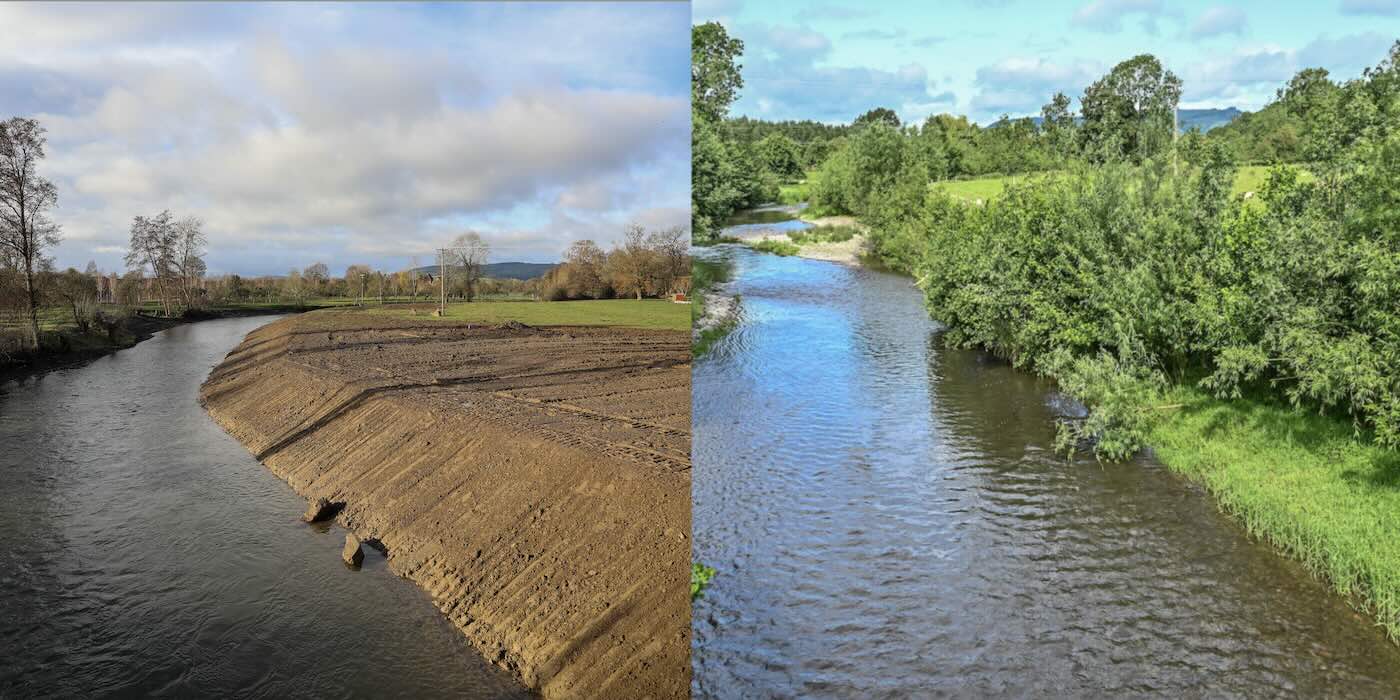
Along a 1.5-kilometer stretch of the River Lugg in Herefordshire, England, nature is writing a redemption story. Before-and-after photographs from 2020 and June 2026 reveal a landscape transformed—from barren, stripped riverbank to a recovering wetland where new trees, bushes, and greenery now flourish where everything was once obliterated.
In 2020, a local farmer used an 18-ton digger to dredge this critical salmon habitat, removing tons of gravel from the riverbed to build a road and horse yard on his property while tearing out 71 trees in a single destructive sweep. A judge later described the damage as "ecological vandalism on an industrial scale." The farmer, John Price, claimed his actions were meant to protect nearby villagers from flooding, but the consequences for wildlife were devastating. He was convicted of seven offenses, sentenced to 12 months in jail in 2023, and ordered to pay £600,000 in reparations. The court also mandated that he restore the riverbed, bank, and replant trees—a commitment that has begun to show real results.
What makes this story hopeful is not the destruction itself, but what has happened in the six years since. Monitoring by Britain's Environment Agency and Natural England confirms the river is healing. Trout, bullhead, and minnows are returning to the water, and key indicator species like kingfishers and sand martins—wildlife sensitive to environmental quality—are present once again. The natural regeneration is remarkable given the scale of the original damage.
"If you let Mother Nature flourish, she will work her magic," said environmental designer Richard Fishbourne, reflecting on the recovery. He was candid about the timeline: "It can take decades to build up this wonderful community of species and habitat. It's really important to have a mix of biodiversity in this space, but it's going to take a long time." His words capture both the resilience of ecosystems and the patience required for true restoration.
The River Lugg is one of Britain's most important salmon rivers, making this recovery particularly significant. Emma Johnson, West Midlands deputy director for Natural England, noted the presence of returning species as evidence of genuine ecological healing. While otters and salmon—the river's "iconic wildlife"—still face a longer road to recovery, the trajectory is unmistakably positive.
This case arrived at a moment of tension in rural communities. Some of the farmer's local supporters argued that he had simply done what generations of farmers before him had done—land management passed down through tradition. Yet the modern understanding of ecological damage, codified in law and enforced by courts, drew a clear line: this was not acceptable stewardship. The conviction and restoration order signaled that even in farming country, the protection of critical habitat is non-negotiable.
The before-and-after images circulating from the site carry a quiet power. They show that while humans can inflict profound damage in a matter of days, nature can reclaim and renew if given the chance and the protection it needs. The River Lugg's gradual return to life is not a miracle—it's restoration in action, one season at a time.