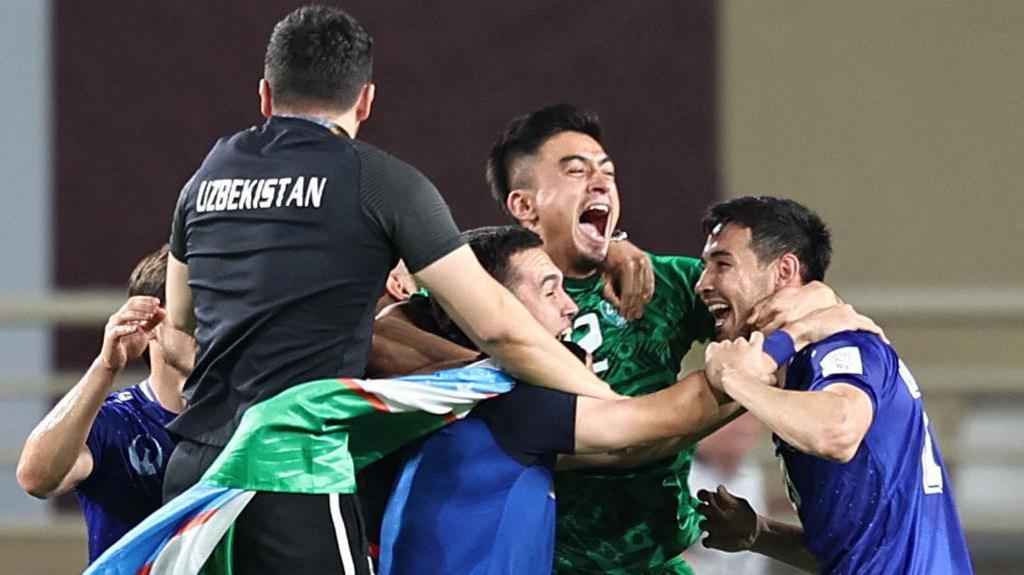
The streets of Tashkent erupted in midnight celebrations on 5 June 2025, as Uzbekistan’s national team secured their first-ever World Cup qualification with a tense 0-0 draw against the United Arab Emirates. For decades labeled the 'nearly men' of Asian football, the White Wolves finally broke through, ending near-misses in 2006, 2014, and 2018 with a historic ticket to the 2026 tournament—marking Central Asia’s debut on football’s grandest stage. The significance stretches far beyond sport: for a nation long overshadowed in international football, this moment is, as Uzbekistan expert Conor Bowers told BBC Sport, 'as significant as winning it would be for nations like England.'
The journey was neither sudden nor simple. After controversial disqualifications—like the 2006 replayed match against Bahrain due to a referee’s error—and narrow goal-difference losses, Uzbekistan has methodically rebuilt its football identity. A long-term development plan elevated coaching standards, expanded FA academies across regions, and established a national training center outside Tashkent modeled on England’s St George’s Park. The results cascaded through the ranks: youth teams claimed Under-17 and Under-20 Asian Cup titles, qualified for Olympic and World Cup tournaments, and raised the bar for domestic professionalism. Between 2025 and 2026, the number of professional clubs in Uzbekistan surged by 36%, a direct reflection of renewed faith and investment in the game.
Now, the nation has a global icon in 21-year-old Abdukodir Khusanov, whose £34 million transfer from Lens to Manchester City in January 2025 stunned European football. Starting in both the Carabao Cup and FA Cup finals for the Premier League champions, Khusanov has become a symbol of a new era. He follows in the footsteps of Server Djeparov, the two-time Asian Footballer of the Year with the iconic mullet, but his impact—amplified by social media and the global reach of English football—resonates differently. Bowers compares Khusanov’s influence to that of David Beckham in early 2000s England: a beacon of aspiration for millions. Drawn into a challenging 2026 World Cup group with Portugal, Colombia, and DR Congo, Uzbekistan’s goal was qualification—and they’ve already achieved it. Now, every match will be a chance to inspire a region.
As new clubs form and young players dream bigger, Uzbekistan’s football renaissance is no longer just about results—it’s about identity, pride, and the quiet revolution happening one pass, one academy, one breakthrough at a time.