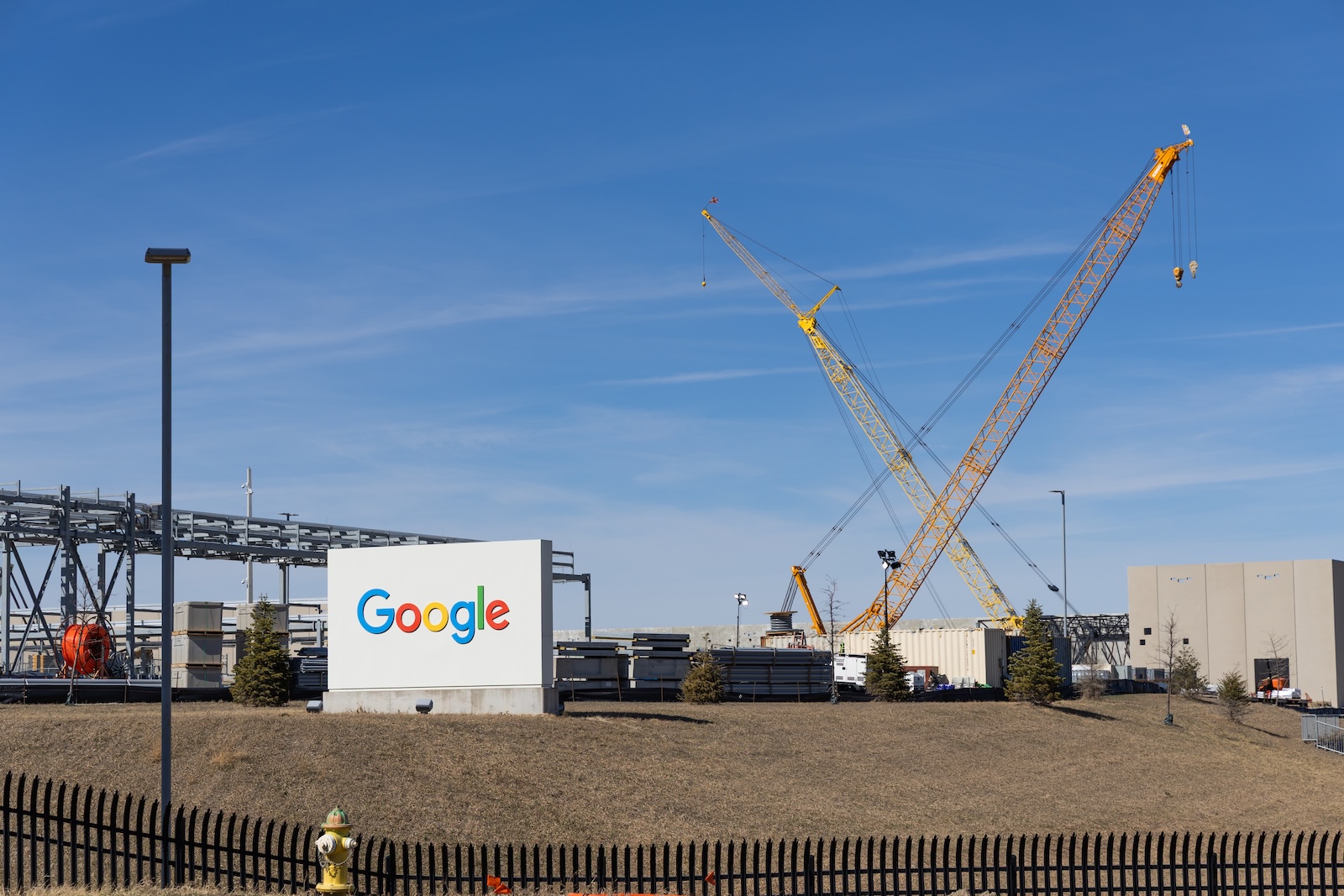
In 2025, Google's Nebraska data centers used 732 million gallons of water — enough to fill hundreds of Olympic-sized swimming pools — and the public had no way of knowing that number until the company chose to share it. That's about to change. Nebraska has passed a new law requiring data centers operating in the state to publicly disclose how much water they use and how much electricity they need, bringing once-secret operations into the light.
The legislation comes as data centers spread into rural and suburban areas where fiber optic infrastructure has improved, raising fresh concerns in a state where wide stretches of farmland are already battling extreme drought. Most of Nebraska's water goes to irrigation for agriculture, and communities worry that new facilities could strain supplies that are already stretched thin. Currently, there's not even an official count of how many data centers operate in Nebraska.
Jesse Bradley, who leads the state's Department of Water, Energy, and Environment, called the new law a "great start" that will help planners identify what information is still missing. The data that is available comes directly from the companies themselves. Beyond Google's 732 million gallons, Meta's Sarpy County facility — a four million square-foot campus — withdrew between 26.7 million and 37.5 million gallons annually from 2020 to 2024, depending on the year. Meta, like Google, expects its water consumption to grow.
Data centers use water mainly to cool servers and prevent equipment from overheating. Some facilities rely on evaporative cooling, which works like evaporation from a lake and requires large volumes of water. Others use closed-loop systems that circulate water and coolant without constant replenishment, though these tend to draw more electricity. Google says it chooses its cooling method based on local water availability, assessing watersheds before and after construction. Meta's Sarpy County site uses a combination of both approaches.
Eric Masanet, an engineering professor at the University of California, Santa Barbara, said there's no universal answer to which method is better — it depends on each facility's design, local climate, and available resources. But he argued the industry should be pushed to do better.
"We should hold them to account and make them install the very best technologies that minimize energy and water," Masanet said. John Winkler, general manager of the Papio-Missouri River Natural Resource District, echoed that sentiment, saying it makes little sense to place data centers in areas already facing water insecurity.
With droughts and heat expected to intensify due to climate change, water policy is becoming increasingly urgent. The new Nebraska law marks an early step toward greater transparency — and, supporters hope, smarter decisions about where and how these facilities are built.