During the COVID-19 pandemic, wastewater surveillance emerged as a democratic approach to disease tracking—a system that could monitor entire communities regardless of whether residents had access to a doctor or a test. But researchers at the Maxwell School have uncovered a troubling paradox: the very system heralded as more equitable carries built-in blind spots that hit the most vulnerable communities hardest.
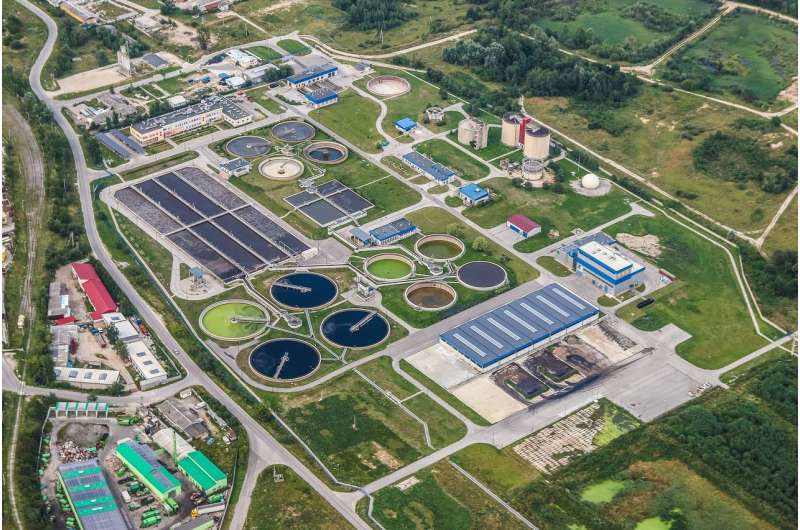
The problem lies in geography and scale. Vulnerable populations tend to live in cities served by large wastewater treatment plants that process water from hundreds of thousands of people. When a single infected person sheds a pathogen into this enormous volume, it dilutes almost to invisibility. Smaller, less vulnerable communities—where wealthier residents tend to live—are served by smaller plants where a single case is far easier to detect. This matters enormously at the critical moment when an outbreak is just beginning and most preventable.
A study published in the American Journal of Public Health, which examined New York State's wastewater surveillance network from 2020 to 2024, quantifies the gap starkly: more than 80 percent of people living in poverty in the state resided in areas where an outbreak would need to surpass 10 infections before the wastewater surveillance system could consistently detect it. By that point, the pathogen is already spreading.
"Wastewater surveillance inherently has a high degree of equity in terms of inclusion," says Professor David Larsen, the study's lead author. "But it also inherently has a high degree of inequity in outbreak detection." The researchers aren't suggesting the system has failed—rather, that its limitations are structural and demand intentional redesign.
The timing of these findings is urgent. The Centers for Disease Control and Prevention's National Wastewater Surveillance System now faces uncertain funding as emergency appropriations expire. Decisions about which treatment plants remain in surveillance networks are being made right now, and the Maxwell School researchers warn that cutting smaller plants to reduce costs could exacerbate existing inequities considerably.
Yet outbreaks don't respect the boundaries of a single surveillance zone. "Outbreaks don't stay in one location. If they are problematic, they spread," Larsen notes. "Detecting an outbreak in a smaller community could signal a larger outbreak in a more vulnerable community nearby." Early detection in one place becomes an early warning system for another.
The researchers propose several concrete solutions. Taking wastewater samples upstream from large treatment plants—at the neighborhood level rather than at the central plant—can detect outbreaks in smaller sub-communities before dilution obscures them. Expanding plant participation in underserved smaller communities and improving statistical modeling for low-population areas could also reduce inequities. These approaches carry significant costs, the team acknowledges, but framing the question reveals its stakes: is disease surveillance meant to work for everyone, or only for some?
The findings arrive at a moment when decisions made about funding and infrastructure could either narrow or widen the gap. Wastewater surveillance remains a powerful tool for protecting public health at scale—but only if its design reflects the communities it's meant to serve.