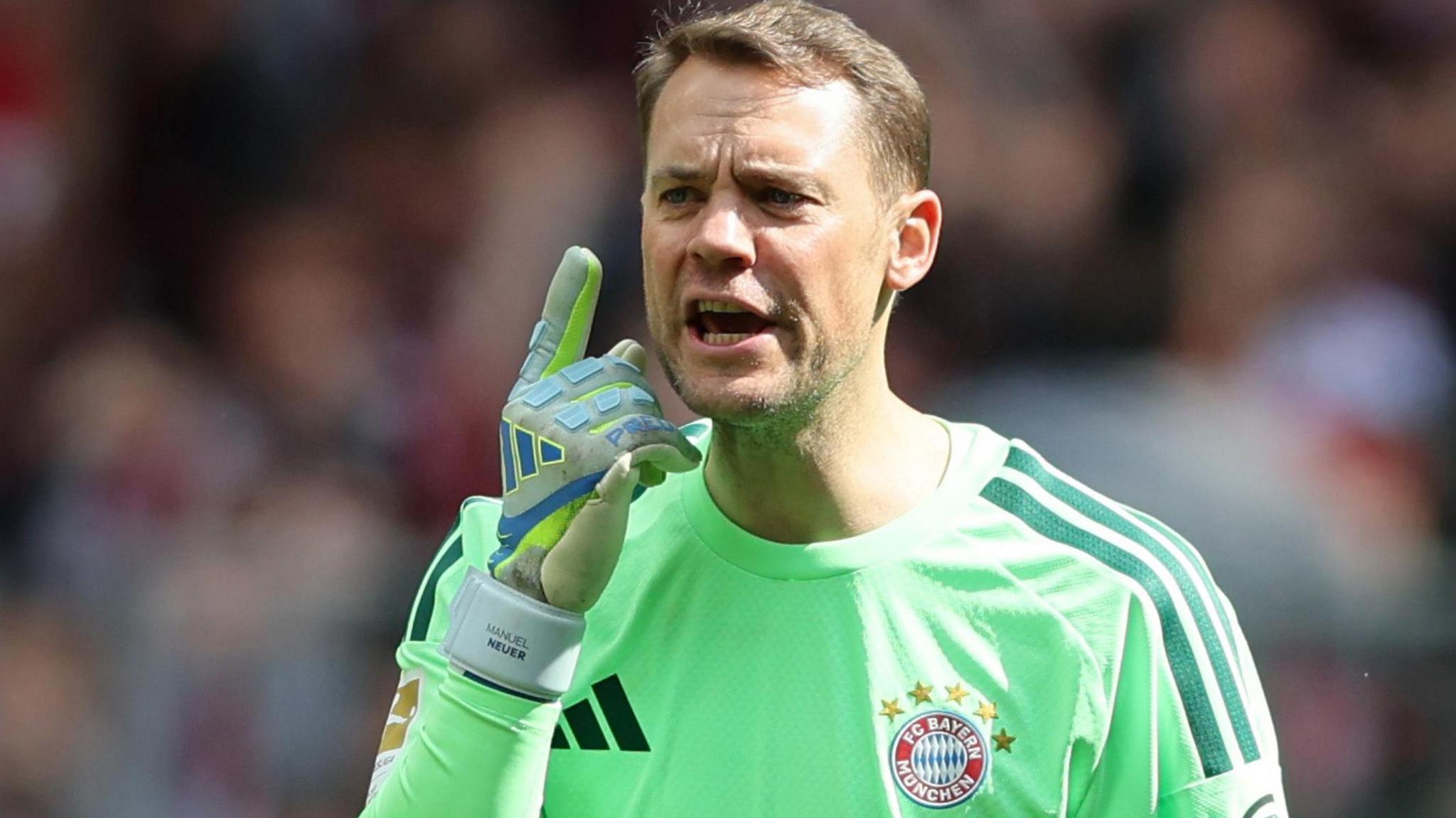
At 40 years old, Manuel Neuer has reversed course on retirement to reclaim his place between the posts for Germany's 2026 World Cup campaign in North America. The Bayern Munich goalkeeper, who earned his 124th and final cap during Euro 2024's quarter-final loss to Spain last summer, announced his international retirement shortly after that tournament ended. But manager Julian Nagelsmann has convinced him to return, naming him as the squad's number one for next summer's tournament across Canada, Mexico, and the United States.
Neuer's decision carries particular weight in a moment when the traditional boundaries of athletic longevity are being tested. This World Cup will feature an unusual cohort of players aged 40 and beyond: Portugal's Cristiano Ronaldo (41), Croatia's Luka Modric (40), Scotland's Craig Gordon (43), and Bosnia-Herzegovina's Edin Dzeko (40) have all been selected by their national teams. Yet Neuer's comeback feels distinctly significant because international goalkeeping demands not just physical durability but also the mental composure to lead a squad through the pressure of a World Cup.
"Everyone knows the aura and quality Manu has, what he brings to a team," Nagelsmann said in explaining his choice. "We're planning with him as our number one." The phrasing suggests something beyond statistics—an intangible leadership quality that the manager deemed essential for Germany's tournament ambitions.
Neuer's club form has remained sharp. This season with Bayern, he has helped the club win the Bundesliga title and reach the Champions League semi-finals, demonstrating that age has not diminished his ability to perform at football's highest level. His career already includes a World Cup triumph: he was Germany's goalkeeper when the team won in Brazil in 2014, a decade before his unexpected return to the squad.
Nagelsmann's confidence in Neuer comes as Germany looks to rebuild after a disappointing Euro 2024. The squad selected for 2026 blends continuity with fresh talent. Joshua Kimmich and Leon Goretzka anchor the midfield alongside emerging stars like Jamal Musiala and Florian Wirtz, who recently transferred to Liverpool. The forward line includes Kai Havertz, Leroy Sane, and younger talents like Maximilian Beier of Borussia Dortmund and Stuttgart's Deniz Undav. Many of these players will hit their peak during the tournament.
Yet Neuer's appointment as the squad's bedrock sends a clear message: in Nagelsmann's vision, Germany's World Cup push is built on a foundation of experienced hands and proven excellence. For a goalkeeper in what would be his fourth World Cup, the 2026 tournament now represents a chance to rewrite the narrative of his international career. His comeback, after just months away from the team, underscores both his personal desire to finish at the highest level and his manager's conviction that some players transcend their years.
The tournament itself will test whether experience remains an asset—or whether Neuer's 40-year-old reflexes can still answer the demands of modern football's most scrutinized stage.