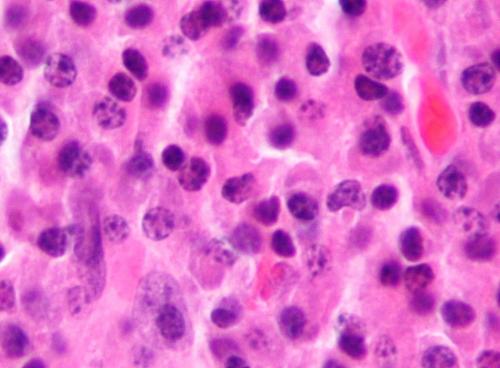
At the University of Miami's Sylvester Comprehensive Cancer Center, researchers have developed an artificial intelligence tool that may fundamentally change how physicians treat newly diagnosed multiple myeloma patients—by learning to read the immune signals hidden in routine bone marrow biopsy slides.
The breakthrough addresses one of modern oncology's most stubborn problems: patients with multiple myeloma, a blood cancer that develops in the bone marrow, often respond dramatically differently to the same treatments. Even when patients share the same clinical stage or genetic risk profile, their bone marrow microenvironments—the complex ecosystem of immune cells and signaling molecules surrounding cancer cells—can vary enormously. This variation directly affects whether powerful new therapies like immunotherapy and stem cell transplantation will help them, and it's been nearly impossible to predict in advance.
Arjun Raj Rajanna, a research scientist at Sylvester, presented the team's findings at the 2026 American Society of Clinical Oncology annual meeting. The research builds on work shown at last year's American Society of Hematology meeting, when the team first demonstrated that AI could reconstruct molecular features from standard biopsy slides. This time, they pushed further: could the same AI uncover immune signals that predict which patients will benefit from specific therapies?
The answer appears to be yes. The researchers used an AI model called GigaTIME to analyze bone marrow biopsy slides from 212 newly diagnosed multiple myeloma patients enrolled in the HealthTree Foundation registry. The AI focused on identifying CD16, a biomarker associated with natural killer cells—immune cells crucial to the effectiveness of daratumumab, a monoclonal antibody that's becoming standard treatment. Understanding these immune features at diagnosis proved as clinically meaningful as understanding the tumor's genetic makeup.
This matters because treatment decisions in multiple myeloma have become far more complex. Doctors now have access to an unprecedented arsenal: immunotherapies like daratumumab, expanded access to autologous stem cell transplantation, and other powerful options. Yet deciding which patients genuinely need the most intensive therapies—and which can safely avoid them—remains a major clinical challenge. Stem cell transplants, while effective at extending remission, carry significant side effects and can temporarily weaken the immune system, increasing infection risk.
"We are using AI to move toward a more precision-based treatment approach for patients with multiple myeloma," Rajanna said. "Instead of asking which drug combination is best overall, we are using AI to ask which treatment strategy best fits the biology of each individual patient." C. Ola Landgren, M.D., Ph.D., senior author and director of the Sylvester Myeloma Institute, emphasized that immune biology at diagnosis may be just as important as tumor genetics—a paradigm shift in how the field thinks about personalized care.
The implications stretch beyond individual patients. If AI can reliably identify which patients will respond to immunotherapy and which might safely defer transplantation, it could spare many people unnecessary toxicity while ensuring others receive aggressive treatment when they truly need it. Multiple myeloma remains incurable, but the goal of treatment is increasingly not just survival, but quality of life tailored to each patient's biology. This tool takes that vision one step closer to reality.