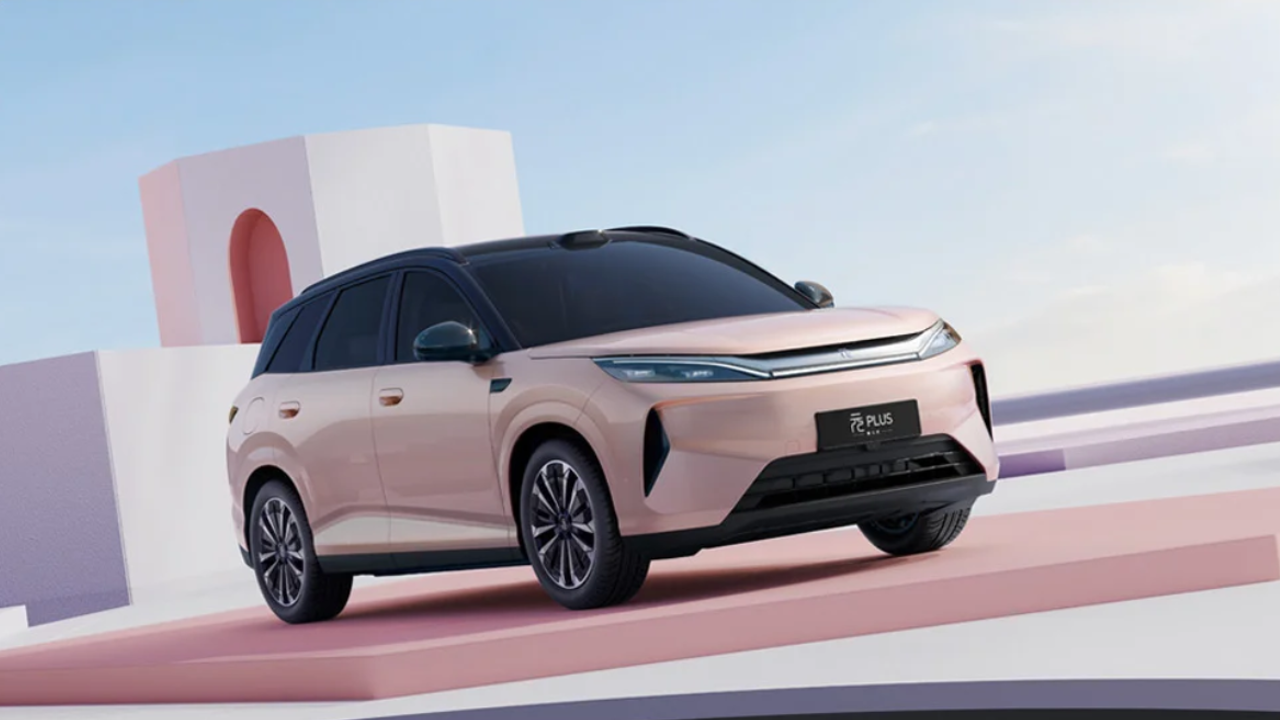
BYD's redesigned Yuan Plus arrived in Chinese showrooms with a promise that might unsettle the global auto industry: a mid-size electric SUV that outperforms both the Toyota RAV4 and Tesla Model Y while undercutting them substantially in price. The new model represents a quiet leap forward in what affordable electric vehicles can deliver—and a glimpse of technology that's still unavailable to most of the world.
The Yuan Plus sits at a pivotal point in the global auto market. The previous generation has been sold internationally as the ATTO 3, making it the closest thing to a real-world test of how Chinese EV technology performs outside China. This new generation arrives with meaningful improvements that matter to drivers choosing between gas, hybrid, and electric powertrains. It's the kind of car that forces a practical question: when electric vehicles become faster, cheaper, and more convenient than the alternatives, what reason remains to choose otherwise?
The numbers tell the story. The refreshed Yuan Plus offers 630 kilometers of range in its top trim—roughly comparable to competitors three times the price—while its new Blade Battery 2.0 charges from 10 to 70 percent in just five minutes and reaches 90 percent in nine minutes. Power increased to 240 kilowatts (322 horsepower) in the upper trim, while prices remained stable at 119,900 to 149,900 RMB ($17,646 to $22,061). BYD also added LiDAR-equipped advanced driver assistance systems and extended the vehicle 210 millimeters, reaching 4,665 millimeters in overall length. The result sits in what industry analysts call the "global sweet spot"—larger than a compact SUV but more maneuverable than a three-row vehicle.
Compared to a Tesla Model Y in China, the Yuan Plus offers the same 5.9-second acceleration to 100 kilometers per hour but with dramatically faster charging, superior cargo capacity (750 liters behind the rear seats versus Tesla's non-standard measurement), and more built-in intelligent driving features. At standard RWD pricing, it costs less than half of Tesla's entry price. Against the Toyota RAV4, the Yuan Plus matches larger dimensions, superior power, and cutting-edge technology—all while remaining less expensive than hybrid or gas versions in the Chinese market. Yet it recharges at home overnight and costs far less to operate.
The wider significance lies in global timing. The previous Yuan Plus was already transforming EV expectations outside China through its ATTO 3 export variant. BYD has confirmed that the new Yuan Plus will reach New Zealand in 2027 as the ATTO 5, where it will replace the current model and signify the increase in size and capability. That rollout offers a crucial signal: New Zealand's streamlined approval process and right-hand-drive configuration make it an ideal test market, one that could preview availability for Australia and the United Kingdom.
European markets face complications. The earlier ATTO 3 EVO released this year still relies on the original Blade Battery, suggesting that localization pressures and battery manufacturing requirements may delay the newest technology in established markets. That paradox—requiring local production in ways that lock in older innovation—threatens to create a two-tier system where premium vehicles get advanced batteries while mainstream models languish with previous-generation tech.
For now, the Yuan Plus remains a stunning achievement available primarily in China. But its trajectory suggests that electric vehicle capability is advancing faster than many expected, and that global markets may eventually demand what China's drivers are already experiencing: affordable, advanced, and undeniably competitive EVs that make the gas-powered future seem not just obsolete, but unnecessary.