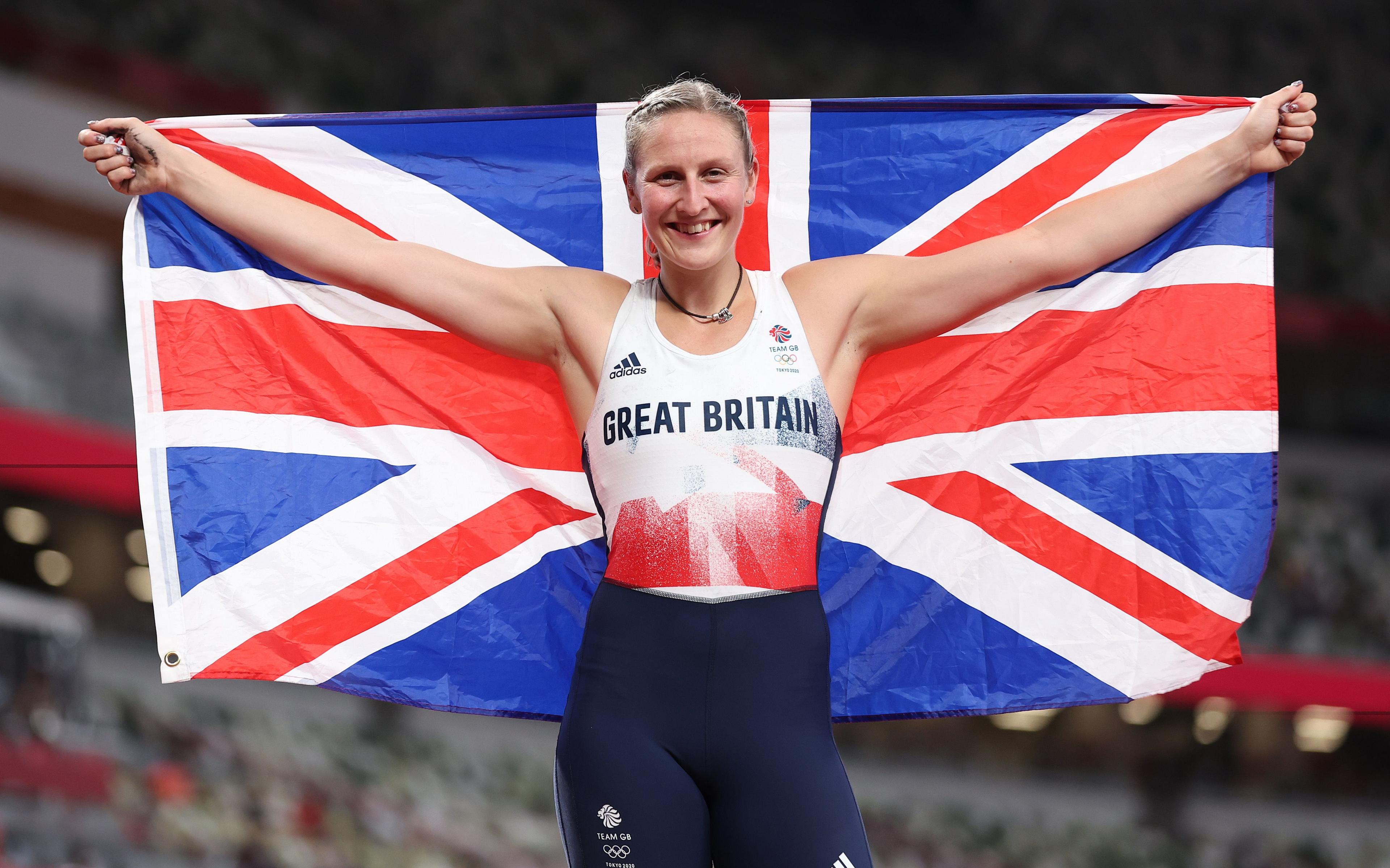
When Holly Bradshaw clears a height at a pole vault competition, she wants the crowd to cheer her skill — not stare at parts of her body the cameras caught from below. But during live broadcasts, that hasn't always happened.
The British Olympic Bronze medalist says she's received social media abuse and seen inappropriate videos of herself online because of revealing camera angles during competitions. "I first-hand have received social media abuse and witnessed inappropriate videos online of myself and colleagues when slow-motion content of us competing is captured," she said.
Now, the European Broadcasting Union (EBU) — the group that coordinates sports coverage across 57 countries and reaches more than a billion people — has released new guidelines to help TV networks show female athletes with more respect. The EBU worked directly with athletes like Bradshaw to create the rules, which tell broadcasters which camera angles to avoid.
The guidelines warn against low cameras positioned underneath athletes during events like the high jump or pole vault, where those shots can capture unflattering or intrusive views. They also discourage lingering slow-motion replays that serve no purpose except to zoom in on women's bodies.
Serbian Olympic long jumper Ivana Spanovic, another athlete who helped shape the rules, said some camera positions don't just feel uncomfortable in the moment — they can hurt athletes' mental health over time. "Certain cameras not only cause discomfort during events but can have serious long-term effects on athletes' mental health," she said.
The EBU's executive director of sport, Glen Killane, put it bluntly: "The sexualization of women athletes through selective camera angles and editing choices continues to be a significant concern across many sports broadcasts." He pointed to lingering body shots, low-angle cameras that capture revealing views, and slow-motion replays that add nothing to the storytelling.
The new guidance could be put to use soon. The European Athletics Championships start on August 10 in Birmingham, England, and BBC Sport will broadcast the events. The BBC is a partner of the EBU. However, the Diamond League — another major track and field series that also airs on the BBC — works independently, so it wouldn't be required to follow the new rules.
For Bradshaw, the issue is about more than just one athlete. She said how women's sport is shown on television shapes how girls see themselves. "How our sport is displayed during live broadcast can be incredibly powerful, yet sometimes harmful to the women competing and the women and girls watching," she said. With these new guidelines, broadcasters now have a roadmap for keeping the focus where it belongs — on the sport itself.