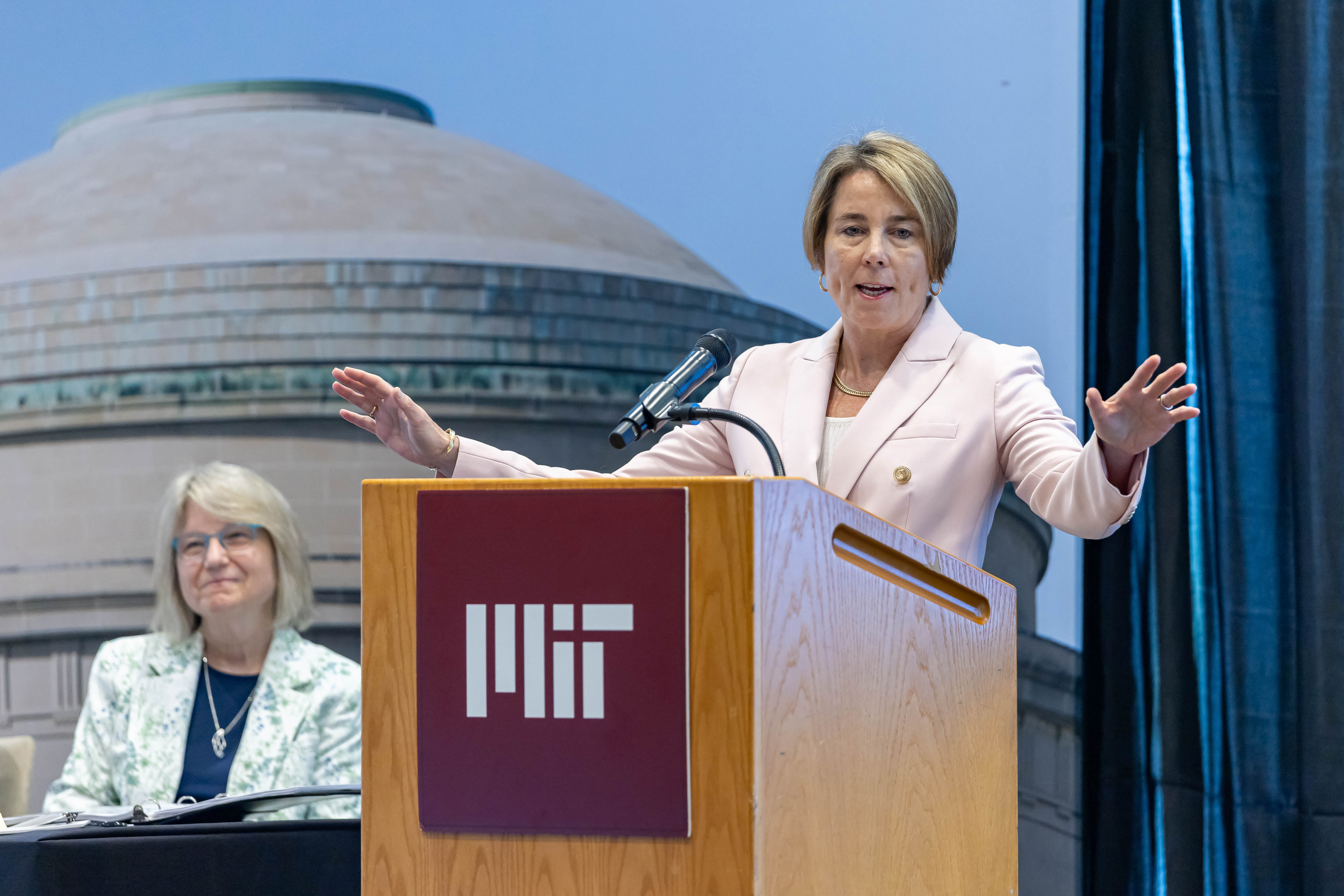
On a May afternoon at MIT's Samberg Conference Center, President Sally Kornbluth and Massachusetts Governor Maura Healey unveiled a new shared laboratory designed to position the Boston region as the world's quantum innovation capital. The Quantum Systems Laboratory (QSL), announced with a $25 million state investment, will house a state-of-the-art quantum computer alongside the peripheral hardware—sensors, quantum interconnects, and other specialized equipment—needed to transform quantum research from theoretical breakthrough into practical, scalable technology.
The timing reflects a growing recognition that quantum computing stands to reshape multiple industries simultaneously. From cryptography and drug discovery to navigation systems and defense technologies, the applications are vast. Greater Boston already holds the world's greatest concentration of quantum talent, according to Kornbluth, but the region lacked the shared facilities to fully mobilize that expertise. "If we could magnify all of that talent with the right facilities—a shared quantum toolbox—we could establish Massachusetts as a national hub for quantum innovation," she said.
Located in MIT's Building 39, the laboratory will be open not only to MIT researchers but to scientists from Harvard, the University of Massachusetts, and institutions beyond the state. This democratization of access echoes the model of MIT.nano and MIT Lincoln Laboratory's SQUILL foundry, both of which have already shaped quantum industry standards and spawned commercial ventures. Governor Healey framed the investment as both scientifically and economically strategic. "The return on investment is clear," she said. "It's going to unleash the great power of scientists and innovators from around the state and across the world."
The economic case is substantial. Life sciences and defense technologies—fields where quantum breakthroughs promise transformative applications—contribute $50 billion annually to the local economy. Dozens of startups already operate in this space, and the new facility is expected to catalyze more. Construction of the QSL facility alone will generate over 150 full-time jobs on site, with another 75 to 100 positions across the Commonwealth in supply chain and professional services.
The QSL announcement represents the physical manifestation of the MIT Quantum Initiative (QMIT) that Kornbluth introduced in December. The $25 million state investment will match existing federal funding already flowing to MIT for quantum research, allowing construction to begin as early as summer. Beyond the state and federal commitments, philanthropic support from Thomas Tull has also bolstered the project.
Quantum research demands something conventional laboratories cannot easily provide: exquisitely controlled environments where quantum systems remain stable enough to perform calculations beyond the reach of classical computers. The new facility addresses this requirement head-on, giving scientists access to the hardware and experimental infrastructure needed to advance quantum science from early-stage research toward real-world applications.
For a region that has long positioned itself as a nexus of innovation, the Quantum Systems Laboratory represents a calculated bet that the next wave of technological transformation will originate here. By building shared infrastructure and opening it to all comers, Massachusetts is wagering that collaboration—not competition—will accelerate the pace of quantum breakthroughs. In a field where a single discovery could reshape industries, that calculation may prove invaluable.