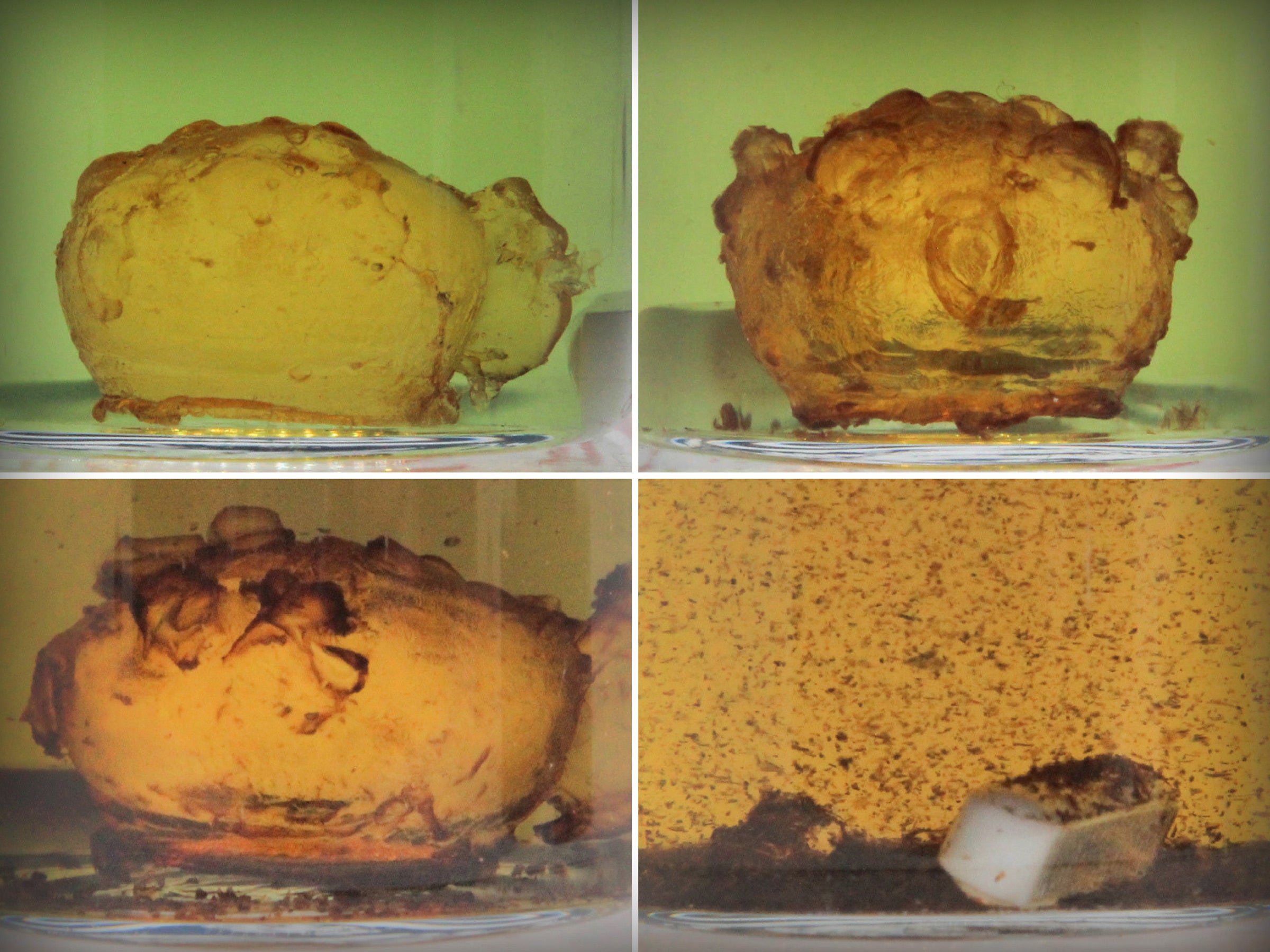
A Ph.D. student walked into his lab expecting to make a plastic stronger. Instead, Keldy Mason watched it melt away like a sugar cube in tea — and in that accident, he may have cracked one of recycling's hardest problems.
Mason, a graduate student at The University of Texas at Austin, was testing a new way to make a famously tough plastic called poly(dicyclopentadiene), or pDCPD for short. The recipe was supposed to toughen the material. It did the opposite. The plastic simply dissolved. For a scientist like UT chemistry professor Zak Page, it was a stunning surprise. "This type of material has been around a long time, and the wisdom was that it was just too thermodynamically stable for this reaction to go the other way," he said. "So, this was quite a surprise."
That accident mattered because pDCPD is a workhorse of heavy industry. Manufacturers love it because it's durable, lightweight and strong — the stuff of car bumpers, construction equipment and chemical storage tanks. But there's a catch. Once a pDCPD product is made, it's almost impossible to recycle. Most of it ends up incinerated, a process that guzzles energy, releases harmful byproducts and destroys the carbon and glass fibers blended in for extra strength.
The new method, published in the journal Science Advances by a team from UT Austin and Sandia National Laboratories, changes the calculus. Researchers dunk a pDCPD object into a solution containing an eco-friendly solvent and a catalyst made with the metal ruthenium. Stir it for hours or days, depending on size, and the plastic deconstructs and dissolves, just like that lump of sugar. What's left behind is a fine powder that can be reshaped into brand-new plastics, plus the embedded fibers, recovered in pristine condition and ready for reuse.
The payoff is a process that uses less energy and creates less waste than burning the plastic, while rescuing materials that would otherwise be lost forever. Page hopes it removes the guilt that has made some manufacturers shy away from pDCPD despite its advantages. "Before now, people might have avoided using these materials, despite their strength, durability and lightness, because they didn't have a good way to recycle them," he said. "I hope this will encourage more people to consider using pDCPDs."
There's still work ahead. The biggest open question is whether the ruthenium catalyst can be recovered and reused, which would make the whole process cheaper and greener. The team is already on the path to scale it up: UT, Sandia and four study authors have filed for a U.S. patent, with co-first authors Mason, Meghan Kiker and Zhenchuang Xu leading the effort alongside researchers from the University of Illinois Urbana-Champaign and MIT. Funding came from the U.S. Department of Energy and several foundations.
If the team can make the catalyst reusable, this same chemistry might one day be pointed at even more common plastics — the ones in water bottles and shopping bags. For now, a lab accident in Austin has shown that even the toughest materials aren't trapped forever.