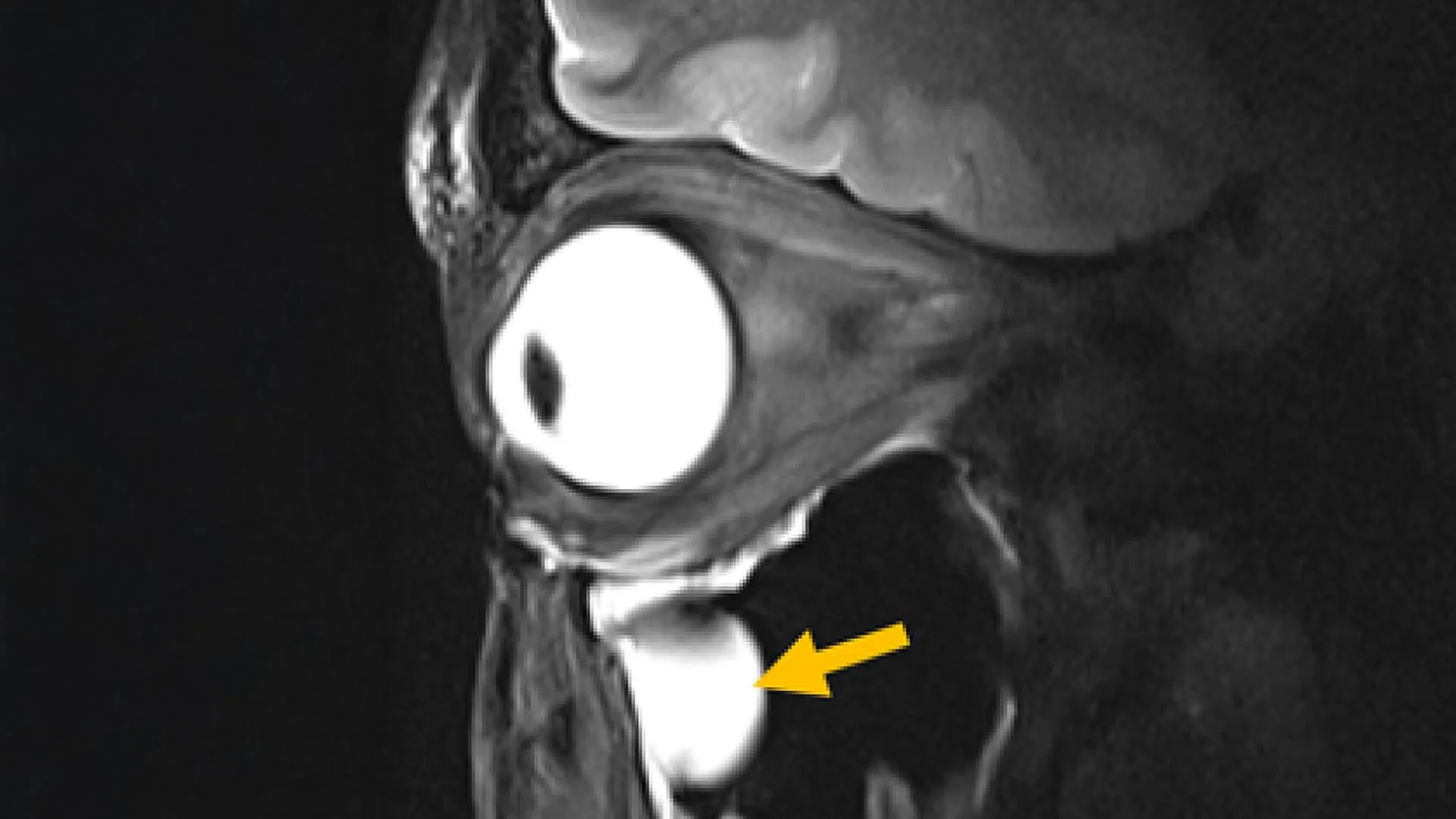
When Nandita Saha peers into an MRI machine, she sees more than just a tool for doctors — she sees an opportunity to make medical scans clearer and faster for patients everywhere. Saha, a doctoral student at the Max Delbrück Center in Berlin, has helped develop a new type of MRI antenna that could transform how doctors see inside the human body. Her team's work, published in the journal Advanced Materials, uses specially engineered materials called metamaterials to dramatically improve image quality.
MRI machines work by sending radio waves into the body while applying a powerful magnetic field. The signals that bounce back tell the machine how to build a picture of bones, organs, and tissues. But getting clear images of tricky areas like the deep brain and the delicate eye has always been difficult. Traditional antenna equipment — the parts that send and receive radio signals — often struggle to collect enough information from these complex regions, leading to blurry scans or long appointment times.
Saha's team found a solution by incorporating metamaterials directly into the MRI antenna. Unlike ordinary materials, metamaterials are specially designed structures that can manipulate electromagnetic waves in unusual ways. In testing, the new antenna strengthened signals from target tissues, produced sharper images, and gathered data more quickly. An important bonus: the antenna can be added to existing MRI machines without needing expensive new equipment.
Researchers tested their invention by imaging the eye and surrounding tissue in volunteers using a 7.0 Tesla MRI scanner — one of the most powerful types available for medical use. The results showed detailed views that were previously difficult to achieve. "This work shows a pathway toward faster, clearer MRI scans that could benefit patients in many clinical areas," said Professor Thoralf Niendorf, who leads the Experimental Ultrahigh Field Magnetic Resonance laboratory where Saha works.
The implications stretch far beyond eye imaging. The technology could help protect patients with medical implants by reducing dangerous heating around metal devices during scans. It may also improve cancer treatments that use heat, like tumor hyperthermia, by directing radio waves more precisely. And because the antenna is compact and lightweight, it could eventually be customized for different body parts, making scans more comfortable for patients.
Professor Oliver Stachs of University Medicine Rostock, who collaborated on the project, said the antenna could open an entirely new window into the eye. "Processes that in the past have been largely inaccessible" may now become visible to doctors, he explained. The team is now planning larger clinical studies across multiple hospitals and adapting the technology for organs like the heart and kidneys. "Innovations in imaging hardware have the potential to transform diagnostics," said Dr. Ebba Beller, another co-author. "This study is an important step toward next-generation MRI technology."