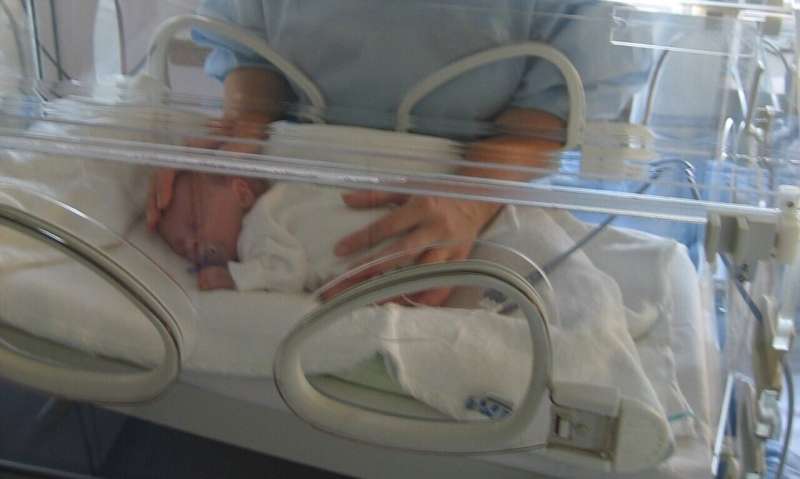
A handheld device placed gently on a premature infant's belly could revolutionize how doctors catch one of the most feared diagnoses in neonatal intensive care units. Broadband optical spectroscopy, or BOS, detects necrotizing enterocolitis (NEC)—a devastating intestinal disease—in its earliest, most treatable stages, before X-rays can see any damage at all. According to a first-in-human study from Ann & Robert H. Lurie Children's Hospital of Chicago published in the Journal of Pediatric Surgery, this noninvasive technology accomplishes in two minutes what doctors have been searching for for decades.
NEC strikes premature infants suddenly and progresses with terrifying speed. In early stages, antibiotics can stop it. But once the disease advances, surgery becomes necessary, and the risks multiply—complications and death loom large. Yet until now, no reliable tool existed to catch NEC before it reached that dangerous threshold. The stakes could not be higher for these fragile babies.
Researchers tested BOS on 96 premature infants younger than 36 weeks' gestation at Lurie Children's, working without radiation or pain. The device measures infrared light reflecting off the intestines, detecting color changes that surgeons recognize as signs of threatened tissue. Senior author Seth Goldstein, MD, MPhil, a pediatric general and thoracic surgeon at Lurie Children's and associate professor of surgery at Northwestern University Feinberg School of Medicine, led the work alongside research fellow Ashley Dodd, MD, and biomedical engineer Vadim Backman's lab at Northwestern.
The team had already proven BOS worked in a mouse model. This human pilot study showed the technology is safe and feasible—and produced detectable signal changes in infants with NEC. "Our results show that BOS is a safe and feasible technology that produced detectable signal changes in premature infants with NEC," Goldstein said. The device's speed and simplicity matter enormously. At the bedside, without subjecting babies to any radiation or discomfort, doctors can screen for early disease within minutes. That window of early detection could mean the difference between antibiotics and surgery, between recovery and devastating complications.
The implications ripple far beyond one hospital. NEC affects roughly one in 1,000 premature infants born in the United States, making it one of the most common surgical emergencies in neonatal care. Every premature infant admitted to an NICU faces some risk. For decades, clinicians have wanted better tools to identify those at highest risk before irreversible damage occurs. Goldstein emphasized the clinical hunger for this innovation: "NEC is one of the most feared diagnoses in any neonatal intensive care unit, and the field has been searching for an early detection tool for decades."
What comes next is carefully designed research. Goldstein and his colleagues hope additional studies will confirm that BOS can reliably screen for early stages of NEC in larger patient populations. If those studies succeed, this handheld device could become standard of care in neonatal units worldwide—catching disease early, preserving health, and giving premature infants a better chance at thriving. For families of premature babies, and for the neonatologists who care for them, that possibility feels genuinely hopeful.