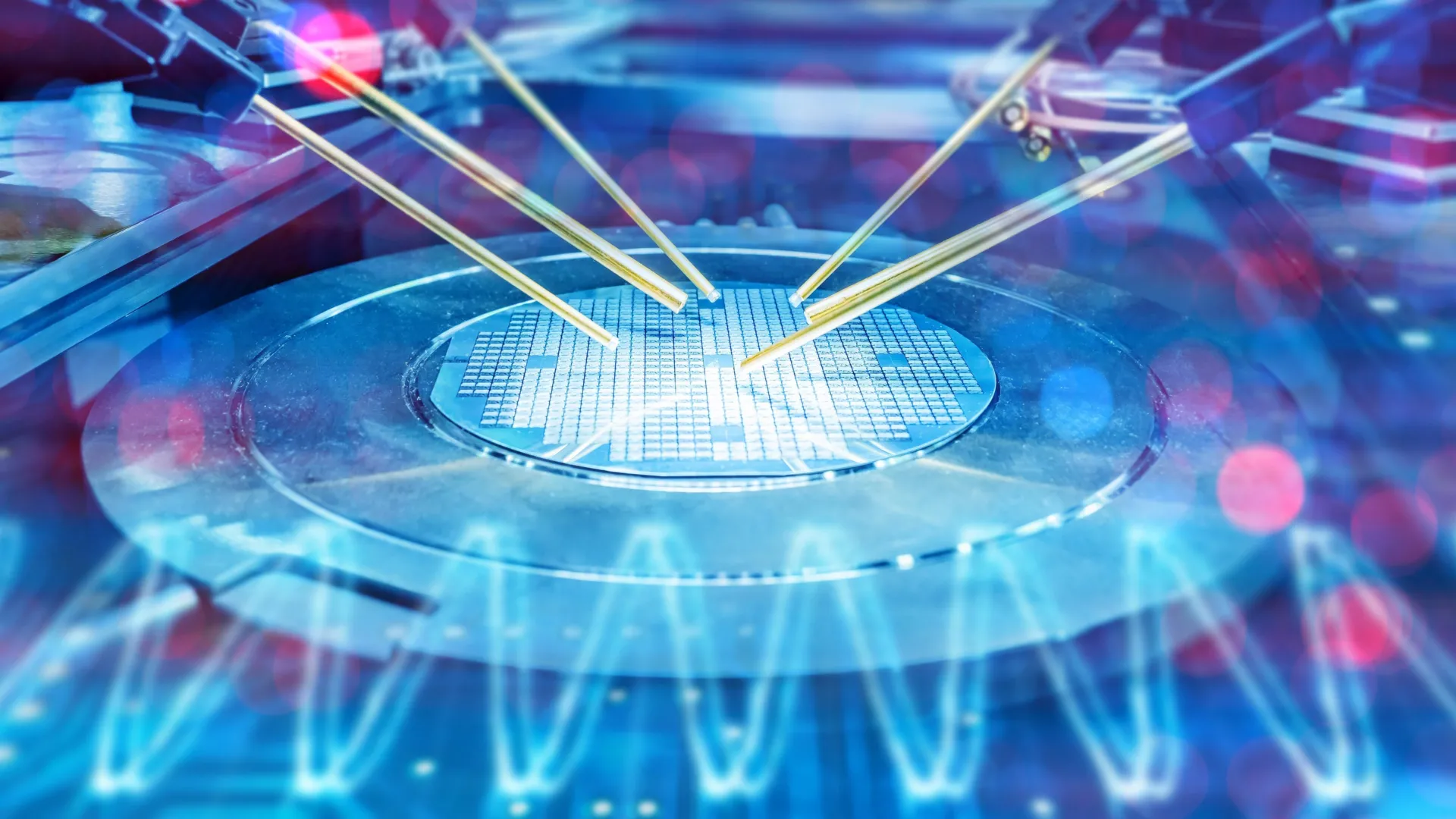
Yury Polyachenko was staring at a simulation on his screen when the breakthrough clicked: what if, instead of smashing atoms apart with brute force, you could coax them away with chemistry? At the Princeton Plasma Physics Laboratory, Polyachenko and his team have discovered a way to remove just the top atomic layer of molybdenum disulfide—a material only three atoms thick—without damaging the delicate structure beneath. This precise control could be the key to building next-generation computer chips that are faster, smaller, and more energy-efficient than anything possible with silicon alone.
As silicon chips approach their physical limits, engineers are racing to find new materials that can take over where silicon leaves off. Transition metal dichalcogenides (TMDs), especially molybdenum disulfide, have emerged as top contenders. But integrating these ultrathin materials into real-world devices requires atomic-scale precision—specifically, the ability to strip just the top sulfur layer while leaving the molybdenum and second sulfur layer intact. Plasma, a high-energy state of matter long studied at PPPL, has been a go-to tool for such tasks. Yet until now, the energy needed to remove sulfur (about 30 electron volts) was perilously close to the threshold that damages the underlying molybdenum, making the process too risky for manufacturing.
The Princeton team’s solution? Pretreat the surface with oxygen or fluorine. In simulations, they found that this simple step slashes the energy needed to remove sulfur atoms to just 14 electron volts with oxygen, and as low as 10 with fluorine. That may sound like a small change, but in the atomic world, it’s a game-changer. It creates a much wider safety margin, allowing plasma ions with a natural energy spread to do their job without wrecking the material. Even more clever is how the atoms come off: incoming ions trigger chemical reactions that form stable gases like sulfur dioxide or sulfur-fluorine compounds, which naturally detach from the surface. “We are not directly breaking the bonds,” Polyachenko explained. “We are forming some intermediate products, such as sulfur dioxide. This intermediate product is much easier to break off.”
The implications extend beyond molybdenum disulfide. The team plans to test the method on related materials—swapping molybdenum for tungsten, sulfur for selenium—to see how broadly the technique can be applied. Supported by the U.S. Department of Energy and powered by simulations at NERSC and Princeton’s high-performance computing clusters, this research is part of a larger push to reinvent microelectronics from the atom up. If experimental teams can now validate these simulations in the lab, chipmakers may soon have a powerful new tool to build the ultra-compact, high-performance devices the world increasingly depends on.