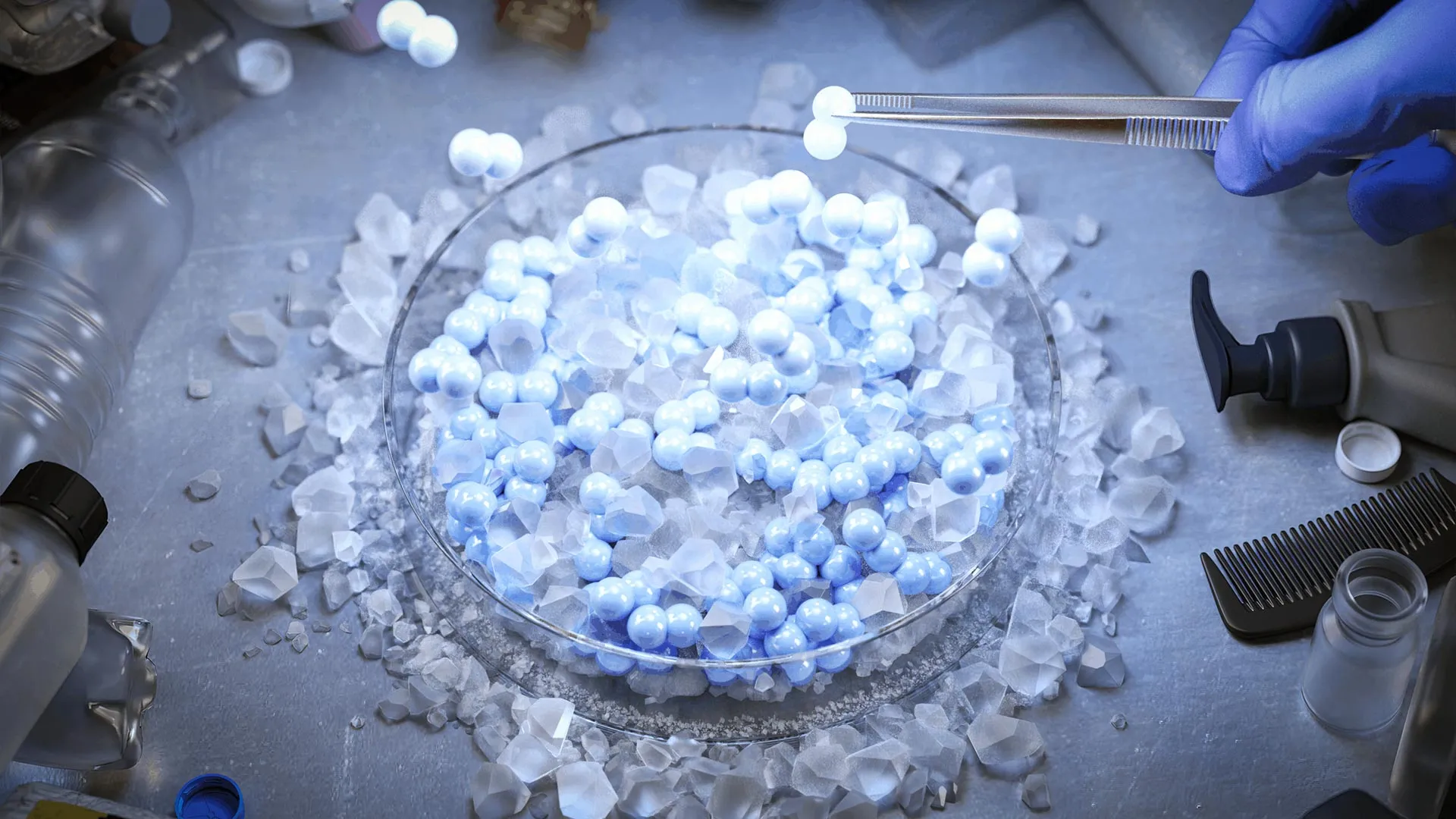
Every year, the world throws away hundreds of millions of tons of plastic. Only 9% of it gets recycled. The rest ends up in landfills or is burned, releasing carbon dioxide into the air. But scientists at UCLA and Ewha Womans University in South Korea have now found a way to transform that plastic trash into something useful: clean hydrogen fuel.
The researchers developed a chemical process called alkaline thermal treatment, or ATT. In simple terms, they mix plastic waste with sodium hydroxide, also known as lye, and heat it up. This triggers chemical reactions that release hydrogen gas. The hydrogen they produced was more than 90% pure.
What makes this method special is that it works on mixed plastics. Most recycling requires separating different types of plastic first, which is expensive and time-consuming. But the UCLA team showed that their process could handle three common plastics together in a single reactor: polyethylene terephthalate (PET), which is used in water bottles; polyethylene (PE), found in shopping bags; and polypropylene (PP), used in everything from food containers to car parts.
The process also works at much lower temperatures than traditional methods. Steam gasification, the conventional way to turn waste into fuel, requires extreme heat. The ATT method operates at temperatures 300 to 400 degrees Celsius lower, making it far more energy efficient.
But perhaps the most groundbreaking part is what happens to the carbon. When plastics break down, they release carbon. Normally, that carbon escapes into the atmosphere as carbon dioxide. With this new method, the sodium hydroxide captures that carbon and converts it into solid sodium carbonate instead. In lab tests, more than 75% of the carbon from the plastics ended up stored in these solid mineral compounds or liquid residues. Less than 13% entered the gas phase, and only tiny amounts escaped into the air.
The team, co-led by Professor Ah-Hyung "Alissa" Park of UCLA and Professor Woo-Jae Kim of Ewha Womans University, originally designed this process to produce hydrogen from seaweed and other plant materials. When they realized it could work on plastic too, they adapted it for the new purpose.
To help stubborn plastics like polyethylene and polypropylene break down more easily, the researchers added a preliminary step: heating the plastics briefly in air before the main reaction. This step adds reactive groups to the plastic molecules, making them easier to decompose.
Other low-temperature methods for extracting hydrogen from plastic only work on certain types, leaving out the most common plastics in household waste. This new ATT process handles the full mix.
The findings were published in the journal Proceedings of the National Academy of Sciences. The researchers say the technology could eventually scale up to help tackle the global plastic waste crisis while producing clean fuel at the same time.