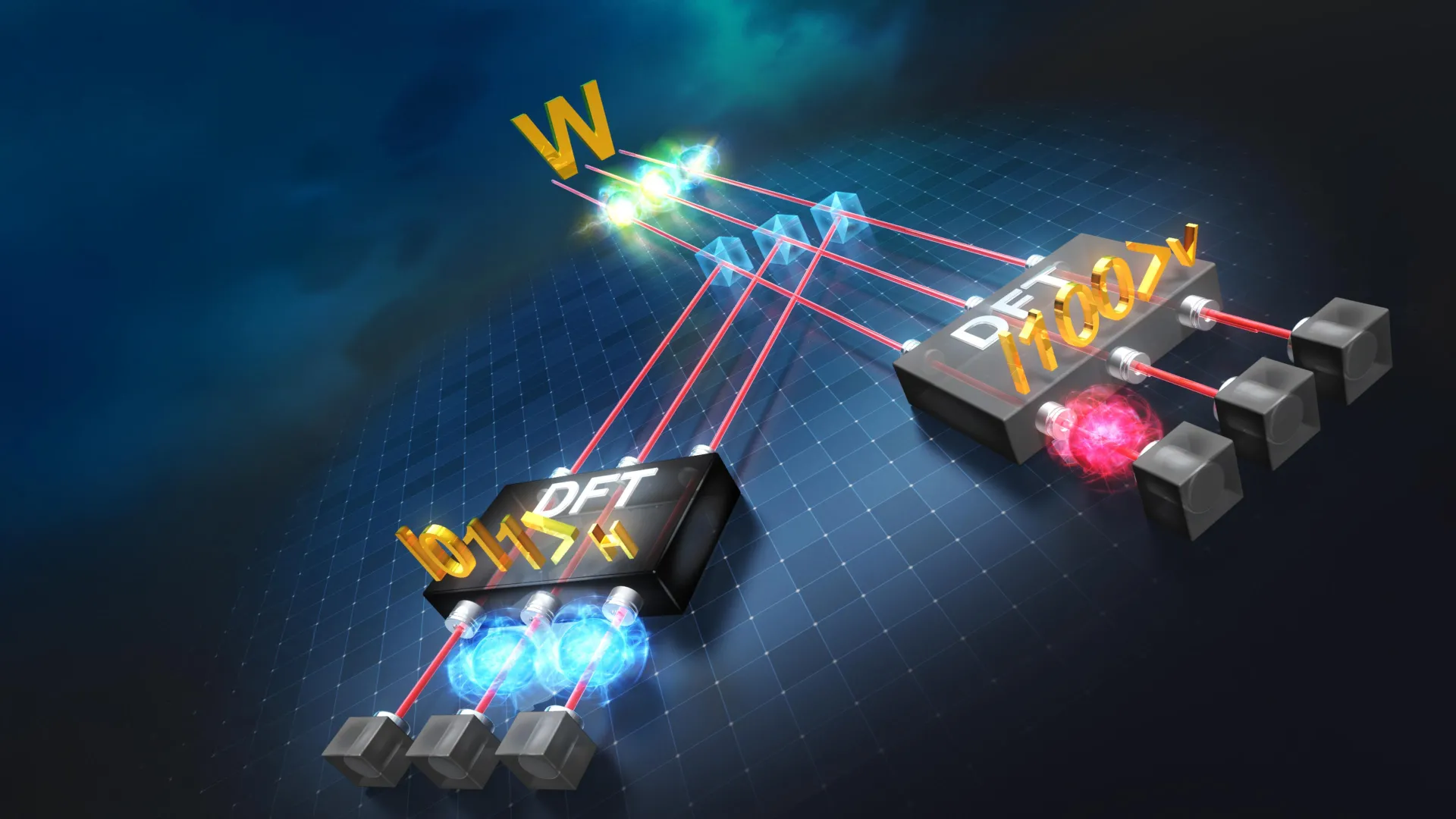
At Kyoto University and Hiroshima University, researchers have just solved a 25-year-old puzzle that physicists thought might be impossible to crack—and their answer could accelerate the quantum revolution by decades. Shigeki Takeuchi and his team have developed the first-ever entangled measurement for W states, a breakthrough that proves we can now identify certain quantum systems with a single, elegant measurement rather than thousands upon thousands of tests.
The reason this matters goes to the heart of what makes quantum computing and quantum communication so powerful. Quantum entanglement is the spooky phenomenon that Einstein himself found deeply troubling: it describes a state where multiple photons become so linked that you cannot describe the physics of each one separately. This interconnection is the engine of next-generation quantum technologies—but only if we can reliably identify what kind of entangled state we're working with. Until now, that identification problem has been a major bottleneck.
The traditional method, called quantum tomography, requires an exponential number of measurements as the system grows. For a system with just a handful of photons, this means collecting data that becomes impractically large very quickly. In 1999, physicists figured out how to use entangled measurements to sidestep this problem for a particular type of entangled state called the GHZ state—but for the W state, the other major player in multi-photon entanglement, the solution remained theoretical. For more than 25 years, no one had demonstrated it experimentally.
The Kyoto and Hiroshima team cracked the W state problem by focusing on a fundamental mathematical property: the W state's cyclic shift symmetry. They designed a photonic quantum circuit that uses quantum Fourier transformation to create an entangled measurement capable of identifying W states with any number of photons. To prove the concept, they built a stable optical quantum device and fed three single photons through it in carefully chosen polarization states. The device successfully distinguished between different types of three-photon W states, each representing unique non-classical correlations between the input photons. The team measured the fidelity of their measurement—essentially the probability of getting the right answer—and confirmed the method works.
"More than 25 years after the initial proposal concerning the entangled measurement for GHZ states, we have finally obtained the entangled measurement for the W state as well, with genuine experimental demonstration for 3-photon W states," Takeuchi said. This achievement opens immediate pathways to practical applications: quantum teleportation (transferring quantum information across distances), new quantum communication protocols, and novel approaches to measurement-based quantum computing, where the act of measurement itself drives the computation.
The researchers are now pushing toward a more ambitious goal—applying their method to larger, more general multi-photon entangled states, and moving the technology onto on-chip photonic circuits that could eventually shrink quantum systems into practical, deployable devices. As Takeuchi emphasized, deepening our understanding of these basic quantum concepts is what drives the innovative breakthroughs that turn theory into transformative technology. For the quantum computing era now taking shape, this Japanese team's elegant solution to a 25-year mystery marks a crucial step forward.