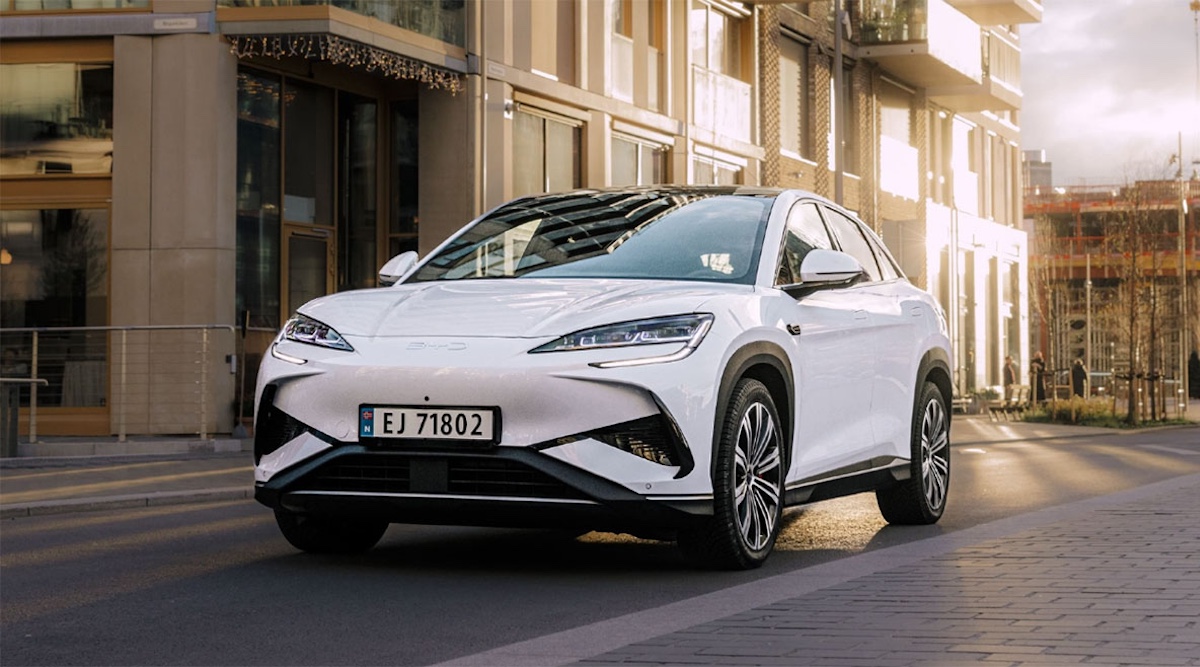
Two out of three new cars sold in the Nordic region were electric in April 2026, marking a historic milestone for one of the world's most climate-conscious corners of the globe. The data, released by the Norwegian Road Traffic Information Council, reveals a region in the midst of a dramatic transformation — one where the future of driving is no longer hypothetical, but already here.
Norway has essentially become an all-electric new car market, with 98.6 percent of new passenger cars registered in April running on batteries rather than petrol. Denmark, meanwhile, has undergone a stunning reversal in just four years: from 13.2 percent electric car adoption in April 2022 to 81.9 percent in April 2026. This shift is not the result of mandates alone but a genuine market preference. As Geir Inge Stokke, director of the Norwegian Road Traffic Information Council, noted, "When the share of electric cars for passenger cars is over 95 percent in all counties of the country, there is no longer any doubt that most Norwegians choose electric when buying a new car."
Yet the Nordic story is more nuanced than a simple tale of triumph. Finland and Sweden, despite their strong environmental credentials, lag behind at 48.8 and 42 percent respectively — still impressive by global standards, but revealing deeper divisions within the region. In April, 56,951 new passenger cars were registered across the four countries: Sweden led by volume with 23,391 sales, followed by Denmark with 16,754, Norway with 11,103, and Finland with 5,703. But Norway and Denmark are clearly on different trajectories, driven partly by policy frameworks that have made electric vehicles far more attractive than conventional cars.
The contrast between private and company car markets helps explain these differences. In Denmark, electric cars have become the clear first choice among private buyers, according to Jonathan Schacht Halling Nielsen, deputy CEO of Mobility Denmark. Meanwhile, company fleets — which represent a substantial portion of sales in Nordic markets — have adopted electric vehicles at varying rates depending on national tax incentives and charging infrastructure.
Norway's achievement represents something extraordinary: a wealthy, developed nation where the transportation sector has essentially undergone complete electrification within a decade. The country set a new monthly EV record in April, the second consecutive month to do so. This success has ripple effects beyond climate metrics — safer roads (electric cars have different safety characteristics than combustion vehicles), cleaner air, and a lesson in what rapid energy transition can look like when the right combination of incentives, infrastructure, and innovation align.
Finland and Sweden face headwinds in their electrification journey. Finland saw passenger car registrations fall 8.7 percent in April, driven mainly by weakness in the corporate market and low consumer confidence. Yet both countries continue making progress, and their current EV shares would be considered remarkable achievements in most parts of the world.
The broader significance lies not in any single country's numbers but in what the Nordic region collectively demonstrates: that high-income democracies can orchestrate wholesale shifts in consumer behavior toward sustainability when they commit to doing so. The mechanisms — tax incentives, charging networks, vehicle availability, and cultural acceptance — are now well understood and replicable. As the rest of Europe and the world watches, the Nordic countries have transformed from mere advocates of climate action into living laboratories of what's actually possible.