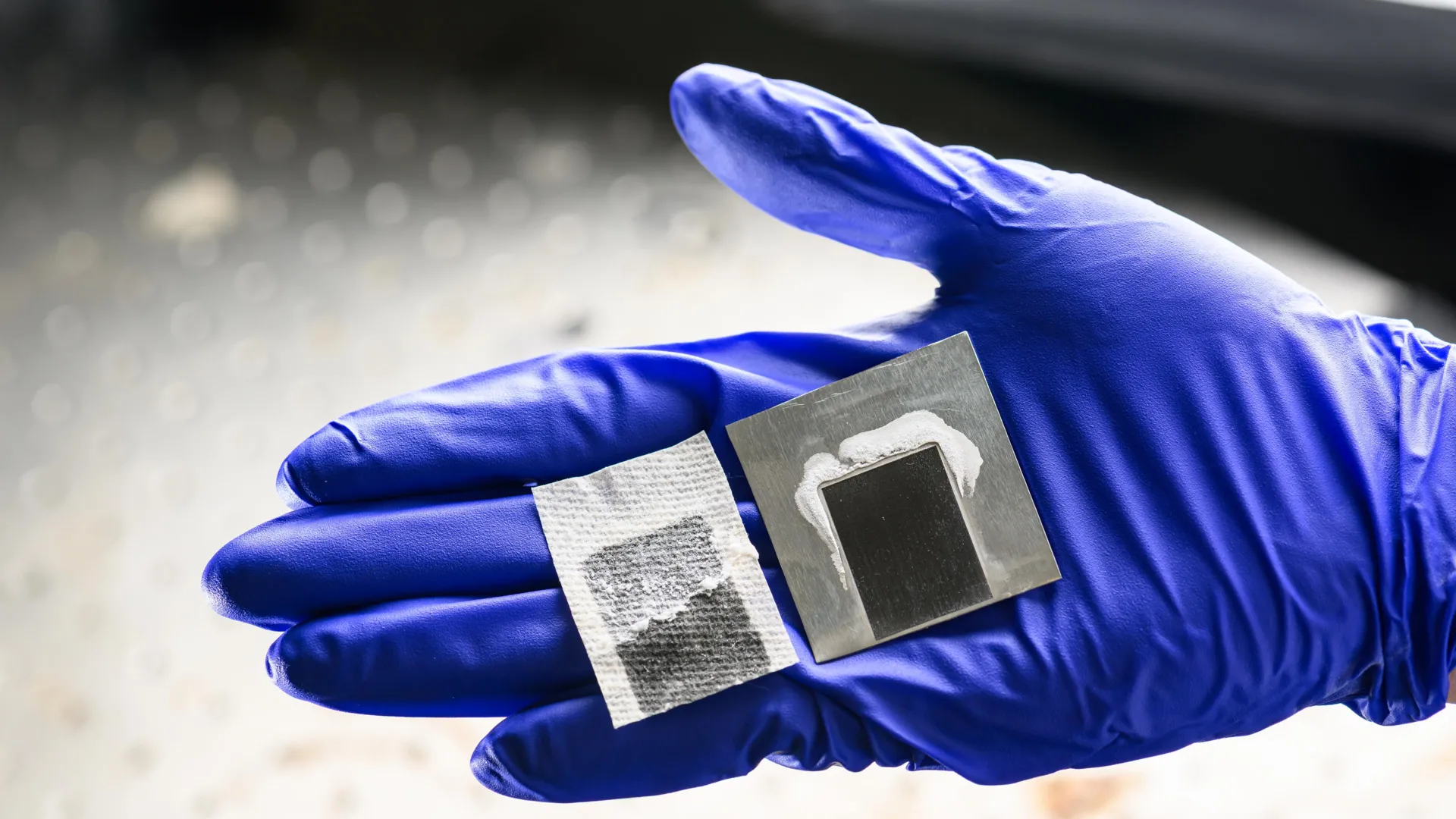
Chunlei Guo holds a piece of specially treated metal in his lab at the University of Rochester, and what makes it revolutionary is almost invisible: a pattern of microscopic grooves and laser-textured ridges that could reshape how the world solves one of its most pressing crises. The black metal surface absorbs nearly all incoming sunlight and powerfully attracts water—a quality called superwicking—and when seawater flows across it, something remarkable happens. Fresh water emerges. Salt stays behind. No toxic brine poisons the ocean. No chemical pretreatment muddies the process.
According to the United Nations, 2.2 billion people still lack access to safely managed drinking water. Desalination offers hope for arid regions from California to the Middle East, yet traditional methods—reverse osmosis and thermal distillation—carry heavy costs: they are energy-intensive, chemically complex, and produce enormous volumes of concentrated saltwater brine that damages marine ecosystems by increasing salinity and reducing oxygen levels. Guo's team at the Laboratory for Laser Energetics has developed something fundamentally different, work recently published in Light: Science & Applications.
The system uses solar panels made from black metal textured with femtosecond lasers. A laser-patterned active region pulls a thin layer of seawater across the surface. As sunlight heats the panel, water evaporates and transforms into fresh water. Dissolved salts and minerals are guided away from the evaporation zone and deposited onto untreated passive regions—a clever spatial separation that prevents the mineral buildup that would otherwise clog the system.
But real seawater is vastly more complicated than the simplified saltwater used in earlier lab tests. Oceans contain magnesium and calcium compounds that form hard, dense crusts when they crystallize—the same problem that scales the inside of a tea kettle, except orders of magnitude more extreme. To solve this, Guo's team borrowed an unexpected principle from everyday life: the coffee ring effect. When coffee evaporates on a surface, concentrated particles collect at the outer edge. By designing microscopic grooves that encourage the same motion in salt crystals, they could push minerals toward the passive regions before they accumulated and blocked flow.
When the researchers tested the technology using water samples from the Pacific, Atlantic, and Indian Oceans, the surface cleaned itself. Fresh water continuously extracted while salts migrated to passive regions where they could be collected without degrading performance. This represents a fundamental shift in what desalination produces.
Conventional desalination creates liquid brine waste requiring treatment and disposal. Guo's system recovers nearly all dissolved salts in solid form—materials that become valuable resources rather than environmental liabilities. In a companion study published in the Journal of Materials Chemistry A, the team went further, embedding hydrogen titanate nanoparticles into the metal's grooves to selectively extract lithium from seawater. With Earth-based lithium mining taxing both energy resources and landscapes, pulling this crucial battery ingredient directly from saltwater offers a radically cleaner alternative. Tested on water from Utah's Great Salt Lake, the approach works. As desalination expands globally to meet water scarcity, systems like this one suggest a different future—one where the process heals rather than harms, and where the very byproducts become tomorrow's resources.