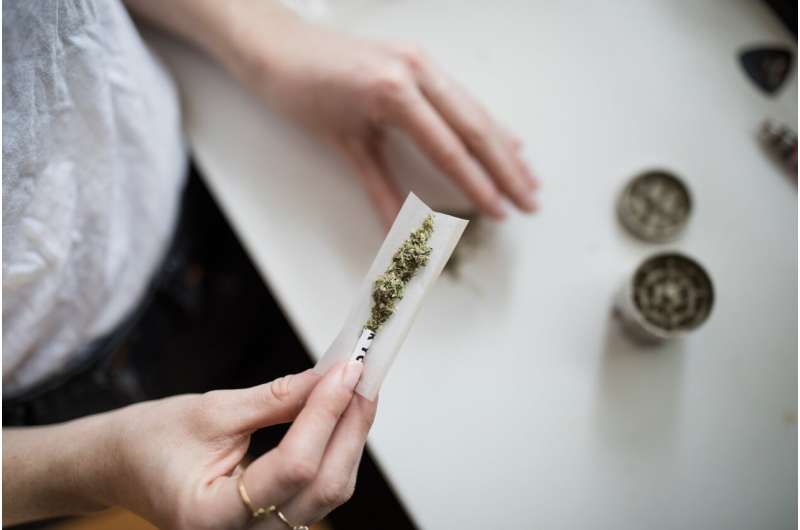
A surprising split emerged in a UCLA cannabis study: men who used the drug occasionally felt more high, sedated and impaired after smoking than women with similar habits—even though their blood contained about the same amount of THC, cannabis’s main intoxicating compound.
The finding challenges the familiar idea that women are generally more sensitive to cannabis. It also points to a more complicated picture: how often someone uses cannabis may shape their response along with their sex. The study, published in the journal Neuropsychopharmacology, was designed to test those two factors together, rather than mixing results from separate experiments.
Researchers at the UCLA Center for Cannabis and Cannabinoids enrolled healthy adults, split evenly by sex and by use pattern: weekly or daily. In three sessions, each person smoked cannabis with no THC, a lower amount of THC or a higher amount. Participants did not know which version they received. To reduce the effect of hormones on the results, women who took part were not using hormonal birth control and were tested during the same phase of their menstrual cycle.
Occasional-use men reported stronger feelings of being high, sleepy and impaired than the other groups. They also reported more unpleasant effects, including anxiety. They were the only group whose heart rate rose significantly after smoking cannabis with THC. By contrast, men and women who used cannabis frequently reported similar effects.
Blood tests did not account for the difference. Frequent-use men tended to have the highest THC levels, but reported fewer effects than occasional-use men. The researchers also found that frequent users, regardless of sex, were more likely than occasional users to choose more cannabis during the study. The team described that result as exploratory, meaning it needs further testing.
“Sex and cannabis use history can both shape how someone experiences the effects of cannabis,” said lead author Dr. Stephanie Lake, a researcher at the UCLA center. Principal investigator Dr. Ziva Cooper said much earlier thinking about sex differences came from animal research or human studies that combined results from different trials. The team’s controlled comparison, she said, changed the picture.
The question matters as cannabis use rises among women. The study authors note that women can move more quickly than men from first use to cannabis use disorder, a pattern of harmful or hard-to-control use. They suggest women may develop tolerance—the need for more cannabis to get the same effect—with less use than men, but say larger studies must test that possibility. Better evidence on who experiences strong, unpleasant or rewarding effects could help shape prevention and treatment.
The findings come with limits: the sample was modest, some results were exploratory, and the cannabis tested had less THC than many products sold today. The UCLA team is now studying stronger products and adults aged 55 and older, a group whose cannabis use is rising. Those studies may show whether the same differences appear with today’s higher-potency products and in older adults.