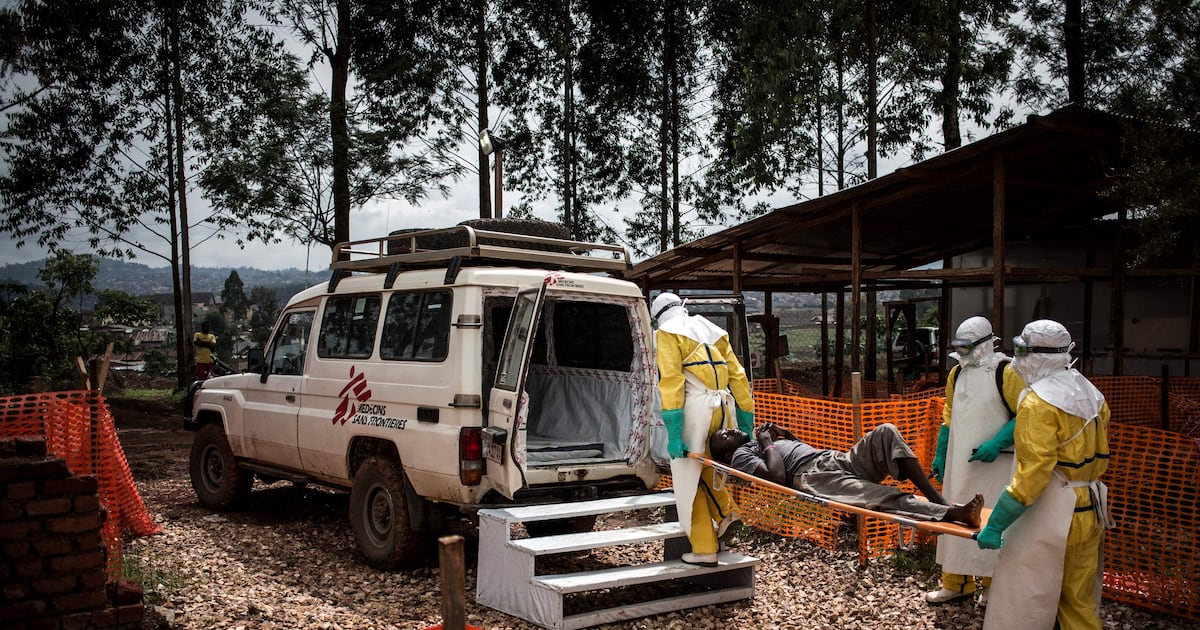
Dr Tedros Adhanom Ghebreyesus, director general of the World Health Organisation, watched as suspected Ebola cases in the Democratic Republic of Congo plummeted from over 1,000 last week to just 116 this week—a dramatic shift that offers a glimmer of hope amid an outbreak that has claimed 60 lives and infected 344 people across the DRC and neighbouring Uganda. But the real promise lies not in the current moment, but in what comes next: three experimental vaccines targeting the Bundibugyo strain of Ebola are moving toward trials within months, and scientists say they will fundamentally change humanity's ability to contain future outbreaks.
For decades, Ebola vaccine development languished in neglect. When the devastating 2014–2016 West Africa outbreak killed over 11,000 people, the only approved vaccine targeted the Zaire strain—leaving other deadly variants like Bundibugyo and Sudan unprotected. The funding gap was no accident. As former WHO director general Margaret Chan once noted, because Ebola "historically, geographically confined to poor African nations, the R&D incentive is virtually non-existent." A profit-driven industry, she explained, simply doesn't invest in products for markets that cannot pay. That calculus is finally shifting.
The Coalition for Epidemic Preparedness Innovations (Cepi) has committed more than $60 million—with up to $50 million flowing to Moderna's mRNA vaccine candidate alone—to accelerate development of three Bundibugyo vaccines. The International Aids Vaccine Initiative and the University of Oxford (producing through India's Serum Institute) are pursuing parallel approaches. The speed possible with modern mRNA technology is transformative. Ian Jones, a professor of virology at the University of Reading, explains the breakthrough plainly: "For the RNA technology you can do it in two weeks." After preclinical safety testing, trials could begin within months—a timeline that could theoretically help contain the current outbreak itself.
Prof John Oxford, co-author of the textbook Human Virology, captures the emotional weight of this moment: "I'm really hoping the next outbreak will be thwarted by the mRNA vaccines, I really do hope it will." Prof Paul Hunter, from the University of East Anglia, is similarly optimistic about the science. "I don't think it's going to be that difficult to get a good vaccine for it in the coming months," he said, noting that Bundibugyo had previously been "not high up on the list of priorities" because it caused only two outbreaks before now.
Yet vaccine development is only half the battle. The real challenge lies in distribution and trust. Ebola outbreaks occur in "relatively rural, poor communities," as Prof Jones notes, and reaching those populations requires sustained commitment and local buy-in. The current DRC outbreak has been hampered by community mistrust—some residents believe Ebola isn't real or that patients aren't being treated fairly—leading to attacks on clinics and poor contact tracing. Misinformation ran rampant during the 2014–2016 crisis too, with conspiracy theories and fake news undermining containment efforts.
What makes this moment different is institutional recognition of these realities. Dr Tedros stated plainly that a successful vaccine "could help to control this epidemic and strengthen preparedness for future outbreaks." The financial commitment from Cepi, coupled with the speed of mRNA technology, suggests that future Ebola outbreaks need not follow the catastrophic trajectory of the past. The next chapter of this story will depend not just on scientific ingenuity, but on whether the world can deliver vaccines to the communities that need them most—and whether those communities will trust what's being offered.