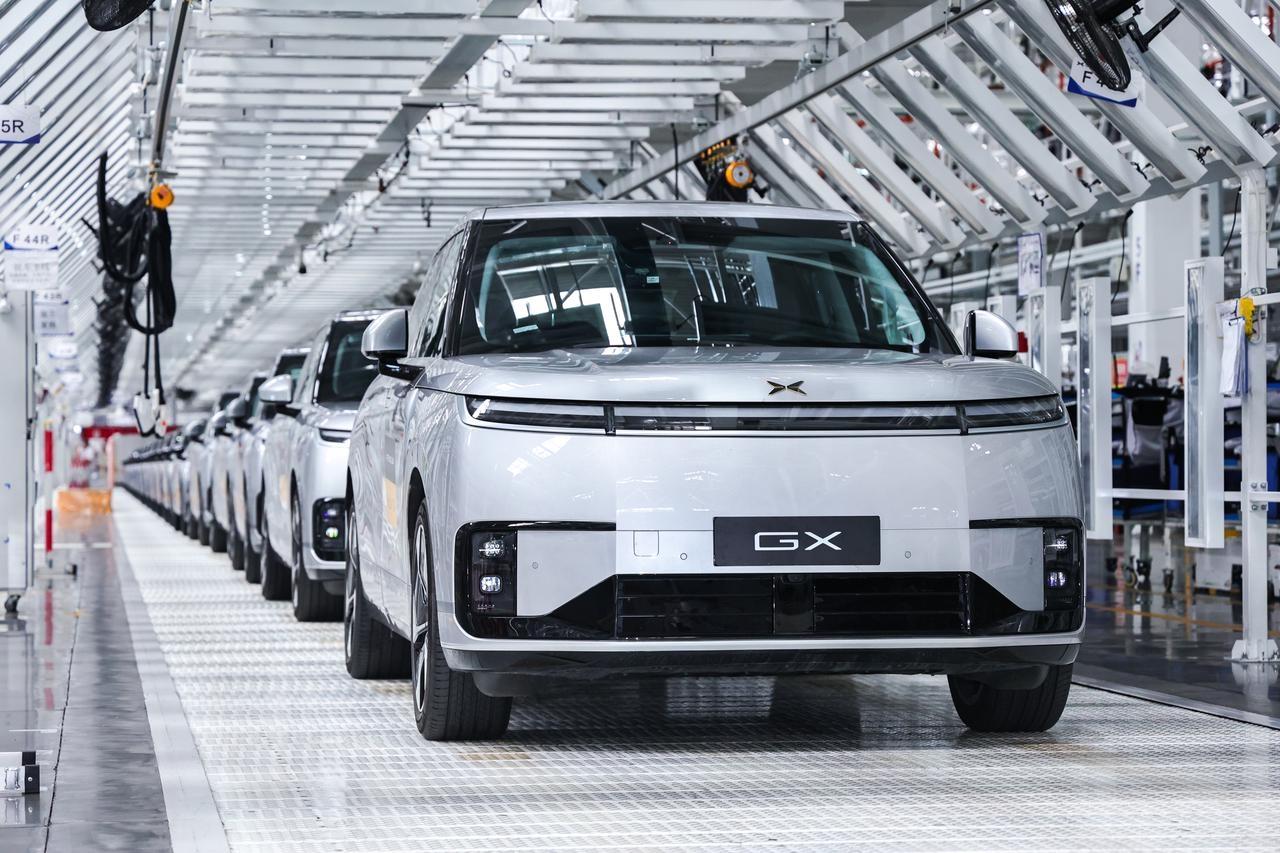
In Guangzhou, China, passengers may soon catch a ride in a car with no driver — and that driver might not even own the vehicle. XPENG Motors, a Chinese electric car company, has begun employee testing of what it calls China's first mass-produced robotaxi built entirely with the company's own technology. The car is designed to drive itself at Level 4 autonomy, meaning it can handle most driving situations without a human backup.
XPENG Chairman and CEO He Xiaopeng recently took the robotaxi for a spin himself, riding from the moment he ordered the car to when it dropped him off at his destination — all without anyone touching the controls. That test run marked a milestone for the company and for self-driving technology in China.
What makes XPENG's approach different from rivals like Baidu, another Chinese tech company that also operates robotaxis? While Baidu builds its own robotaxi service, XPENG wants to sell or license its technology to robotaxi fleets around the world. The company says its system uses ordinary cameras instead of expensive LIDAR sensors and high-definition maps, which could make it cheaper and easier to deploy in new cities. XPENG's Head of Robotaxi, Candice Yuan, said the company designed its system to work across different countries and driving conditions without major custom engineering.
The robotaxi runs on XPENG's GX platform and uses four custom-designed Turing AI chips that give the car 3,000 TOPS of computing power — enough number-crunching muscle to perceive its surroundings, make decisions, and react in real time. XPENG has already started producing the vehicles at scale, calling them "production-ready" in May 2023.
The company plans to launch a demonstration program in Guangzhou later this year, with potential partnerships in Europe, the Middle East, and Southeast Asia on the horizon. If all goes well, XPENG's technology could eventually power robotaxi fleets far beyond China's borders.
The implications go beyond convenience. Robotaxis could reduce the cost of rides since companies wouldn't need to pay drivers. They could also cut emissions if the fleet runs on clean electricity. For people who can't drive — due to age, disability, or other reasons — a truly driverless taxi could open up new freedom to get around.
Of course, many questions remain. Can the technology handle bad weather, crowded streets, and unpredictable pedestrians reliably? Will regulators allow these cars on public roads in more places? XPENG is betting the answer to both is yes. And if the company succeeds, getting a ride might soon mean just opening an app and letting the car come to you.