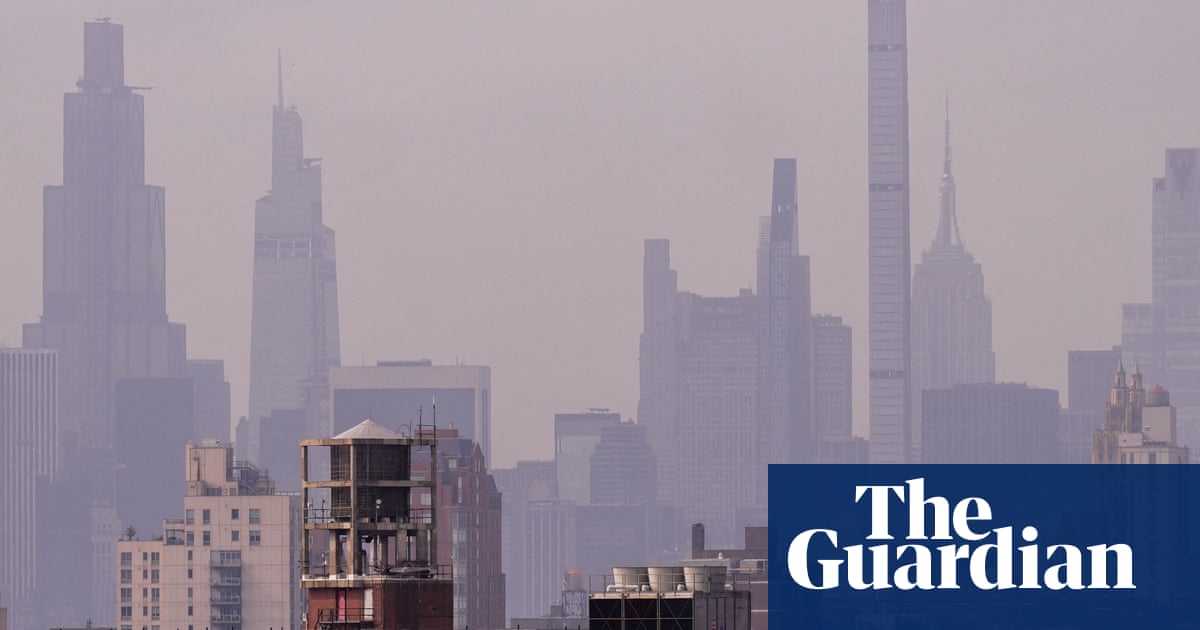
In one stretch of testing the bacteria behind legionnaires' disease showed up inside the Guggenheim Museum, a Whole Foods, a private school and dozens of apartment buildings — 59 of more than 180 cooling towers sampled by New York City health workers tested positive. Loved in summer for air conditioning, these rooftop water towers can quietly turn deadly if the water isn't cleaned. Now the city is fighting back with its strictest rules in the country.
Legionnaires' disease is a serious kind of pneumonia caused by a germ called legionella. It grows in the water of cooling towers — the big air-conditioning systems used in hotels, hospitals and high-rise buildings. If the water is neglected, the bacteria can ride the fans through the vents and into people's lungs. "You can just be walking by this hotel or hospital or apartment building and happen to linger having a conversation or something and then you get exposed," said Amy Pruden, an engineering professor at Virginia Tech. Worst of all, scientists say nearly every death is preventable.
Two outbreaks in two summers made that painfully clear. In August 2025 in Harlem, seven people died and more than 100 fell ill. This summer on the Upper East Side, 92 people got sick, 79 were hospitalized)Skip, and seven lost their lives. Victims of the first outbreak and their families have filed four lawsuits against the city, its hospitals and the companies that tend the towers.
The city admits it let its guard down. In the first six months of 2017, inspectors checked 3,190 cooling towers; in the same stretch of 2025, only 1,167 — because of a staffing shortage. New York is now fixing that. In May, it promised $13 million in new funding for inspections, including money to hire 23 water ecologists, and will require building owners to test for the bacteria every 31 days the towers run — the toughest rule reported anywhere in the US. Governor Kathy Hochul signed legislation demanding twice-a-year certifications and raised fines from $10,000 to $12,500 when a violation leads to serious illness or death. City council member Virginia Maloney also wants towers cleaned at least three times a year instead of two.
Pruden calls it "a carrot and a stick": upkeep that saves lives, backed by penalties if owners slack off. She wonders if the fine is high enough — a fair worry for a city staring at an $8.8 billion budget gap. But as the climate crisis heats up the planet, more air conditioning means more towers and more risk.
Legionnaires' won't vanish overnight students. "We can all do better in preventing legionnaires' disease," said Dr William Schaffner of Vanderbilt University. "We have the tools in hand. They have to be done rigorously all the time." New York now has the rules, the money on paper and the people — and the quiet hope that no family has to walk into summer heat and wonder whether a neighbor's tower is safe again.