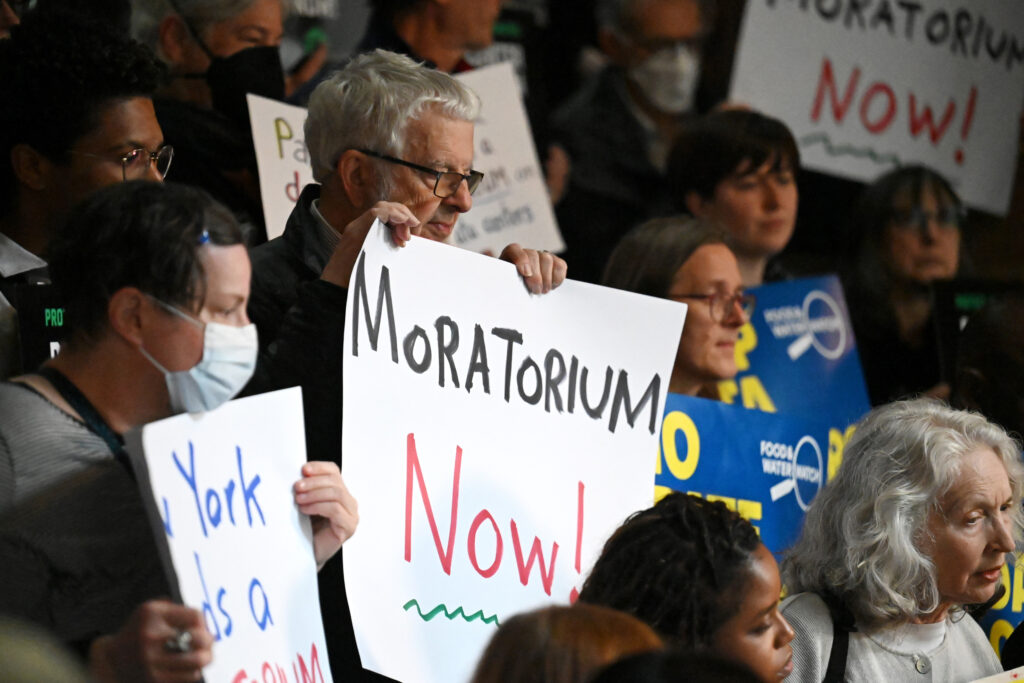
The New York Legislature just took a historic swing at one of the fastest-growing industries in America. On Thursday night, lawmakers passed the Responsible Data Center Development Act, a one-year moratorium on permits for data centers consuming more than 20 megawatts of power—a threshold that captures the massive facilities built to power artificial intelligence and other energy-intensive computing. If Governor Kathy Hochul signs it into law, New York would become the first state in the nation to freeze such permits, a landmark moment in the growing battle between communities and corporate tech expansion.
The stakes are enormous. Data centers suck up staggering amounts of electricity to run their computers and water to cool them down. In New York alone, proposals for these facilities have spread across upstate communities—from Niagara and Erie counties along the Canadian border to the town of East Fishkill in the southeast—with local opposition growing steadily, particularly in rural areas that bear the burden of their environmental and infrastructure impacts.
The moratorium accomplishes two things. First, it pauses new high-energy data center permits for twelve months while the state conducts a comprehensive environmental impact report. Second, it requires mandatory local public hearings before any such facility can be constructed, giving communities a formal voice in decisions that affect their energy grids, water supplies, and land use. State Senator Kristen Gonzalez, the Democrat who introduced the bill, framed it as protection: "We need to make sure that we have the appropriate infrastructure and processes in place to protect communities from rising utility bills, protect our environmental resources and actually have a positive vision for what our energy future as a state should look like."
The bill addresses a real imbalance. William Rivera, the town supervisor of Oneonta in central New York, discovered firsthand how these projects operate when Eco-Yotta Inc. proposed rezoning over 150 acres of farmland for a data center. His town successfully passed its own 12-month moratorium last month. "Gone are the days where these mega-corporations can come in and sneak in harmful applications on the backs of working people," Rivera said—a sentiment echoed by activists like Gay Nicholson of Sustainable Finger Lakes, who pointed out that "the burden of rigorous analysis and defense against billionaires and their white-shoe law firms should not be put on volunteer planning board appointees."
The economic argument cuts both ways. Data center developers and trade unions argue the freeze will cost jobs and discourage investment. The Data Center Coalition's state policy director, Khara Boender, warned that a moratorium would "send a signal that the state is closed for business." Yet Senator Gonzalez countered with data: a $77 million state subsidy for a data center near New Jersey had created only a single permanent job. She emphasized that the state is redirecting investment toward housing and grid improvements—sectors that create far more sustained employment.
One significant caveat: Governor Hochul hasn't committed to signing the bill. She has suggested the decision should rest with local municipalities rather than the state, positioning her cautiously on an issue that will likely define her re-election campaign. Maine's governor vetoed a similar moratorium in April, a reminder that this momentum isn't guaranteed.
Still, Thursday's vote represents something crucial—a statewide recognition that communities deserve time and information to understand what's coming before corporations reshape their landscapes and infrastructure for corporate profit.