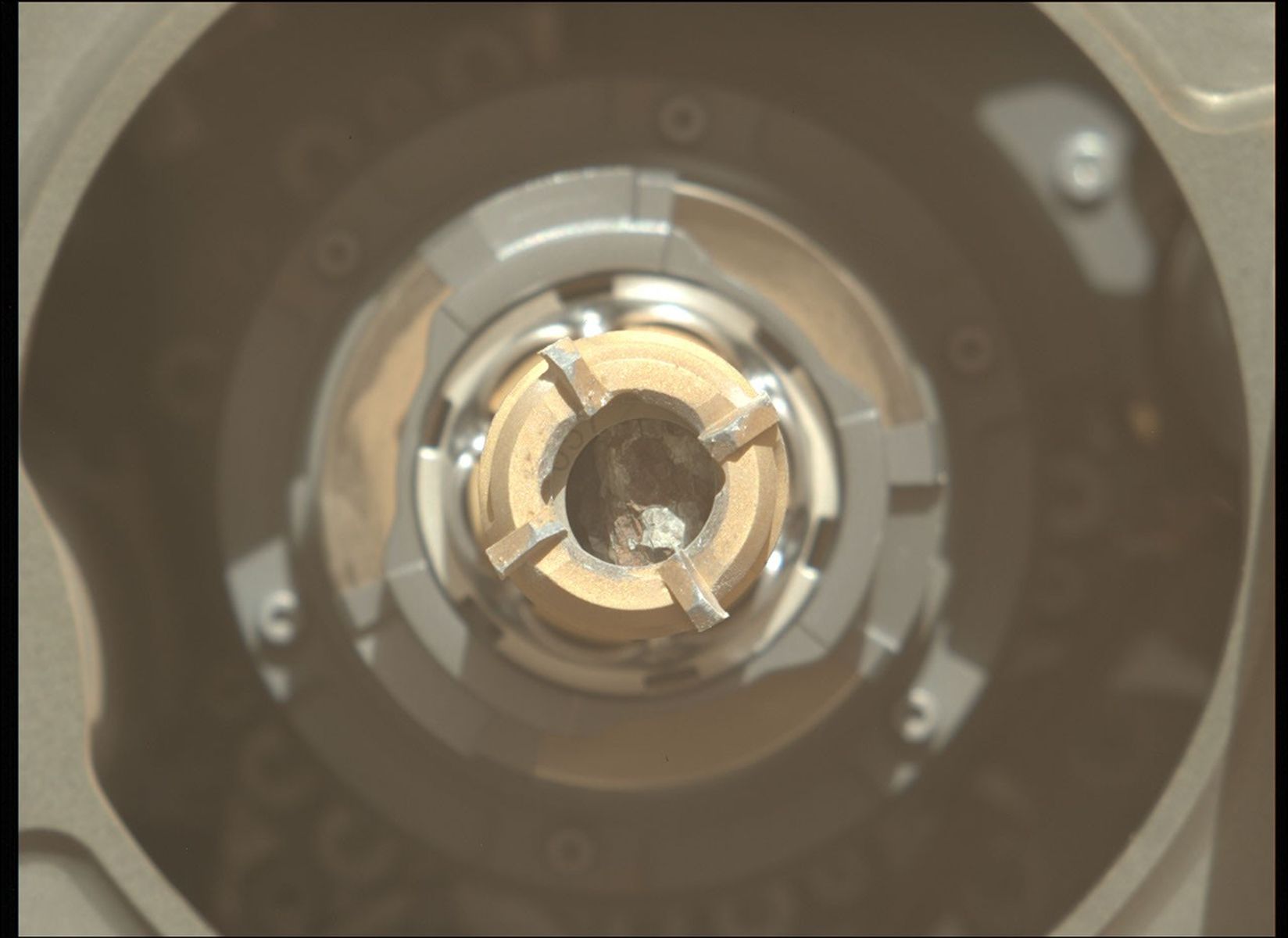
A drill bit pressed 3.1 centimeters into a pale Martian rock, giving NASA’s Perseverance rover its first sample in more than a year. The rock, named Singita, is the newest addition to the rover’s collection—and could be among its oldest.
The sample came after an earlier attempt showed how difficult some Martian rocks can be to core. Perseverance had abraded a rock called Badger Peak, but its hardness was too high for the rover to drill out a sample. Scientists still wanted a gabbro, a type of volcanic rock made mostly of calcium-rich feldspar and pyroxene crystals, for the collection. Gabbros can help researchers learn about the materials and processes that shaped the planet’s crust.
To find another candidate, the rover traveled about 100 meters, or 330 feet, to a different patch of light-toned rocks. The team compared images and chemical readings from the area and found a rock with a makeup similar to Badger Peak. The new abrasion, called Pumbe, also looked strikingly like the earlier one.
This time, the team adjusted its approach. It chose a neighboring rock with a flatter surface, giving the drill’s stabilizers a better place to press. The team also used a coring bit with less wear. Those choices helped the rover make progress: the drill reached about 3.1 centimeters, or 1.2 inches, into the rock. Perseverance then carried out the steps needed to collect the sample, naming it Singita.
Though Singita was gathered recently, its story may reach far back into Mars’ past. Its textures suggest the rock likely formed deep in the planet’s crust. Later, one or more large impacts may have changed it and brought it closer to the surface. Researchers can study the sample to investigate those events and the deep rocks that existed before them. The source does not give a precise age, so Singita’s place among the oldest samples remains a possibility rather than a confirmed date.
The collection effort also marks Perseverance’s 66th successful abrasion. Abrading means scraping a small patch of rock so scientists can inspect its surface and composition. The rover’s latest mission status report said it “remains healthy and stable on Mars” and listed its status as “Nominal.” In plain terms, Perseverance is operating normally and can keep exploring.
Singita turns a careful change in drilling strategy into a new chance to read Mars’ history. The sample will join the rover’s other discoveries as scientists continue examining the planet’s rocks. And with the rover in working condition, its team expects more abrasions—and more opportunities to find rocks worth bringing into its collection.