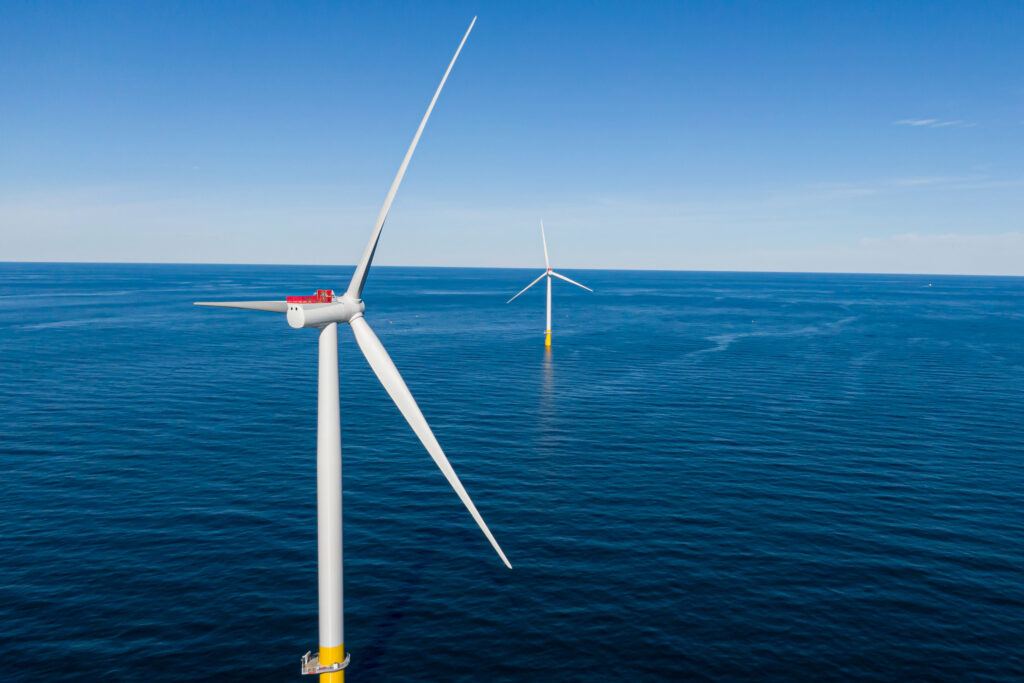
NextEra Energy, the nation's largest utility by market value, has agreed to merge with Dominion Energy and acquire ownership of the Coastal Virginia Offshore Wind project—a 2,640-megawatt facility that represents the largest offshore wind installation in the United States. The merger marks a significant moment for American offshore wind, even as the industry faces headwinds from the Trump administration's opposition.
The deal matters because it places offshore wind development in the hands of a company already dominant in renewable energy. NextEra is already the nation's leading developer of onshore renewables and battery storage. The combined company will have a larger market value than any U.S. energy company except ExxonMobil and Chevron. Yet the implications remain complicated: while NextEra's involvement could provide the expertise and financial resources the fledgling offshore wind industry desperately needs, analysts question whether even this powerhouse utility can meaningfully counter the administration's efforts to stall offshore development.
The Coastal Virginia Offshore Wind project itself has made measurable progress despite regulatory headwinds. Dominion has reduced the project's estimated cost from $11.5 billion to $11.4 billion and is on track to begin commercial operation by mid-2027 with 176 turbines. Fourteen turbines are already delivering test energy. NextEra CEO John W. Ketchum signaled his company's commitment to completing the project, saying "we feel like that project is online. And given the investment that's been made there, it's the right thing to do to finish it."
This promise of completion carries weight in a challenging landscape. The Trump administration has actively worked to slow offshore wind development through stop-work orders, permit delays, and even payments to leaseholders willing to abandon projects. The irony is sharp: in 2018, NextEra's then-CEO James Robo called offshore wind projects "terrible energy policy" because they were too expensive and slow to complete—a quote that opponents of offshore development have cited repeatedly. His successor's embrace of the Coastal Virginia project suggests either a genuine shift in NextEra's assessment or a pragmatic recognition that abandoning a well-advanced $11.4 billion investment would be indefensible.
The broader offshore wind landscape remains fragile. The United States currently has four operational projects generating 978 megawatts of capacity, plus four more under construction with a planned capacity of 5,089 megawatts. Revolution Wind, south of Martha's Vineyard, began delivering electricity from some turbines in March and should be fully operational this year. Empire Wind 1, south of Long Island and east of New Jersey, is expected to deliver its first electricity late this year. But dozens of other proposed projects—some with leases already awarded, others in pre-construction phases—face an uncertain future. Progress on these projects is nearly stalled, according to analysts, pending a change in political direction.
NextEra's acquisition also includes Dominion's 2024 purchase of an 800-megawatt lease in waters off the Carolinas, now being developed as CVOW-South. Whether this project moves forward depends largely on forces far beyond any single utility's control. NextEra's entry into offshore wind brings financial heft and operational expertise to an industry that sorely needs both. But expertise alone cannot overcome policy opposition. The company's role will ultimately be measured not by announcements, but by whether it can shepherd these projects to completion while the political winds remain decidedly unfavorable.