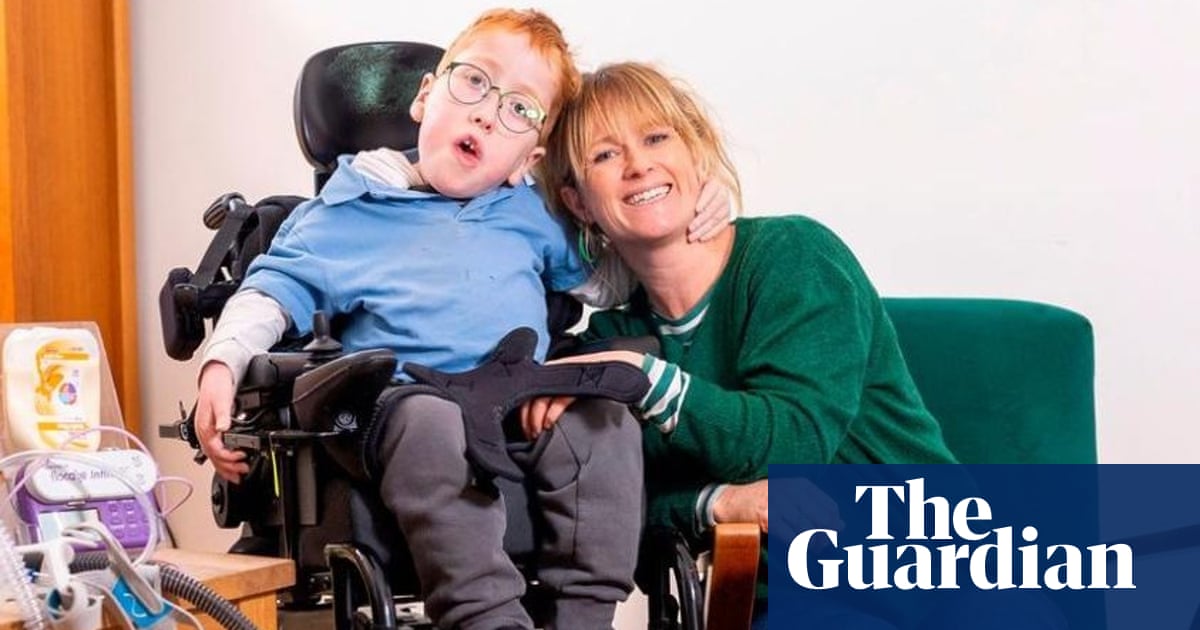
Ezra Thorman was five months old when he received his first injection of nusinersen, a drug that would fundamentally alter the trajectory of his short life. Born with spinal muscular atrophy type 1 — a diagnosis that typically carries a life expectancy of under two years — Ezra faced a future measured in months. Today, at nine years old, he attends primary school in Ramsgate, Kent, plays with friends, and remains home with a cold instead of cycling through intensive care units. His mother, Portia Thorman, calls the drug "literally a lifeline" for her son, and as of Thursday, hundreds of other children across England, Wales, and Northern Ireland will have access to that same possibility.
The National Institute for Health and Care Excellence has published final guidance recommending that any patient who would benefit can receive either nusinersen (Spinraza) or risdiplam (Evrysdi) through the NHS. This approval marks the end of years of uncertainty for families living with spinal muscular atrophy, a progressive genetic disorder that causes severe muscle weakness, affecting movement, breathing, and swallowing. Without treatment, the consequences are devastating — profound disability and sharply reduced life expectancy. Around 1,150 children under 18 with SMA live in England, with an estimated 70 babies born with the condition across the UK annually.
The two drugs work differently: nusinersen is administered as regular injections into the spinal fluid, while risdiplam is taken daily as a syrup or tablet at home. Both have been available in limited ways since 2019 and 2021 respectively, but remained beyond reach for many families. NHS England has now struck price agreements with manufacturers Biogen and Roche Pharmaceuticals to make them routinely available. Prof James Palmer, NHS England's national medical director for specialised services, captured the profound shift this represents: "For parents who faced the unimaginable pain of thinking their child would not reach their second birthday, they now have hope of seeing them walk to school and play with their friends, thanks to these lifechanging new therapies."
The evidence supporting this move is substantial. Helen Knight, Nice's director of medicines evaluation, notes that independent experts determined the drugs "offer substantial, life-changing benefits for many people with SMA," enabling people to live longer while maintaining independence, communication, and participation in everyday life. Importantly, these treatments also reduce the need for hospital care — a practical benefit that eases the burden on families managing a complex condition.
The momentum around SMA treatment has been building. Jesy Nelson, former member of Little Mix, disclosed in 2025 that her twin daughters have the condition, bringing high-profile attention to the disease and sparking campaigns for newborn screening. The NHS in England plans to launch an "in-service evaluation" of newborn screening in October, assessing whether SMA could become part of routine heel-prick blood tests. University of Oxford scientists are already evaluating the feasibility and costs of such screening.
For Giles Lomax, chief executive of SMA UK, this week's announcement feels historic. "After years of uncertainty, people can finally feel confident that these treatments will remain available on the NHS." Ezra's story — from a two-year prognosis to mainstream school and childhood friendships — stands as both proof of what these drugs can achieve and a reminder of how much hangs in the balance when access shifts from impossible to assured.