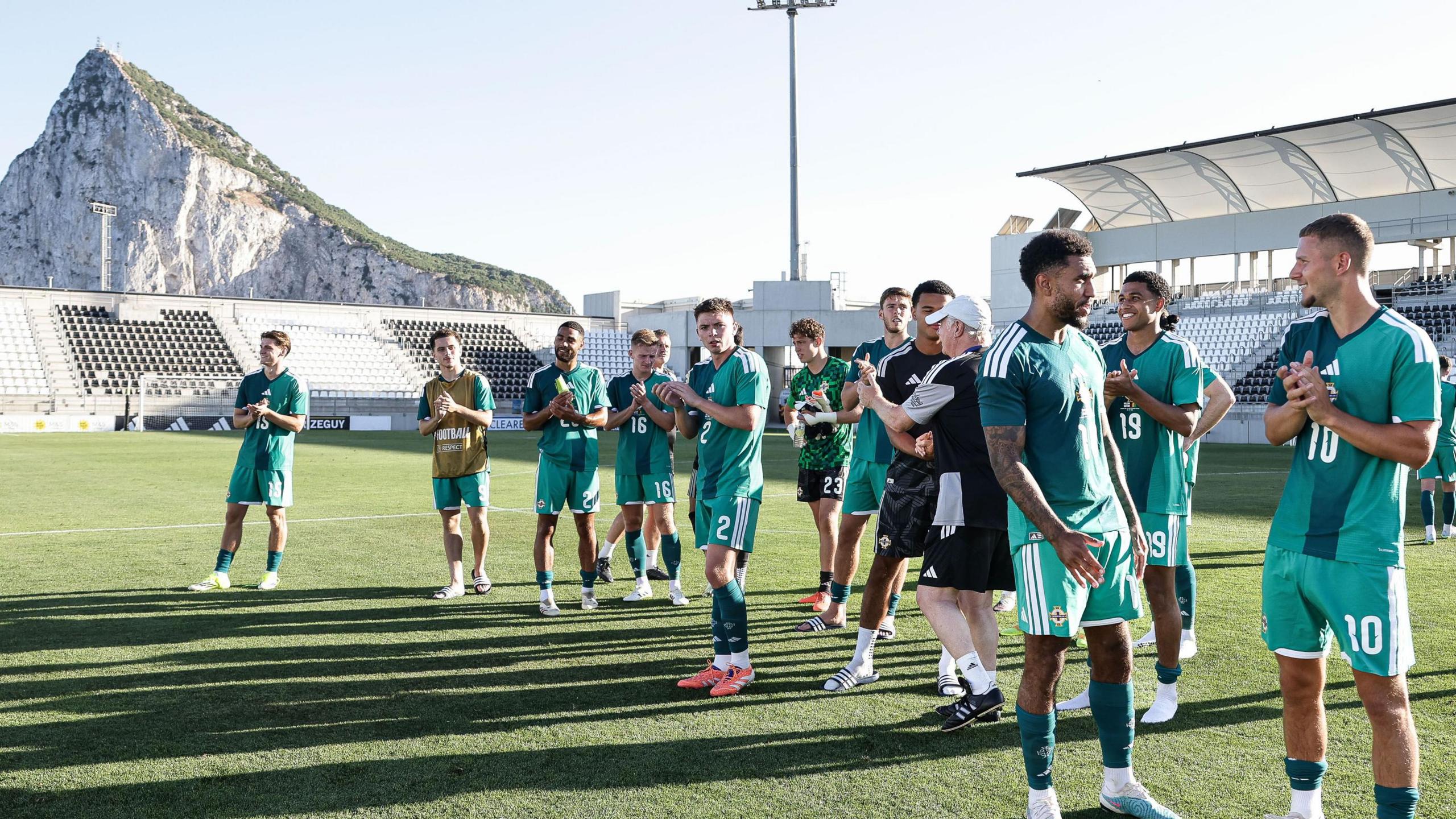
In the small Spanish enclave of La Linea, watched by just 300 fans beneath the shadow of the Rock of Gibraltar, Northern Ireland's record-breaking young squad proved they have steel beyond their years. Tom Atcheson, a 19-year-old from Blackburn Rovers, scored the decisive goal that carried his team to a 1-0 victory over Guinea—then was sent off, forcing Northern Ireland to defend for the final 25 minutes with only 10 men on the pitch. They held firm, securing a win that speaks volumes about manager Michael O'Neill's bold strategy of building a team around youth.
The squad that took the field in La Linea carried an average age of just 22.1 years, surpassing the record set by the Luxembourg match in November 2024 as Northern Ireland's youngest starting team since World War Two. Liverpool teenager Kieran Morrison earned his debut, while Arsenal's Ceadach O'Neill came off the bench in the second half for his first senior cap. Even the veterans felt young: at 28, Ciaron Brown and Paul Smyth were the oldest players on the pitch, nearly elderly in the eyes of their teammates.
What made this performance particularly striking was its familiarity. A year earlier, Northern Ireland had gritted out a 1-0 home victory against Iceland while also playing with 10 men after Brodie Spencer's red card. That win, dismissed at the time as fortunate, now looks like the first sign of a pattern—a team learning to compete not through experience but through character. Goalkeeper Pierce Charles, only 20 years old and just two caps into his international career at Southampton, demonstrated composure beyond his years, making a crucial save from Lass Kourouma's powerful drive in injury time to seal the result.
The investment in youth is paying tangible dividends. Players like Shea Charles, Isaac Price, Justin Devenny, and Trai Hume—who were teenage debuts themselves not long ago—are now seasoned internationals providing mentorship to the next wave. Devenny, at 22 with a Crystal Palace team fresh from Uefa Conference League success, spoke warmly of the newcomers. "There is some real quality coming through," he said. "They have been great in training all week and they totally deserve their chance. You could see their quality on the pitch—they have fitted in brilliantly."
Shea Charles, a Southampton midfielder with 35 caps despite being only 22, captured the moment with wry humor. "It's really good, I feel like one of the old ones now, which is a bit mad," he said. The group's confidence is palpable, built on the foundation that competitive matches against genuine opponents forge character faster than any training session. O'Neill, whose future is now secured after signing a new contract through 2032, has clearly articulated his belief that introducing players to senior international football young, even if there is "short-term pain," creates long-term resilience.
That philosophy will be tested again on Monday in Lille, where Northern Ireland face France in what may be their send-off game before a major tournament push. Having faced Germany, Italy, and Spain in recent months, O'Neill's squad has learned to play without fear against the world's elite. As Charles put it simply: "With the young team we have there's not much fear here. There's more excitement than nerves or fear." For a program rebuilding after missing the World Cup, that shift in mentality—forged in the thin air of youth and tested by grit in small stadiums like La Linea—may matter more than any single result.