Three institutions with deep roots in American energy innovation just joined forces to tackle a challenge that could reshape the nation's competitive edge: securing a domestic supply chain for critical minerals. The National Laboratory of the Rockies, Colorado School of Mines, and University of Utah signed memorandums of understanding this week that thread together research facilities, academic firepower, and industry partnerships to accelerate the transition from laboratory discovery to market-ready technology.
The partnership matters because critical minerals—the rare earths, lithium, cobalt, and other elements essential for batteries, solar panels, and advanced technologies—have become strategic bottlenecks. Most of America's supply comes from overseas, leaving energy systems vulnerable to geopolitical disruption. These three institutions are betting that by combining their unique capabilities, they can build the innovation pipelines and skilled workforce that American competitiveness demands.
The centerpiece is a pair of ambitious new facilities. NLR is completing the Energy Materials and Processing at Scale (EMAPS) facility on its South Table Mountain Campus in Golden, Colorado—a 60,000-square-foot complex of laboratories and high-bay spaces designed to take early-stage innovations and scale them into products ready for industry to manufacture. Meanwhile, Colorado School of Mines acquired a 50,000-square-foot Critical Minerals Innovation and Commercialization Hub that spans the entire value chain, from mining and processing through recycling and workforce training.
"These integrated capabilities, along with a world-class student pipeline and partnership with U.S. industry, will help transform our nation's competitiveness in critical minerals research, workforce development, and technology demonstration," said Jud Virden, NLR Director, whose laboratory is steered by the Department of Energy's Office of Critical Minerals and Energy Innovation. The partnership builds on a relationship between NLR and Colorado School of Mines that stretches back to 1974, creating continuity across nearly five decades of energy research.
The collaboration goes beyond bricks and mortar. NLR and Colorado School of Mines will share facilities and data, coordinate student and researcher exchanges, and coordinate funding applications that span research through commercialization. The University of Utah brings a different strength: artificial intelligence and high-performance computing applied to materials science. Joint research programs will link university researchers, industry engineers, and national laboratory scientists—dissolving the silos that often slow innovation.
Colorado School of Mines President Paul C. Johnson framed the partnership as crystallizing his institution's distinctive strength: "Our ability to bring together applied research, industry and government partnerships, and workforce development in ways that move technologies from concept to impact." The three institutions are essentially building a pipeline for the next generation—students who will design the supply chains, run the facilities, and launch the companies that the nation will depend on.
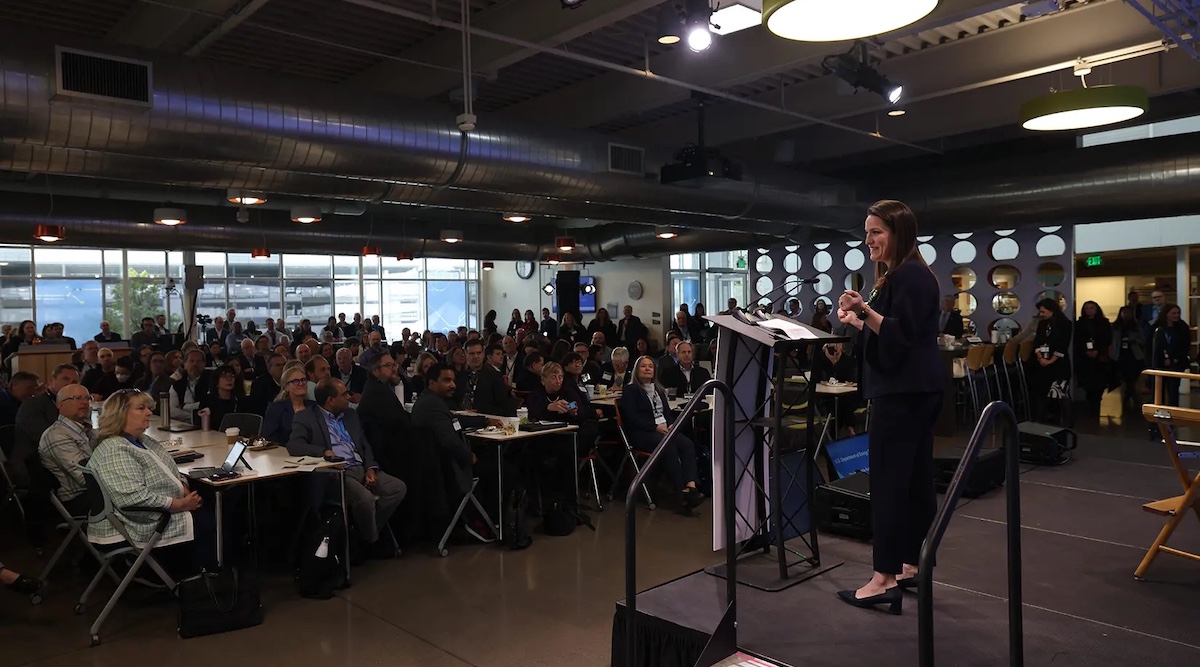
The announcement arrived as NLR convened its annual Partner Forum in Golden to address a specific challenge: how to build resilient, end-to-end critical mineral supply chains for energy systems. That forum, which brings together startups, established companies, and academics, signals a shift in how innovation in this sector happens—not behind closed laboratory doors but through partnerships that move knowledge and people between industry and institutions.
For a nation seeking to secure its clean energy future and reduce dependence on foreign suppliers, that kind of integration—facilities talking to facilities, students flowing between institutions, research flowing into products—may be the difference between strategic vulnerability and competitive advantage.