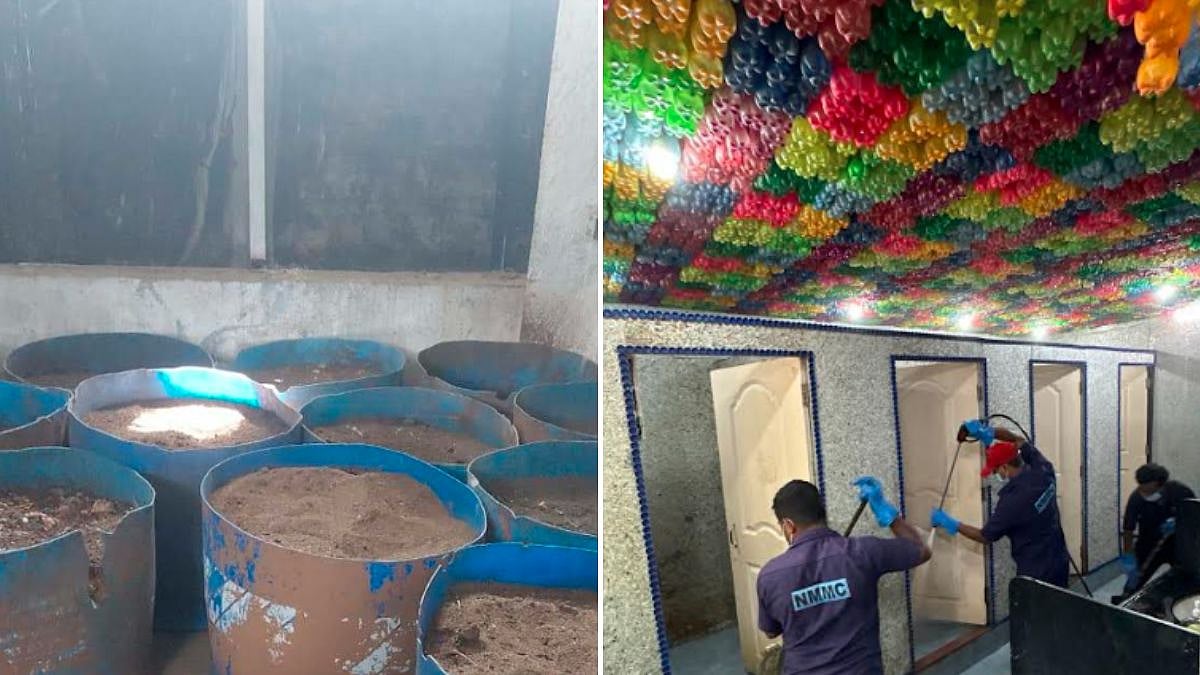
On a warm June morning in Sector 5 of Sanpada, teams in bright green vests scrubbed grime from public toilet floors while others knocked on apartment doors in Koparkhairane, carrying color-coded bins as teaching tools. This is Navi Mumbai in motion — not just cleaning up, but reimagining how a city lives with its waste. The Navi Mumbai Municipal Corporation (NMMC) has launched a 16-day intensive cleanliness drive from June 15 to June 30, part of the national Swachh Survekshan 2025–26 initiative, targeting some of the city’s most overlooked spaces: railway stations, slum pockets, gaothans, creek shores, and the back lanes where garbage often piles unseen. But this isn’t just about picking up trash — it’s about changing habits, one household at a time.
India’s urban centers generate over 140,000 metric tonnes of waste daily, and how cities manage it defines their livability. NMMC’s campaign cuts deep into this challenge by promoting four-way waste segregation — wet, dry, domestic hazardous, and sanitary waste — in line with the updated Solid Waste Management Rules, 2026. The goal is to stop mixed waste from reaching landfills and instead build a culture of responsibility at the source. Large housing societies and institutions are being pushed to process waste on-site, reducing transport burden and unlocking compost and recyclables.
Awareness isn’t an afterthought — it’s woven into the drive’s fabric. Across all eight wards, NGOs AG Enviro and Parisar Sakhi are leading door-to-door campaigns, educating residents and commercial units alike. In Airoli, teams visited Gavate Wadi, Mindspace, and Chinchpada, while in Digha, Green World Society received guidance on maintaining its composting units. Even bulk waste generators — hospitals, malls, and large offices — are being coached to run scientific waste processing systems, turning liabilities into resources.
Public toilets in Sanpada, CBD Belapur, Agroli, and Koparkhairane have undergone deep cleaning, paired with hygiene outreach to ensure they stay clean. These spaces, often neglected, are now focal points of dignity and public health. Under the leadership of Municipal Commissioner Dr. Kailas Shinde, with Additional Commissioner Sunil Pawar and Deputy Commissioner (Solid Waste Management) Dr. Ajay Gadde steering operations, the campaign blends enforcement with empathy.
The real victory won’t be measured in just cleaner streets — though that matters — but in how many families now separate their banana peels from plastic wrappers, how many societies compost, and how many citizens see waste not as waste, but as a starting point. As the city prepares for Swachh Survekshan rankings, the deeper ambition is clear: to build a Navi Mumbai where cleanliness isn’t a sprint, but a way of life.