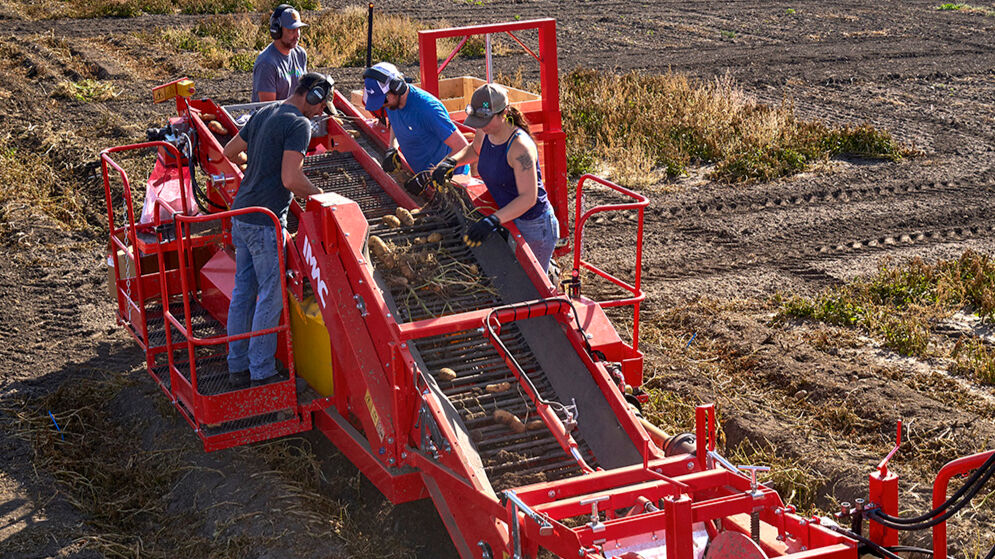
Taylor Doyle remembers the first time she saw the truck pull up to Interfaith Food Bank in Lethbridge, loaded with 14,000 pounds of fresh potatoes from Farming Smarter. That was just one delivery. Over two years, the agricultural research group has donated 28,000 pounds of potatoes — and this year’s harvest could nearly double that total to 50,000 pounds.
This isn’t charity from surplus. These are research potatoes, grown to test which varieties and fertilizers work best in southern Alberta’s soil. Once scientists gather their data, instead of tossing them, Farming Smarter sends them to people who need them most. “We’re so glad they choose to give them back to those in need in the community,” Doyle said. “We certainly wouldn’t want to see that quantity of potatoes going to waste.”
Potatoes may seem simple, but they’re a lifeline. Packed with vitamins, fibre, and energy, they fill stomachs and can be boiled, roasted, mashed, or turned into soups and stews. For the 950 food hampers Interfaith distributes each month — serving about 2,500 people — these donations mean more than just meals. They mean dignity, nutrition, and hope.
And the help goes beyond the hampers. Interfaith runs the Chinook Country Kitchen, where people learn to cook healthy meals from scratch. They also operate a resource room that connects clients with housing, employment, and mental health services. Altogether, nearly 3,000 individuals count on Interfaith each month for support.
Farming Smarter’s work does two things at once: it builds better farming knowledge for Alberta’s future and feeds people today. Their research helps local farmers grow more resilient, productive crops without relying on data from distant regions. At the same time, their generosity feeds families who might otherwise go hungry.
The next big delivery comes at harvest’s end, when the fields are cleared and the data is in. But the impact lasts much longer. Every potato passed from field to food bank is a quiet act of community — science serving society in the most human way possible. As Doyle put it, “It’s more nutritious meals on our tables across our community.”