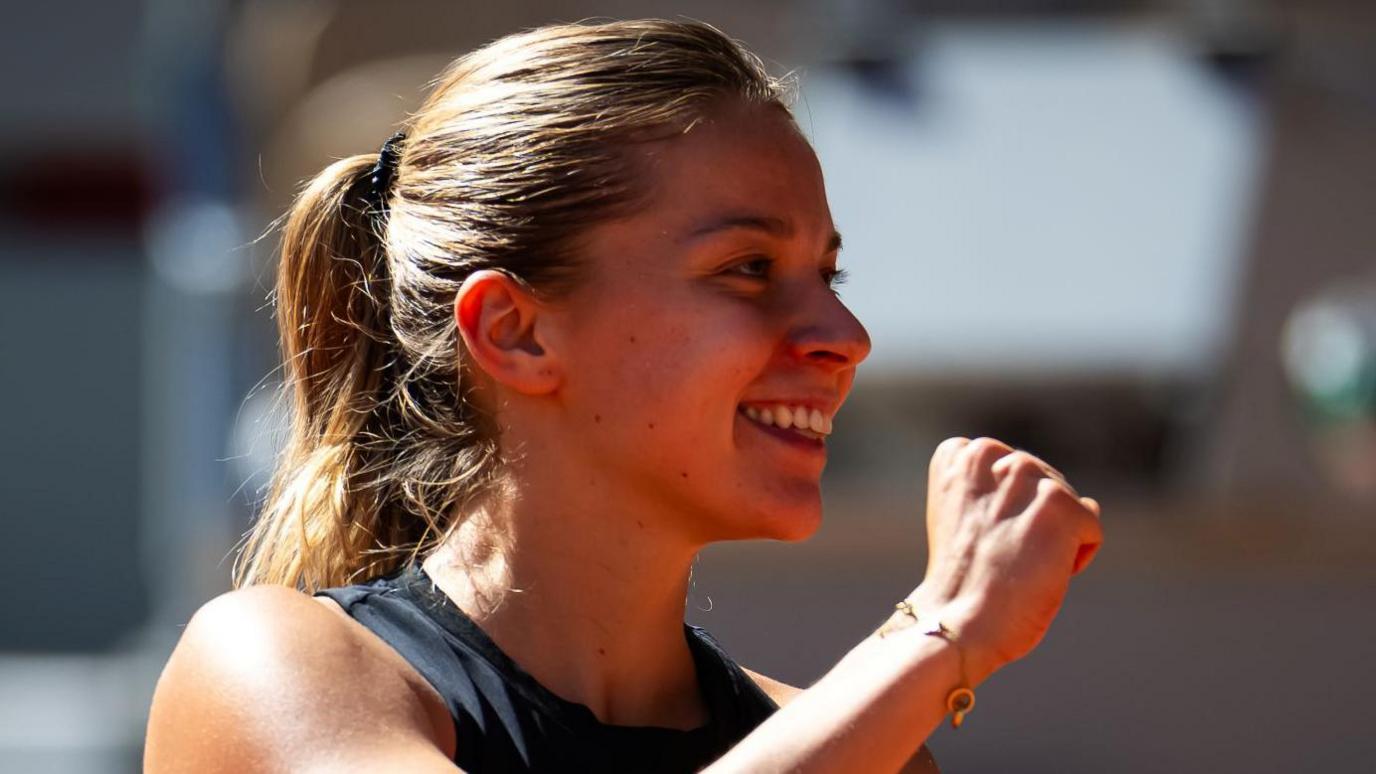
Poland's Maja Chwalinska shook her head in disbelief as she walked off Court Philippe Chatrier, having just dismantled French player Diane Parry 6-3, 6-2 to reach the French Open quarter-finals. For a 24-year-old ranked 114th in the world who entered Roland Garros through three qualifying rounds, the moment felt almost impossible—and yet, as she stood there on one of tennis's most hallowed courts, it was undeniably real.
Chwalinska's run represents something increasingly rare in professional tennis: a qualifier breaking through to tennis's highest stages. She is the first woman to reach the French Open quarter-finals as a qualifier in six years, since Nadia Podoroska achieved the feat in 2020. But her journey is about far more than rankings or seedings. Two weeks ago, before qualifying even began, the world barely knew her name. "Nobody knows me, to be honest," she said with a shrug after her victory. Now, seven matches into Roland Garros—winning all of them, six in straight sets—she has become impossible to ignore.
The path that brought Chwalinska to this moment is not a typical tennis narrative. Before this tournament, the Polish player had won only two tour-level main-draw matches on clay in her entire career. Her record at Grand Slams was nearly non-existent: just a single win at Wimbledon in 2022 across her only two previous Slam appearances. Nothing in her résumé suggested she belonged among the world's elite. She had taken a break from tennis in 2021, struggling with depression and questioning whether she would ever return to the sport at all. Yet she did return, quietly grinding away in lower tiers, waiting for her opportunity.
What she has accomplished in Paris over the past two weeks suggests a player who has been underestimated by nearly everyone—perhaps because her credentials genuinely did not warrant much attention before now. Seven consecutive wins, including victories over players seeded far higher than her ranking. The projections are already shifting: she is on course to break into the world's top 50 after this tournament. More importantly, she has proven she can compete with and defeat players most ranked-observers would have considered her superiors.
Next, Chwalinska faces 22nd seed Anna Kalinskaya, a player who has earned her seeding through years of consistent performance at the sport's highest level. Kalinskaya, 27, just edged Anastasia Potapova 6-4, 2-6, 7-6 (10-7) in a two-hour-and-49-minute battle that required a deciding-set super tie-break. The Russian has reached only her second major quarter-final. The contrast between the two players could hardly be sharper: one an established seed with a lengthy Grand Slam record, the other an unheralded newcomer who did not even have a guaranteed spot in the draw.
Chwalinska is acutely aware of the challenge. "She is one of the top players in the world," she acknowledged. "So definitely, a very challenging one again—like every match here. I need to play my best tennis to win." If she prevails, she would become only the second qualifier in the Open era to reach the French Open women's semi-finals. Podoroska remains the only other to achieve it, in 2020. The odds remain steep. But for a player who once questioned whether she would ever play tennis again, reaching a quarter-final seemed impossible too.