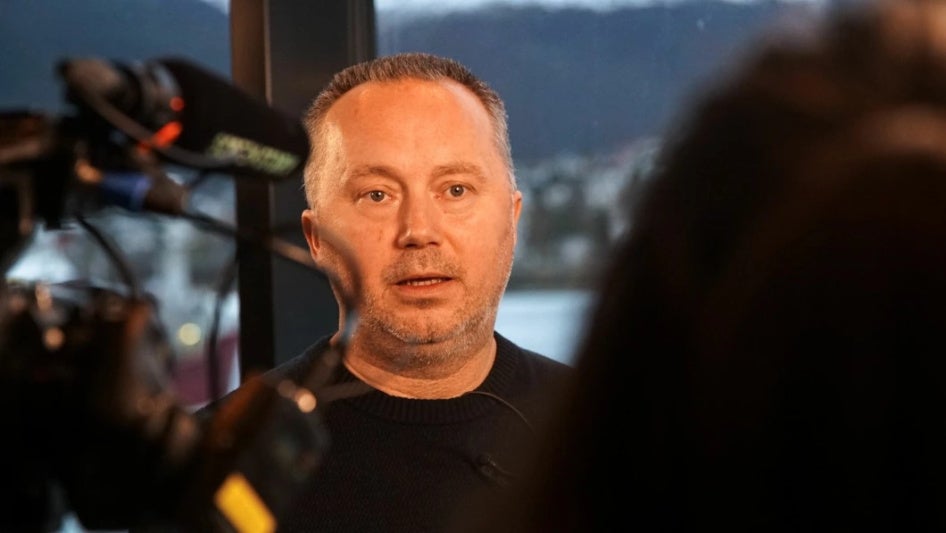
On May 15, 2026, a Norwegian appeals court delivered a landmark ruling: Tommy Olsen, founder of the human rights group Aegean Boat Report, would not be extradited to Greece to face charges widely regarded as retaliation for his activism. The Hålogaland Court of Appeal's unanimous decision marks a critical moment for defenders of freedom of expression in Europe—and a stark warning to governments that weaponizing the law against dissidents has limits.
Olsen's case began when Greek authorities targeted him in 2023 with charges stemming from his work documenting illegal pushbacks of asylum seekers and migrants at Greece's borders. A Norwegian district court initially approved Greece's extradition request in March 2026, but Olsen appealed. What followed was a careful legal reckoning: the appellate court examined the charges against him and concluded that the acts described by Greek authorities do not constitute criminal offenses under Norwegian law. More fundamentally, the court recognized that extraditing Olsen would violate his right to freedom of expression, protected under article 10 of the European Convention on Human Rights. The court found his actions to be lawful conduct shielded by international treaties binding both Norway and Greece.
This protection matters because Olsen is not alone. He faces prosecution alongside Panayote Dimitras, a Greek human rights defender with the Greek Helsinki Monitor, for similar work documenting border practices and aiding vulnerable migrants. Their case is part of a disturbing pattern. In January 2026, a Greek court in Lesbos acquitted 24 humanitarian workers of felony charges after a seven-year legal ordeal that left some detained for their peaceful activism—a mass prosecution the European Parliament called the "largest case of criminalization of solidarity in Europe." Greek authorities have recently passed legislation that makes it easier to criminalize civil society organizations involved in supporting migrants and asylum seekers, further tightening the space for human rights work.
The United Nations Special Rapporteur on the situation of human rights defenders, Mary Lawlor, called the charges against Olsen "in direct retaliation" for his advocacy and part of "a long-standing and well-documented repression" of rights defenders in Greece. Eva Cossé, senior Europe researcher at Human Rights Watch, framed the Norwegian court's decision as "a direct rebuff to Greece's attempt to export its crackdown on dissent."
Yet the threat to Olsen has not fully receded. As long as Greece's European Arrest Warrant remains in force, he faces the risk of arrest and extradition if he travels anywhere in the European Union or associated states. Extraditions under such warrants are largely automatic across EU member states—and Norway, though not an EU member, follows similar procedures. The Court of Justice of the European Union has ruled that they can be delayed or halted on human rights grounds, as Norway's courts have done, but only if individual states act as Norway did. Cossé urged Greece to revoke the warrant entirely and called on other nations to respond similarly if Olsen's case reaches them.
The Norwegian court's reasoning suggests a path forward: that defending migrants' rights, documenting state abuses, and advocating for vulnerable populations are not crimes but protected speech. Whether Greece listens remains an open question.