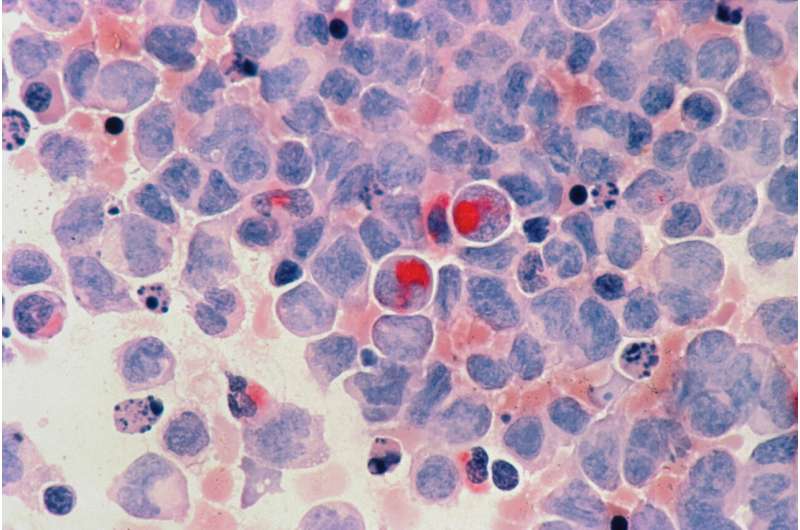
In a Houston laboratory, something remarkable is happening for people with a type of blood cancer called B-cell acute lymphoblastic leukemia, or B-cell ALL. Researchers at MD Anderson Cancer Center have discovered that a targeted drug called inotuzumab ozogamicin can wipe out the tiny traces of cancer that sometimes remain after initial treatment — and it's working in a striking majority of patients.
B-cell ALL is a cancer that starts in white blood cells called B cells. When patients finish their first round of treatment, doctors look for something called measurable residual disease, or MRD — essentially, any leftover cancer cells that are too small to see with regular tests. Finding MRD is a warning sign, because it often means the cancer could come back.
In a clinical trial with 37 adult patients, 70 percent — that's more than 2 out of every 3 people — had no detectable MRD after treatment with inotuzumab ozogamicin. The drug is what's called an antibody-drug conjugate, which is a technical way of saying it's a guided missile: it uses an antibody (a kind of immune protein) to find cancer cells and deliver a powerful cancer-killing drug directly to them, like a courier dropping off medicine right at the doorstep of the problem.
The results, published in the journal Blood Cancer Journal, showed impressive staying power. Patients who responded to the treatment went an average of 40 months without the cancer returning — and their median survival, meaning the point where half lived longer and half lived less, reached 61 months. The treatment worked well for both types of the disease the researchers tested: Philadelphia chromosome-positive and Philadelphia chromosome-negative.
"These results show that inotuzumab is highly effective at clearing residual disease in patients already in remission, with durable responses and encouraging survival," said Dr. Elias Jabbour, a professor of leukemia at MD Anderson who led the study.
One of the most hopeful parts of the findings is what this could mean for patients' next steps. When MRD is cleared, patients may become eligible for other powerful treatments like stem cell transplants or CAR T-cell therapy in a safer, lower-disease state — giving them more options down the road.
The side effects were manageable, which matters for patients weighing treatment decisions.
"This approach has the potential to deepen remissions and change how we manage patients at high risk of relapse," Jabbour said.
For people fighting B-cell ALL, this research offers real reason for optimism — a targeted treatment that doesn't just slow cancer down, but gives patients a better shot at staying cancer-free.