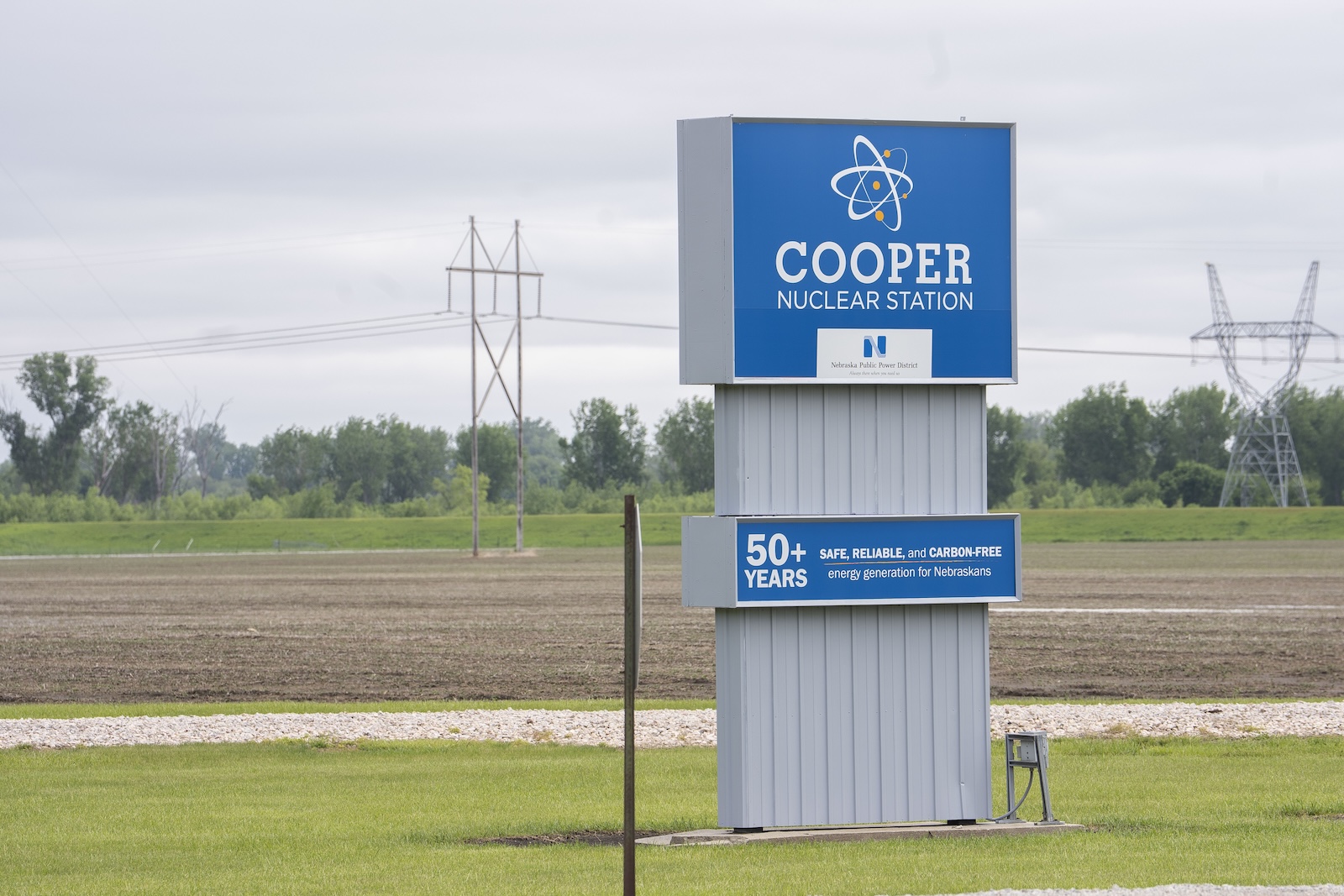
In September 2020, Larry Allder stood in an overflowing Gage County courthouse and watched his community embrace one of the most contentious energy debates in modern Nebraska history—the battle against wind turbines. Six years later, he's singing a very different tune. When the Nebraska Public Power District announced four potential sites for a new nuclear power plant last month, with Gage County among them, Allder didn't hesitate: "I think that's a great idea. I like nuclear energy. I think it's the way of the future."
His reversal captures a quieter but significant shift happening across rural America. While wind and solar projects have sparked fierce local resistance—residents calling turbines "ugly," questioning their efficiency, complaining about land use—nuclear development is meeting a strikingly different reception. Across the four communities NPPD identified as potential hosts—Beatrice, Sutherland, Norfolk, and Brownville—local leaders report broad openness to nuclear expansion. Beatrice Mayor Bob Morgan said his community is "excited" to be in the top four. Madison County Commissioner Troy Uhlir described the general consensus in his area as "supportive of nuclear energy," even as some voices raised safety questions.
This receptiveness reflects a broader national realignment around nuclear power. Lawmakers from both parties now embrace it, as do everyday Americans increasingly viewing it as a climate solution—a source of large-scale electricity generation that produces zero greenhouse gas emissions. The momentum is tangible. NPPD CEO Tom Kent recently told Grist what he found "pleasing and reinforcing": genuine community interest in hosting nuclear development. "Those communities are really interested," he said, "and Nebraska has always been a state that's been very supportive of nuclear power."
What's driving this change in perception? Partly, it's technological promise. The next generation of nuclear plants aims to address the industry's historic vulnerabilities—astronomical costs, construction delays stretching years, and lingering safety anxieties. Small modular reactors, or SMRs, represent the frontier. Joseph Giitter, a former senior executive at the Nuclear Regulatory Commission, noted these advanced reactors could operate flexibly, ramping output up or down to complement renewable energy sources while generating abundant baseload power. The latest innovations have attracted massive private investment from tech companies and investors betting nuclear can help meet surging electricity demand from data centers and artificial intelligence systems.
Early projects are already underway in Tennessee, Wyoming, and Washington, demonstrating that these designs are moving from theoretical to concrete. Yet Nebraska remains about a decade away from its first new nuclear plant, which is precisely why NPPD is preparing now. The utility recently secured over $27 million in cost-shared funding from the Department of Energy to apply for a federal permit required to site a new reactor. Kent emphasized the urgency: "When nuclear takes off, it's going to take off quick. So we want to be ready to be in that first set of fast follower orders, right? Or we'll miss the middle of the next decade."
NPPD is weighing designs similar to the small reactors being tested elsewhere, though it remains open to large-scale reactors as well. The utility's cost-share funding covers less than half of the total application expenses, reflecting the magnitude of work ahead. Still, with communities willing and technological momentum building, Nebraska may be positioning itself at the forefront of nuclear's American renaissance—all while the wind turbines that once dominated local debates fade quietly into the background.