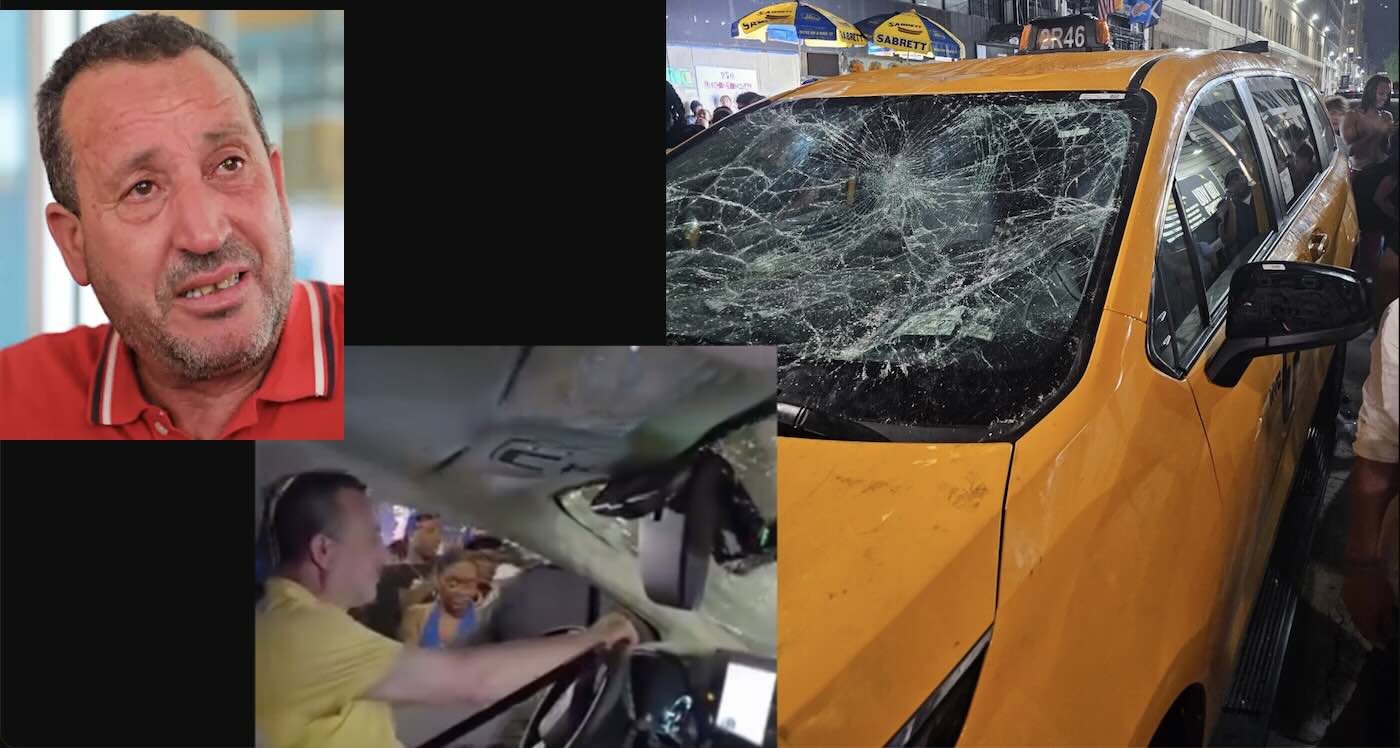
Bitat Noureddine was just trying to get home after a shift when the roar of the crowd swallowed his cab whole—windows smashed, body crushed under jumping fans, and for a terrifying moment, his own safety hanging by a thread. It was June 2024, and New York City had erupted in celebration after the Knicks claimed their first NBA championship in 53 years. But for Noureddine, a dedicated member of the New York Taxi Workers Alliance, the night turned into a nightmare when he was dragged from his yellow cab by a frenzied mob, assaulted, and forced to watch as his livelihood was destroyed beneath a wave of euphoric chaos.
The video of the attack spread like wildfire—viewed over 6 million times on X—drawing outrage and heartbreak in equal measure. Among those who saw it was rapper French Montana, whose own roots in New York run deep. "If someone can find this man, I want to help," he wrote in a now-viral comment. That message reached Zachery Dereniowski at the New York Taxi Workers Alliance, who quickly connected with French to launch a GoFundMe campaign to rebuild what was lost.
"Recently, during celebrations following a New York Knicks finals win, Noureddine’s life was turned upside down," the campaign read. "His cab was vandalized, and he was reportedly assaulted and dragged from his vehicle by a crowd. In a matter of moments, the vehicle he was driving was severely damaged, leaving him facing an incredibly difficult situation."
The response was overwhelming. In just days, more than 2,000 donors—strangers moved by injustice and inspired by solidarity—poured in $76,000 to help Noureddine replace his cab, cover medical expenses, and regain his footing. The fund far surpassed its original goal, becoming one of the most shared acts of community support in recent months.
This wasn’t just about a car. For Noureddine, like thousands of immigrant taxi drivers in New York, the cab is more than a vehicle—it’s a lifeline, a symbol of hard-earned independence, and often, the engine of an entire family’s survival. The attack threatened all of that. But the outpouring that followed proved something deeper: that even in moments of collective recklessness, compassion can organize faster than chaos.
As Noureddine begins to rebuild, his story has become a quiet rallying cry—for accountability, for empathy, and for the kind of neighborly courage that doesn’t wait for permission to act. In a city that never sleeps, it turns out, neither does its conscience.