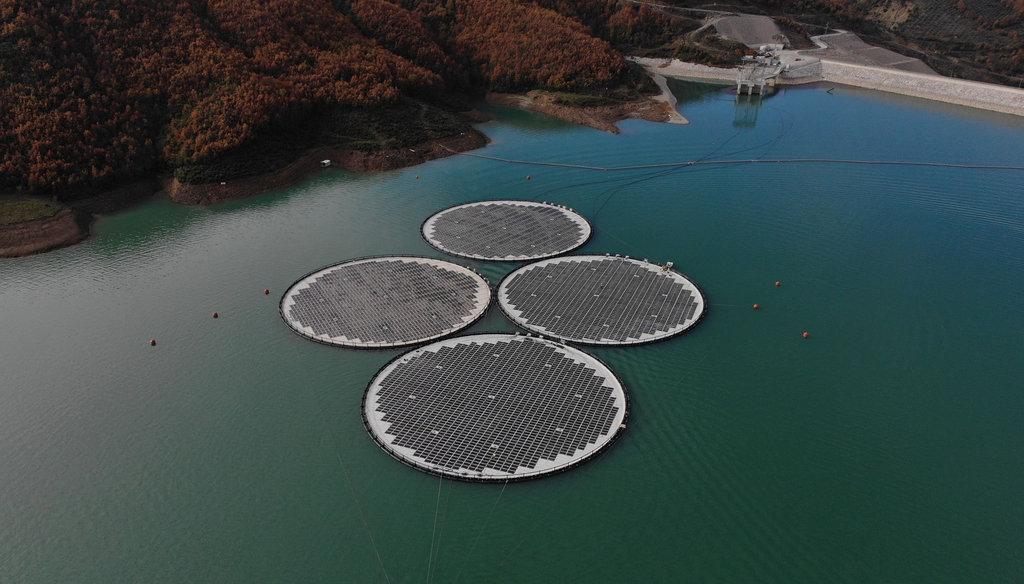
When the sun rises over Tazacorte port on the volcanic island of La Palma, it now glints off a new kind of hope: a 310 kWp floating solar array stretching across the harbor’s calm waters, quietly powering a future where clean energy and clean water go hand in hand. This is Ocean Sun’s latest innovation—a floating photovoltaic (FPV) demonstrator funded with €193,000 from the European Union and embedded within the larger €13.5 million Isla Bonita project, part of Horizon Europe’s ambitious “Restore our Ocean and Waters” mission. Designed to thrive in exposed coastal conditions, this installation isn’t just generating electricity—it’s pioneering a model for island resilience.
For regions like the Canary Islands, where freshwater is scarce and energy prices are high due to reliance on imported fossil fuels, solutions that merge renewable power with water production are transformative. The Tazacorte site pairs Ocean Sun’s advanced floating solar technology with desalination systems, creating a closed-loop approach to sustainability. The Norwegian company, known for its robust FPV designs, is also integrating automated panel cleaning and rainwater harvesting—features critical for maintaining efficiency in salty, sun-drenched environments. These upgrades build on lessons from the earlier BOOST project, refining floating solar for real-world challenges faced by coastal and island communities.
The broader Isla Bonita initiative, coordinated by the Oceanic Platform of the Canary Islands (Plocan), unites research institutions, industry leaders, and public authorities across Europe to test and scale ocean-based climate solutions. La Palma’s demonstrator serves as a living laboratory, validating how renewable energy can directly support essential services like water supply. With water scarcity affecting over 100 million Europeans and island grids often operating at higher costs and lower reliability, this integration offers a replicable blueprint—from the Azores to the Aegean.
What makes the Tazacorte project especially promising is its scalability. Floating solar avoids land-use conflicts, a key advantage on terrain-limited islands, while directly powering energy-intensive desalination with zero emissions. Early estimates suggest such systems could reduce desalination costs by up to 30% where solar irradiance is high. As climate change intensifies droughts and sea-level rise, the fusion of ocean-based energy and water infrastructure is no longer just innovative—it’s necessary.
By 2030, the Isla Bonita project aims to have multiple demonstrators operational across Europe’s island regions, each adapting the core model to local needs. The ripple effect could be profound: cleaner grids, secure water supplies, and stronger community resilience. In Tazacorte, the water may still come from the sea, but the power to transform it now comes from the sun—floating, fearless, and forward-looking.