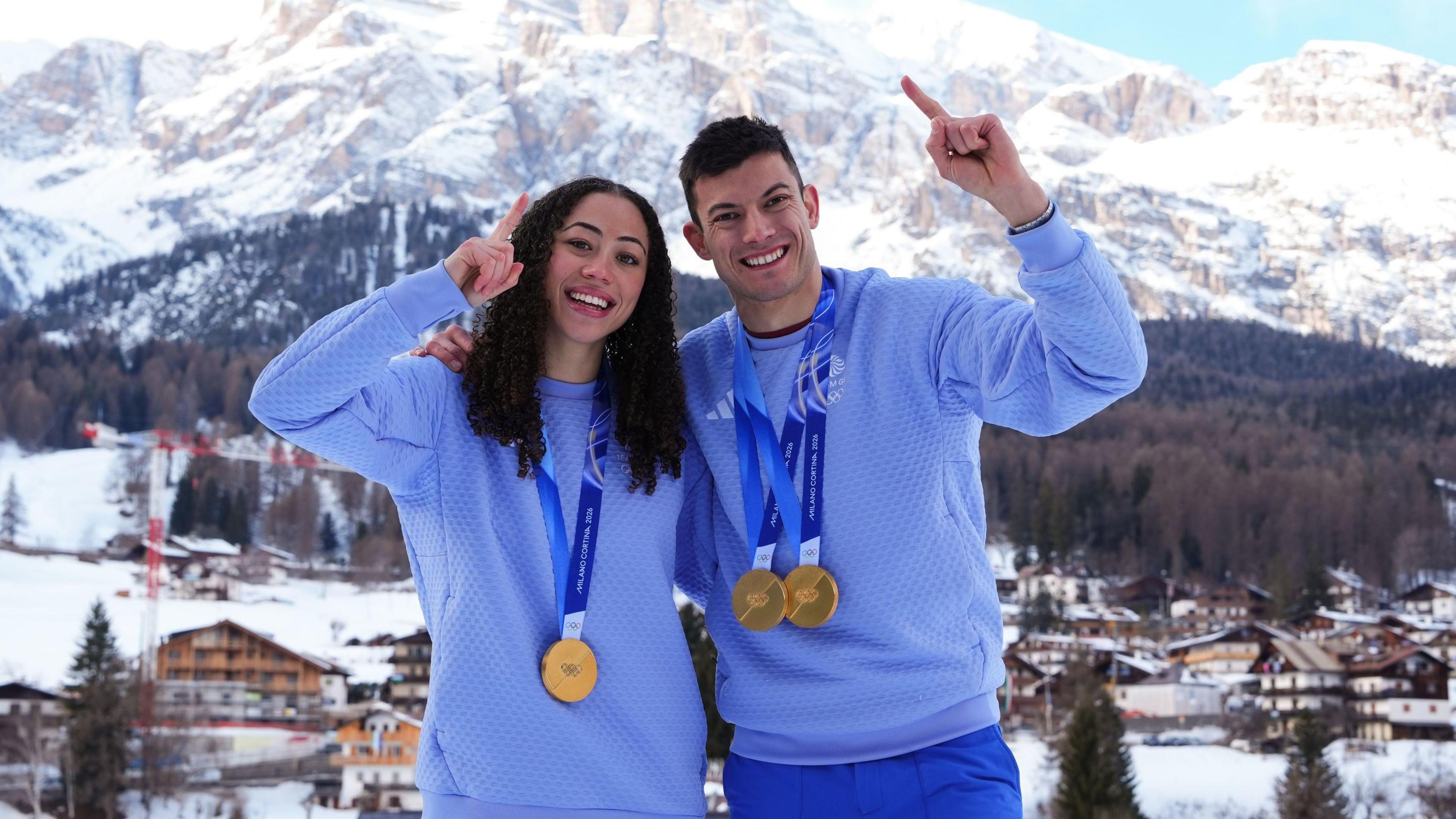
When Matt Weston crossed the finish line to become the first British man to win skeleton gold at the Winter Olympics, he had no idea he was about to unlock something far larger than his own medals. Within weeks, the sport had transformed from a niche winter pursuit into a national phenomenon — more than 7,000 people signed up for a talent identification campaign launched by the British Bobsleigh and Skeleton Association in the months during and after the Games, a surge of interest that has never been seen before in Great Britain.
For Weston and his teammate Tabitha Stoecker, who won three gold medals between them in skeleton and the team event, the numbers tell a striking story. On the two days alone when Weston and Stoecker claimed victory, around 2,400 people signed up to pursue the sport — 1,200 each day. That volume matters especially for a country that doesn't even have an ice track for athletes to train on, forcing the sport to operate with significant logistical constraints. Yet the momentum is undeniable: testing sessions have already begun with around 1,600 of the 7,000 applicants invited to participate, far exceeding the BBSA's pre-Games target of 1,000 applications total.
What makes this moment remarkable is how it traces back to two very different paths to skeleton. Weston, now 29, came to the sport via a UK Sport campaign called "Discover Your Gold" after his weightlifting coach advised him to apply. He first started in skeleton in 2017 and has since become a three-time World Cup champion, European champion, and two-time world champion. Stoecker, 26, stumbled upon the sport even more unexpectedly — she saw an Instagram advert about the campaign while working as a circus performer and applied. She only began competing internationally in 2021, making Milano-Cortina her first Games ever. Together, they've become proof that talent spotting works, but more importantly, they've become visible role models for people who never imagined winter sports were a path for them.
"If you can see it, you can believe it," Stoecker told BBC Sport. "It opens a door for people to know that there's this path out there for them to go and do this amazing, exciting winter sport that you don't really get to see that much in the UK." She brings a particular perspective to that message — raised in central London, she had no mountains, no winter sports culture surrounding her. Now she hopes others from similar backgrounds will see themselves in her position and take that first step.
Weston, who has won two gold medals in a single Winter Olympics — a first for British athletes — has barely had time to absorb what he's accomplished. He underwent shoulder surgery after the Games, having competed while managing an injury he'd been carrying for eighteen months. Yet even as he navigates recovery and new media commitments, his mind has already shifted forward. He's thinking about 2030 and 2034, about the new talent coming through, and about the competition that will push him further.
Skeleton's long history in Britain — 11 medals accumulated through athletes like Amy Williams, Lizzy Yarnold, Laura Deas, and Dominic Parsons — has finally converged with a moment of genuine breakthrough. For the first time, the sport isn't just celebrated every four years. It's being chosen, explored, and embraced by thousands of ordinary people who've suddenly discovered it exists.