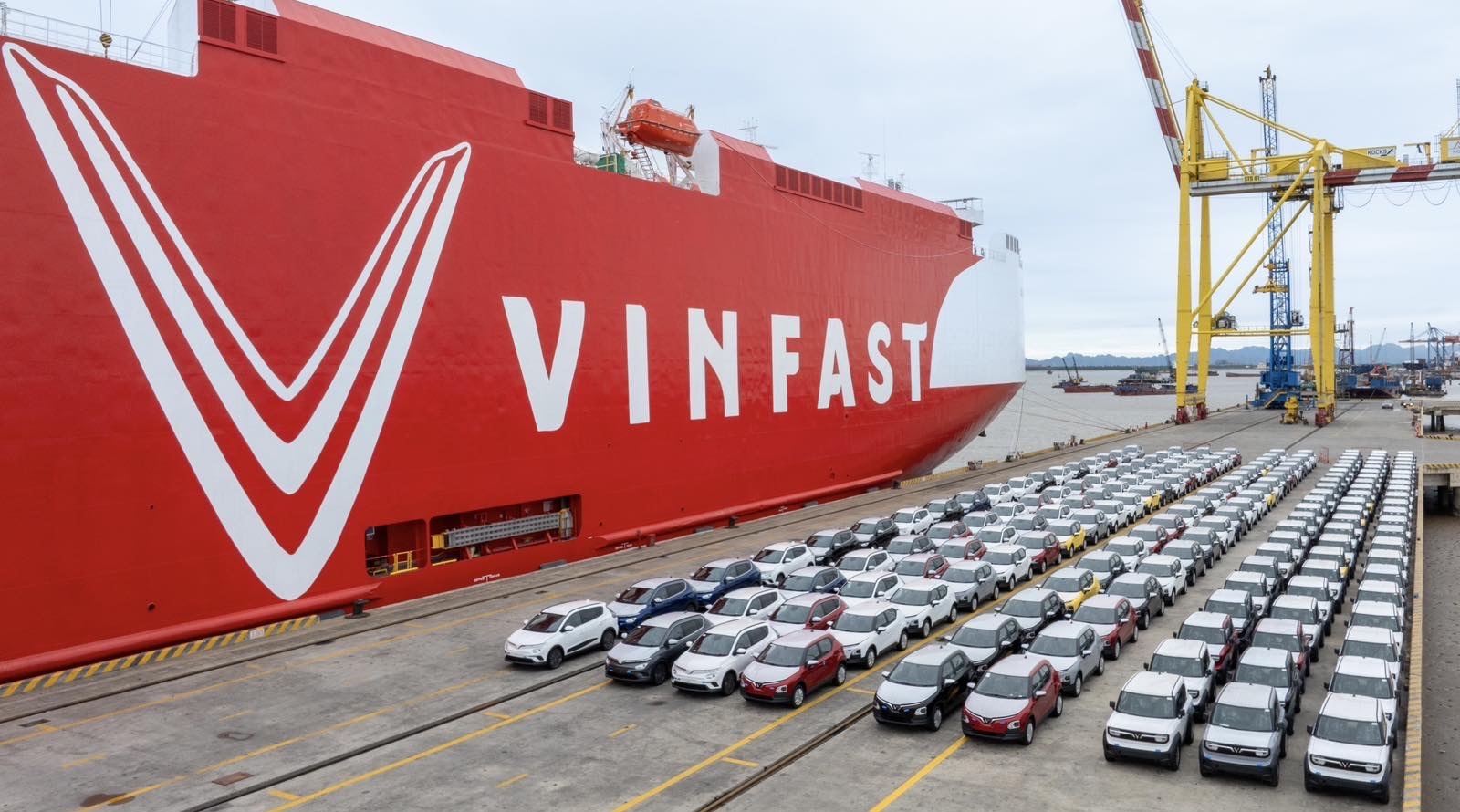
Inside VinFast's sprawling manufacturing complex in Hai Phong, Vietnam, something quiet but purposeful is unfolding—workers on press, body, and final assembly lines are building toward an audacious goal: 300,000 electric vehicle sales by 2026. The target itself is striking, but the strategy behind it reveals how one Vietnamese automaker is rewriting the playbook for EV adoption in emerging markets.
VinFast's approach hinges on a careful geographic split that Vingroup Chairman Pham Nhat Vuong outlined at the company's annual general meeting in Hanoi. The plan envisions roughly 200,000 units from the domestic Vietnamese market, with approximately 100,000 sales coming from beyond Vietnam's borders. This isn't a conventional, consumer-focused expansion—it's a calculated ecosystem strategy built on local manufacturing, fleet partnerships, and business-to-business channels that skip traditional retail obstacles.
Indonesia and India emerge as the cornerstone of VinFast's international ambitions, together accounting for nearly two-thirds of the overseas target. Indonesia, supported by VinFast's new assembly plant in Subang, sits positioned to deliver between 30,000 and 35,000 units. The facility serves a dual purpose: manufacturing right-hand-drive vehicles for local demand while anchoring a regional production hub that can serve much of Southeast Asia. Local EV incentives and partnerships with transportation operators provide the infrastructure for rapid scaling. India represents another 25,000 to 30,000 units, with VinFast advancing production plans in Tamil Nadu and eyeing a market ripe for disruption. Here, the company is deliberately courting commercial operators, tourism fleets, and mobility providers—institutional demand that sidesteps reliance on individual consumers and creates a steadier revenue stream.
Beyond these two pillars, a second tier of markets could collectively contribute around 20,000 units. The Philippines stands out as a meaningful contributor through transport modernization programs, Green SM operations, and partnerships with transport cooperatives. This business-to-business strategy gives VinFast access to daily public transport visibility while reducing dependence on consumer adoption. The Middle East, particularly the United Arab Emirates, offers smaller but strategically valuable volumes, where stronger pricing and growing EV interest could bolster both sales and profitability.
Thailand and Malaysia present steeper terrain. Both markets remain highly competitive, dominated by established domestic players and aggressive Chinese EV entrants. Malaysia's fuel subsidies continue to undercut the economic case for electrification, while Thailand's crowded market resists rapid expansion. Here too, fleet and commercial customers represent a more practical entry point than mass-market retail. Additional volume could trickle in from smaller ASEAN nations and emerging markets where VinFast is quietly expanding its distribution network, with Singapore offering modest potential despite its restrictive vehicle ownership framework.
North America and Europe, by contrast, appear secondary to the 300,000 target. The delayed North Carolina manufacturing project and a shift toward dealer-based sales signal a strategy prioritized around sustaining global credibility rather than chasing volume. Deliveries in these mature markets remain valuable for brand visibility, but they are unlikely to anchor the company's ambitions.
What emerges is not a traditional automotive sales campaign but a strategy rooted in ecosystem expansion, where local assembly operations, fleet partnerships, and mobility services across emerging markets become the engine for growth. The real differentiator, as conversations with workers and engineers at Hai Phong revealed, lies not solely in technology but in the people executing this vision—a culture willing to build markets rather than simply enter them.