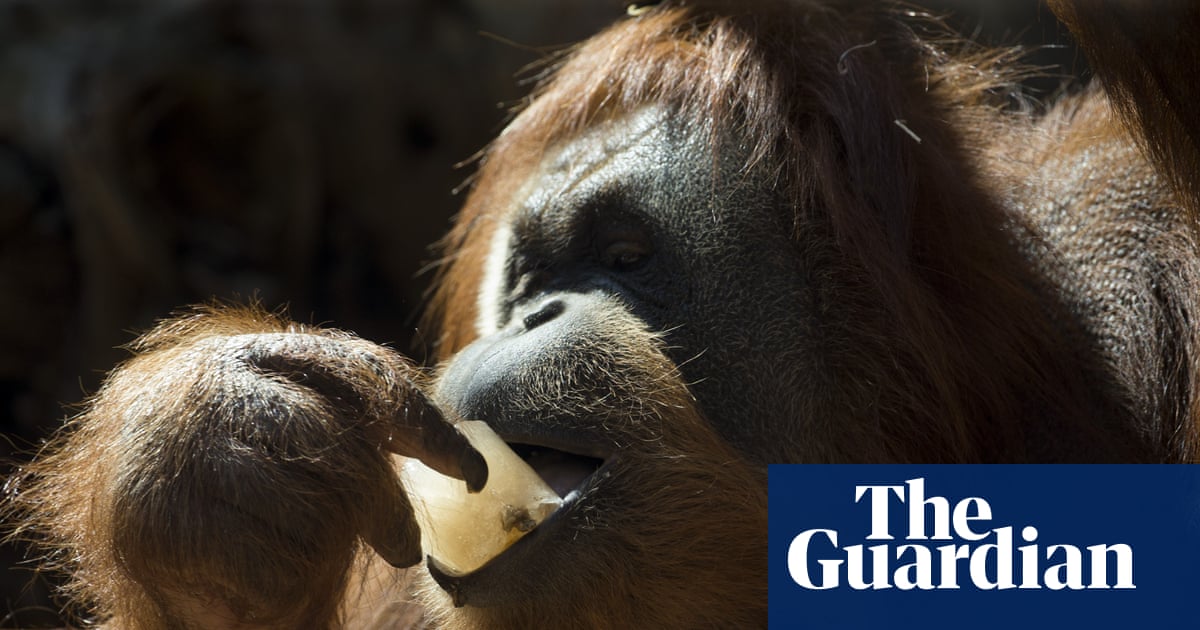
When 12-year-old orangutan Tilda heard the sound of her fellow apes laughing, she didn’t just smile—she made a beeline for the bowl covered in moss, knowing it meant a treat was hidden underneath. At the Indianapolis Zoo and the Oregon Zoo, six orangutans like Tilda took part in a clever experiment that revealed something surprising: laughter changes what apes want to eat. Scientists played recordings of orangutan laughter or neutral nature sounds before showing the apes two bowls—one covered with moss, the other with sawdust. One bowl hid a snack, and the covering linked to laughter became the favorite. By day five, when both bowls had treats, the apes still picked the one paired with joyful sounds. Four out of six orangutans consistently chose the laughter-linked bowl, showing they didn’t just learn where food was—they learned better when they were happy.
This isn’t just about snacks. Erica Cartmill, a professor at Indiana University and lead researcher, studies how emotions shape learning in animals—and what that means for us. “We wanted to extend that to animals – in this case to orangutans,” she said. Her team’s study, published in Biology Letters, adds to growing evidence that feelings aren’t separate from thinking. They’re part of it. When we’re joyful, we remember things differently. So do orangutans. The sound of laughter didn’t just put them in a good mood—it changed how they valued what they learned.
The experiment was simple but powerful. First, the orangutans learned to dig through bowls for food. Then, researchers linked one covering—say, moss—with laughter, and sawdust with wind or rustling leaves. After just a few days, the apes began to prefer the laughter-associated material. Even when both options had rewards, they trusted the one tied to joy. It’s like seeing your friend laugh while eating an apple, and suddenly you want that apple too—even if you don’t know why.
Dr Adriano Lameira, a primatologist at the University of Warwick who wasn’t involved in the study, put it best: “Effectively, hearing others clearly having a good time, orangutans placed their food order: ‘I will have what they are having, please!’” That social signal—laughter—acted like a recommendation. And it wasn’t about hunger. It was about emotion.
Cartmill believes this has real lessons for people, especially in classrooms. If a student learns math while anxious, they might avoid it later—not because it’s hard, but because the feeling sticks. But if learning happens in a joyful moment, that knowledge feels more valuable. “Students might learn at similar rates if they are in a good mood or not,” Cartmill said, “but our research suggests that they would value information more if they learn it when they are in a good mood.” That could help explain why some kids love science or art and stick with it for life. The feeling becomes part of the memory.
As scientists keep exploring animal emotions, one thing is clear: joy isn’t just a bonus. It’s a tool. For orangutans choosing snacks, and for students choosing futures, how we feel shapes what we choose.