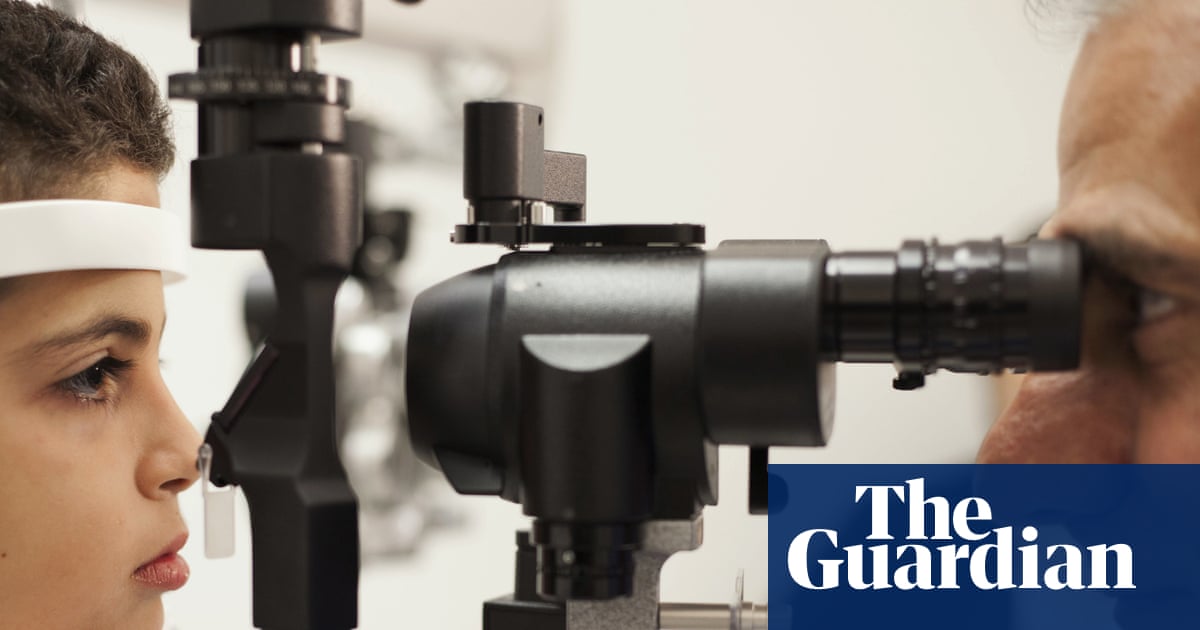
Jean Bennett and Albert Maguire met over a dissected brain at Harvard Medical School and emerged, 25 years later, as the architects of the first approved gene therapy to restore lost vision—a breakthrough so profound that patients began seeing their children's faces, wooden grain, and trees swaying in wind for the first time in their lives. The married couple, along with physician Katherine High, have just been awarded the $3 million Breakthrough Prize for life sciences, an honor their Silicon Valley founders call the Oscars of science.
Their journey began with an impossible target: Leber congenital amaurosis, a genetic disorder that condemns people to total blindness by early adulthood. The disease stemmed from faulty versions of a single gene, RPE65, but for decades scientists lacked the tools to fix it. Bennett, a molecular biologist, pressed forward anyway. "The nice thing about being young and naive is I didn't know what I didn't know," she recalled. Working with Maguire, an ophthalmologist, she developed a revolutionary approach—a gene therapy that could smuggle a working version of the gene directly into retinal cells, restoring sight that genetic illness had stolen.
The results were transformative. In clinical trials, patients described sensations they had never known. One saw their child's face for the first time. Others reported discovering the fine texture of wooden furniture, the movement of branches in wind. These were not incremental improvements; they were windows reopening onto a world that had been locked away. Luxturna, as the therapy was named, won US approval in 2017 and has since given back vision to people who had been told blindness was their inescapable fate.
Along the way, Bennett and Maguire adopted two dogs they had treated with the same therapy during the development process—Venus and Mercury, now permanent reminders of the 25-year gamble that paid off. "I was overwhelmed," Bennett said of winning the prize. "It was one of the most miraculous eureka moments you can imagine."
Yet even in victory, Bennett's remarks carried warning. She spoke of attacks on US science, politicized agendas, and government agencies undermined. "Knowledgable advisers and experts have been dismissed or have fled," she said, expressing fear that the country faced a brain drain from which "we would struggle to recover from." Her caution reflects a broader anxiety among the scientists celebrated at the ceremony: that the infrastructure enabling discoveries like Luxturna—the funded labs, the protected research time, the collaborative freedom—faces unprecedented pressure.
The Breakthrough Prize ceremony, held Saturday night in Los Angeles, celebrated other transformations too. Swee Lay Thein and Stuart Orkin received a life sciences prize for discovering that disabling a gene called BCL11A could force blood cells to produce healthy fetal hemoglobin, effectively treating sickle cell disease and beta thalassemia. Their work led to Casgevy, a therapy that edits patients' own blood stem cells and returns them to the body—a technique that Orkin acknowledged represents only a first step. "In order to reduce the burden of disease," he said, "you've got to have a more user-friendly kind of therapy."
Like Bennett, Orkin mourned the state of US science. "We were in a golden age of biomedical science," he said. "Now there are attacks on academic institutions." The very infrastructure that made Luxturna possible—decades of funded, curiosity-driven research with the freedom to pursue seemingly impossible questions—appears to be the casualty now under siege.