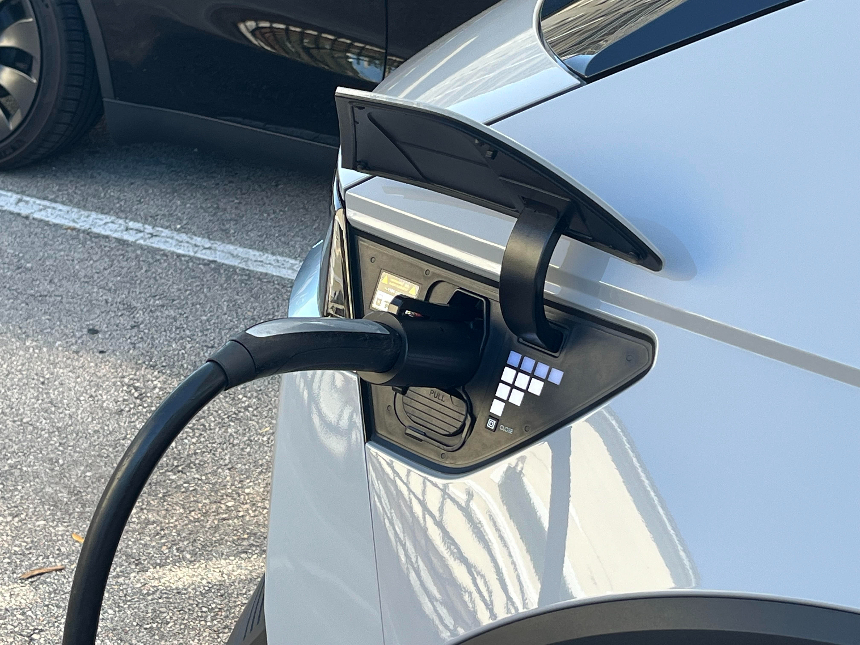
California is charging toward a faster, more equitable transportation future. On May 28, the state's Energy Commission announced $55.2 million in new funding through the California Electric Vehicle Infrastructure Project—a focused investment aimed at closing one of the biggest gaps in the nation's EV transition: the shortage of public fast chargers.
The challenge is stark. While over 201,000 public EV chargers hum quietly across California, most are Level 2 chargers, the slower variety that work fine for daily commutes but fall short for the long road trips that convince skeptics to abandon gas tanks for good. Without reliable fast-charging networks, electric vehicles remain tethered to short-distance driving. Home chargers and Level 2 stations meet everyday needs, but they can't unlock the freedom that long-distance travel demands—and that freedom matters for mass adoption.
Enter the California Electric Vehicle Infrastructure Project. The $55.2 million will fund up to 1,000 new direct current fast-charging ports across the state, based on a rebate structure of $55,000 per port. Chargers can appear anywhere in California, from urban corridors to rural stretches, as long as they're publicly accessible. But here's where equity enters the picture: projects proposed for low-income, disadvantaged, and tribal communities move to the front of the funding queue.
That priority isn't just noble—it's strategic. Transportation emissions hit vulnerable communities hardest, and so does the transition to clean energy. When EV charging infrastructure clusters only in affluent neighborhoods, it deepens inequality. The data proves the strategy works. In the most recent funding window, which closed in January, 64 percent of all installations landed in disadvantaged, low-income, or tribal areas. That's not accident. It's design.
Bailey Muller, Senior Manager for Electric Vehicle Infrastructure at the Center for Sustainable Energy, frames the broader purpose clearly: public investment in fast chargers addresses what markets alone won't. The upfront costs are steep. Private companies focus on profitable corridors. But renters, rural residents, and low-income drivers need chargers too—not eventually, but now. Public funding bridges that gap.
The timeline matters. California isn't moving at EV adoption speed; it's moving at grid-ready speed. All new chargers must be installed and commissioned within 450 days of receiving funding. That's ambitious but achievable—the first funding window showed an average of just 103 days from reservation to energization. Applications are processed first-come, first-served within designated windows, letting proponents plan with some certainty.
Why now? Transportation accounts for roughly half of California's greenhouse gas emissions. Electrifying vehicles cuts those emissions dramatically, but only if drivers trust the charging network. You can't ask someone to buy an EV if the fast chargers don't exist. The state is betting that $55.2 million in targeted infrastructure investment will tip the scales—making zero-emission road trips feel not like an experiment, but like an obvious choice. With 1,000 new fast-charging ports on the horizon, and a commitment to placing them where they're needed most, California is building not just infrastructure, but possibility.