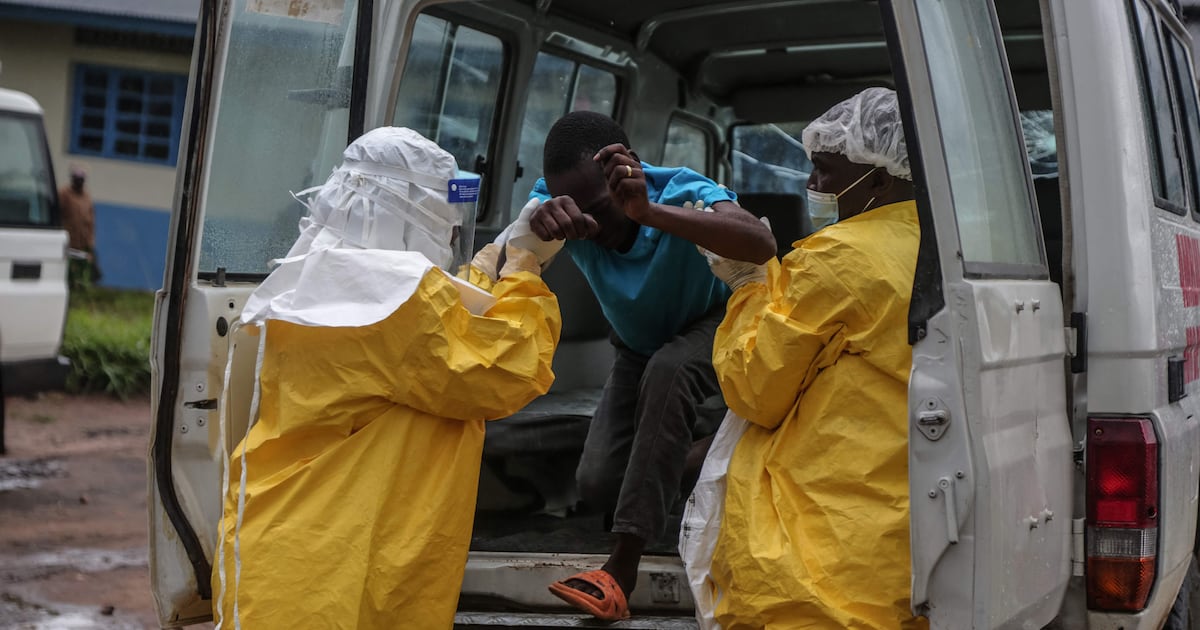
Oxford scientists are racing to adapt the same vaccine technology that helped stem the Covid-19 pandemic to fight a deadly Ebola outbreak now spreading across the Democratic Republic of Congo. The Bundibugyo species of Ebola, for which no approved vaccine or treatment exists, has claimed over 170 lives in roughly 750 cases and was declared a global health emergency this week by the World Health Organisation—a milestone that has mobilized researchers to action with unusual speed.
The stakes are sobering. The virus kills roughly one in three people it infects, and WHO officials have raised the risk of a national outbreak in the DRC to "very high." On Friday, WHO Chief Tedros Adhanom Ghebreyesus acknowledged the trajectory: "The potential of this virus spreading rapidly is high, very high, and that changed the whole dynamic." Yet early containment efforts in neighbouring Uganda, including aggressive contact tracing and the cancellation of a mass gathering, suggest the outbreak can still be controlled if resources and urgency align.
This is where Oxford enters the picture. The Oxford Vaccine Group, whose researchers have spent years developing candidates for emerging infectious diseases, is now working frantically to adapt ChAdOx1—the viral-vector platform that underpinned the Oxford/AstraZeneca Covid-19 vaccine—to target Bundibugyo Ebola. The technology is based on a modified common cold virus, and early in the pandemic it demonstrated its potential: the Covid vaccine derived from this platform was estimated to have saved more than 6 million lives in its first year of global use.
"The ChAdOx platform has previously demonstrated a vital role in the development of vaccines for emerging infectious diseases and responding to outbreak scenarios," the Oxford Vaccine Group said in a statement. The team is now collaborating urgently with Oxford University's Clinical Biomanufacturing Facility and the Serum Institute of India to rapidly produce and scale doses of a candidate vaccine, while simultaneously accelerating testing timelines. Prof Teresa Lambe, head of vaccine technology at the group, frames the effort with cautious hope: "My hope is that this outbreak can be brought under control quickly and that vaccines are ultimately not needed. Nevertheless, our team and partners will continue working to ensure that potential vaccine options are available if they are needed."
In parallel, the WHO's chief scientist Sylvie Briand has flagged an experimental oral antiviral called Obeldesivir—originally developed by Gilead Sciences as a Covid treatment—as a potentially promising preventive option for people exposed to infected contacts. The drug would need to be administered under strict protocols, she cautioned, but it represents an additional tool in the response arsenal.
What troubles WHO officials most is the gap between the outbreak's actual danger and the global attention it has received. Mohamed Yakub Janabi, WHO regional director for Africa, pointed out that this Ebola crisis has drawn far less international focus than this month's hantavirus outbreak, which affected cruise ship passengers from 23 countries. "You just need one contact case to put all of us at risk, so my wish and prayer is that we should give this the attention it deserves," said Abdirahman Mahamud, director of WHO Health Emergency Alert and Response Operations. The ground situation remains fluid: the Democratic Republic of Congo is scaling up testing, infection prevention measures, and community engagement efforts even as rapid population movement makes the outbreak's true scale difficult to assess. The coming weeks will test whether the speed of modern vaccine science can outpace the speed of viral spread.