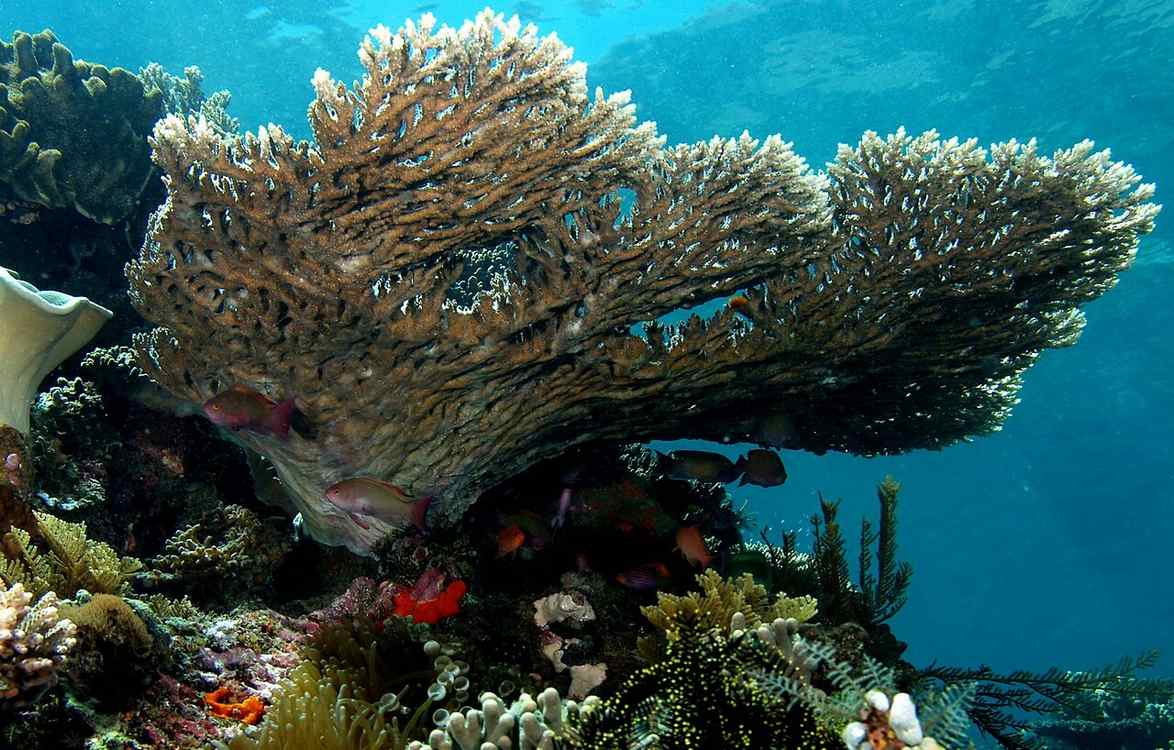
In the legendary Coral Triangle where the Pacific and Indian Oceans meet, Papua New Guinea has just drawn one of the world's boldest lines around the sea. The newly designated Western Manus Marine Protected Area spans 77,000 square miles—roughly the size of the United Kingdom—and has been permanently closed to commercial fishing. This landmark decision, revealed at the inaugural Melanesian Ocean Summit in Port Moresby in mid-May, marks a turning point not just for Papua New Guinea, but for one of Earth's most biodiverse ocean regions.
The Western Manus area sits in the north of PNG's territorial waters, characterized by undersea mountains, volcanoes, ridgelines, and canyons that form what scientists call a "marine highway"—a corridor connecting shallow coral ecosystems with deep-water zones teeming with pelagic life. Here, orcas migrate seasonally alongside over a hundred species of coral, the giant deep-sea yokozuna slickhead, and Cuvier's beaked whale. This underwater geography wasn't selected by chance. Researchers tracked key mobile species—grey reef sharks and seabirds capable of foraging 200 miles a day—to map the movements of animals between reef and abyss, ensuring the protected area would truly safeguard the creatures that depend on it.
The National Geographic Pristine Sea's expedition, which surveyed the area over two years, found one of the world's healthiest and most diverse coral ecosystems. But they also found warning signs: shark populations were troublingly low, a clear signal of overfishing for predatory species like tuna. The reserve accounts for 10 percent of Papua New Guinea's tuna fisheries and about 6.7 percent of all fishing output—a significant sacrifice that underscores the government's commitment. Yet research shows the logic behind the trade-off: once marine protected areas are established, catch rates tend to increase in boundary areas as a spillover effect from a robust and unharmed natural environment.
Jelta Wong, Papua New Guinea's minister of the National Fisheries Authority, framed the decision as both conservation and investment. "Papua New Guinea is one of the most biodiverse places on the planet," he said. "Establishing the Western Manus Marine Protected Area will allow us to preserve and protect our ecological legacy and, at the same time, ensure that our ocean continues to provide people with what we need—food and a source of income."
The Western Manus MPA forms part of the newly established Melanesian Ocean Corridor of Reserves, a network of national and jointly managed protected areas spanning Fiji, Vanuatu, and Papua New Guinea—a regional approach that recognizes oceans don't respect borders. For Papua New Guinea specifically, this designation is part of the nation's broader commitment to conserve 30 percent of its territorial waters.
Powes Parkop, governor of the National Capital District and a native of Manus Province, offered a perspective rooted in cultural continuity. "Our ancestors have always lived in harmony with the sea, but today, we are writing a new chapter for our children," he said. "We aren't just protecting fish or coral; we are safeguarding our identity." In that single statement lies the heart of this conservation victory: protecting the ocean is not separate from protecting a people, their heritage, and their future.