In kindergartens across Estonia, a quiet truth emerged from research that challenges a common parental instinct: doing more at home doesn't necessarily help children learn better. Anne-Mai Meesak, a researcher with a Doctorate in Educational Sciences, studied over 500 five-year-olds and 300 parents to understand what actually matters for early academic success, and the answer surprised many: it's not the volume of home activities, but the quality of partnership between parents and kindergarten.
The research matters because it reflects a wider anxiety among parents everywhere. In an age of educational pressure, many families believe that success requires endless worksheets, flashcards, and structured lessons at home. This study suggests otherwise. Using a digital assessment tool called LAHE, Meesak individually tested children's cognitive processes—their attention, perception, working memory, and thinking—as well as their language and mathematical skills on tablets. Teachers independently assessed the same areas, and remarkably, their observations aligned closely with the actual test results, validating the measurements.
Here's where the findings turn revealing: children's academic skills were significantly predicted by their own cognitive processes and learning abilities. Girls performed slightly better in language skills, and Russian-speaking children scored slightly higher in study skills, but overall, Estonian five-year-olds demonstrated similar achievement levels. This consistency points to something working well in the system itself.
The most striking discovery involved a hidden inequality in many homes. Parents who believed their children had cognitive difficulties—the very children who needed the most support—engaged in the fewest home learning activities. This means support was thinnest where it was needed most. The educational level of parents made little difference to how many activities they organized at home, suggesting that belief in a child's ability, not parental education, drives engagement.
Yet something unexpected happened when researchers looked deeper. Although higher parental expectations about school readiness correlated with more home activities, those expectations and all that home effort showed no connection to actual language or math performance. The turning point came when the data revealed what did matter: parents' active participation in kindergarten itself. When parents engaged with the kindergarten community, their children performed better academically—and crucially, those parents also became more likely to collaborate with their children at home. Partnership between institutions, not solitary homework, moved the needle.
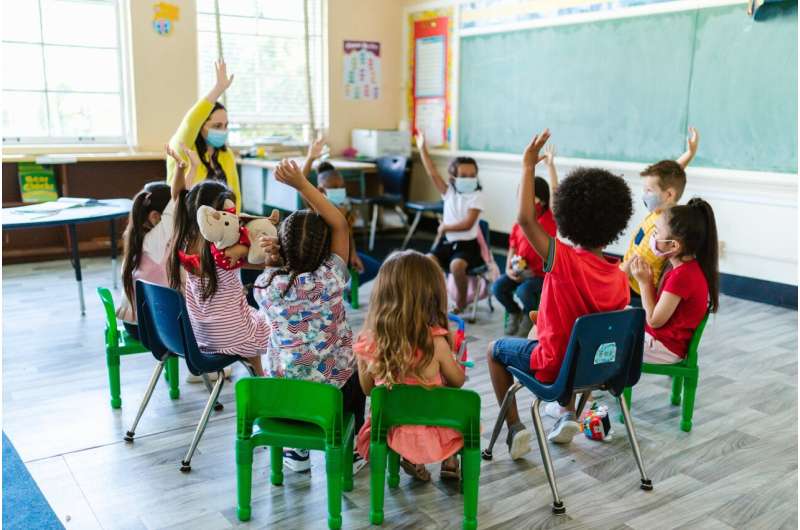
The implications ripple outward. In Estonia, most five-year-olds attend kindergarten, where learning happens through play-based activities aligned with the national curriculum. This approach appears to level the playing field, allowing children from different home backgrounds to achieve comparable academic results. The system works because it's designed to include everyone equally.
Meesak's research offers two clear takeaways for society. First, parents need help recognizing what their children actually struggle with and what they excel at—perception often lags reality. Second, active parent involvement in the kindergarten itself matters more than isolated home tutoring. The path forward isn't more work piled onto family evenings. It's deeper collaboration between the places where children spend their time. When home and kindergarten genuinely work together, children thrive. When they operate separately, no amount of extra flashcards can bridge the gap.