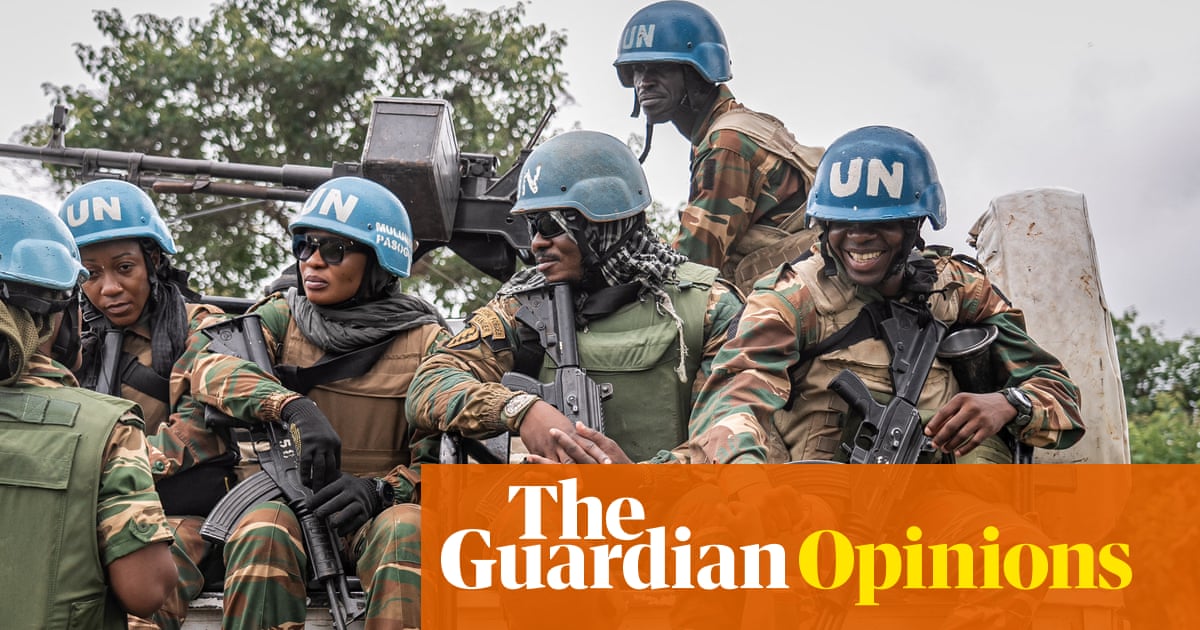
In the marshy borderlands of Am-Dafock, a remote town in the far north of Central African Republic, more than 11,000 displaced families have returned to their homes after UN peacekeepers brokered a fragile peace between warring communities. It's a story that rarely breaks international news cycles, yet it offers a glimpse into why peacekeeping—unglamorous, underfunded, and often overlooked—remains one of the world's most vital tools for preventing catastrophe.
When Sudan's civil war spilled across the border in 2024, Am-Dafock became a refuge for people fleeing violence. Intercommunal tensions exploded. Families fled their homes and gathered near a temporary UN military base, camps of desperation forming in the shadow of a peacekeeping presence. Rather than simply provide shelter, peacekeepers with Minusca—the UN's Central African mission—did something harder: they facilitated dialogue between CAR and Sudanese communities, eventually guiding them toward a local peace agreement. The result was remarkable in its simplicity—nearly all those displaced families could finally return.
This is what a successful peacekeeping intervention looks like, measured not in headlines but in families sleeping in their own homes again.
Yet across eleven peacekeeping operations worldwide, such successes are increasingly threatened by financial starvation. More than 50,000 civilians, military and police personnel serve under the UN flag in some of the world's most dangerous places, yet delayed and incomplete funding contributions have forced missions to shrink their footprints dramatically. Nine of eleven operations have had to send substantial numbers of troops home. Patrols have been cut. Training activities have stopped. The effects ripple outward in concrete ways.
In the Democratic Republic of the Congo, a 30 percent decline in police patrols has left remote and high-risk areas more vulnerable. In South Sudan, the closure of field offices in Torit and Aweil has crippled diplomatic efforts and reduced protection for communities. In the Central African Republic itself, fewer flights mean less human rights monitoring in remote regions. In Western Sahara, reduced operational capacity means peacekeepers can no longer observe multiple areas simultaneously—violations may now go undetected.
Since the first UN peacekeeping mission deployed to the Middle East in 1948, the work has exacted a human price. Last year, 59 peacekeepers died in service. Over nearly eight decades, more than 4,500 have been lost to violence in places like Lebanon, the Democratic Republic of the Congo, and Abyei. They work under extreme duress because the work matters.
Peacekeeping's true purpose is political—to reduce violence, create space for diplomacy, and help societies transition from conflict to durable peace. In South Sudan, peacekeepers support mobile courts that bring justice to communities where formal courts don't exist. In Abyei, teams identify tensions early before they escalate. In the DRC and elsewhere, UN mine-clearing teams remove explosive hazards that threaten civilians and peacekeepers alike. In Bentiu, South Sudan, peacekeepers maintain dykes that protect more than 300,000 people from catastrophic flooding and sustain the infrastructure connecting vulnerable communities to humanitarian aid.
These are the invisible scaffolds holding fragile peace in place. They can only survive if they are adequately resourced. The question facing the international community is whether nations will match their mandates for peace with the funding these missions need to fulfill them—or whether the world will continue to underfund its own stability.