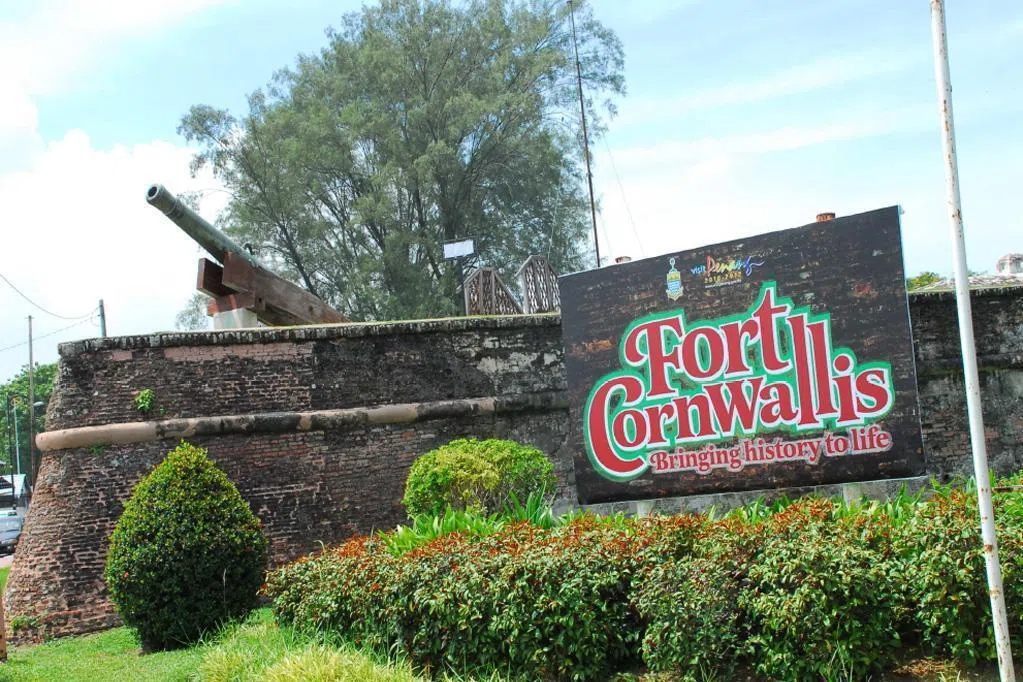
George Town is now home to an officially recognized list of 50 cultural treasures—from the kopitiam coffee shops where neighbors gather to steaming bowls of asam laksa—marking Penang's first major heritage preservation action in 15 years. After the Penang State Heritage Enactment passed in 2011, no state-level gazettement had actually occurred until this year, when the government finally translated legal protections into concrete institutional action. The move encompasses 15 heritage sites, seven intangible cultural practices, and 28 traditional food items, reflecting the state's commitment to safeguarding the lived, built, and tasted dimensions of its multicultural identity.
The gazetted sites read like a map of Penang's layered history: Fort Cornwallis, the Kapitan Keling Mosque, Penang Free School, and St George's Church sit alongside the Guar Kepah archaeological site and the Cherok Tok Kun Inscription Stone. The Leng Eng Seah Association building in Butterworth rounds out the architectural roster. These landmarks anchor Penang's story across centuries and communities. But the preservation effort extends beyond bricks and mortar. The intangible heritage list captures the living practices that define the island: nasi kandar culture, kopitiam culture, the Thaipusam and Chingay processions, the St Anne's feast in Bukit Mertajam, and the Penang Tanjong dialect. These are the rituals, traditions, and languages that tie people to place and to each other.
Perhaps most distinctively, Penang has formally recognized seven heritage food items, including asam laksa, char kuey teow, nasi kandar, cendol, roti canai, putu mayam, and pasembor. The decision to gazette food alongside stone and tradition reflects an understanding that cultural heritage lives on plates as much as in prayer halls or colonial fortifications. Wong Hon Wai, the state tourism and creative economy committee chairman, framed the move not as nostalgia but as strategic preservation. "The gazettement of these cultural heritage items not only demonstrates Penang's proactive role in heritage preservation, but also reflects the state's long-term vision of positioning cultural heritage as an important asset in tourism development, educational research and the creative economy," he said in a May 28 statement.
The implications extend beyond Penang's borders. Wong noted that gazetted items could be proposed for national recognition under the National Heritage Act 2005, and intangible cultural heritage elements representing Malaysia's broader values could eventually be nominated to UNESCO's Representative List of the Intangible Cultural Heritage of Humanity. This pathway allows Penang's treasures to shine on international stages while rooting them in local protection. More profoundly, Wong emphasized that cultural heritage serves as a bridge for national unity. "When the histories, beliefs, celebrations, languages, food cultures and built heritage of Malaysia's multi-ethnic communities are recognised and institutionally protected, society can deepen mutual understanding through respect, foster a stronger sense of togetherness through cultural appreciation," he said. In a moment when cultural identity can feel fragile or contested, Penang has chosen institutional action: to name, protect, and celebrate the plural heritage that makes it home.