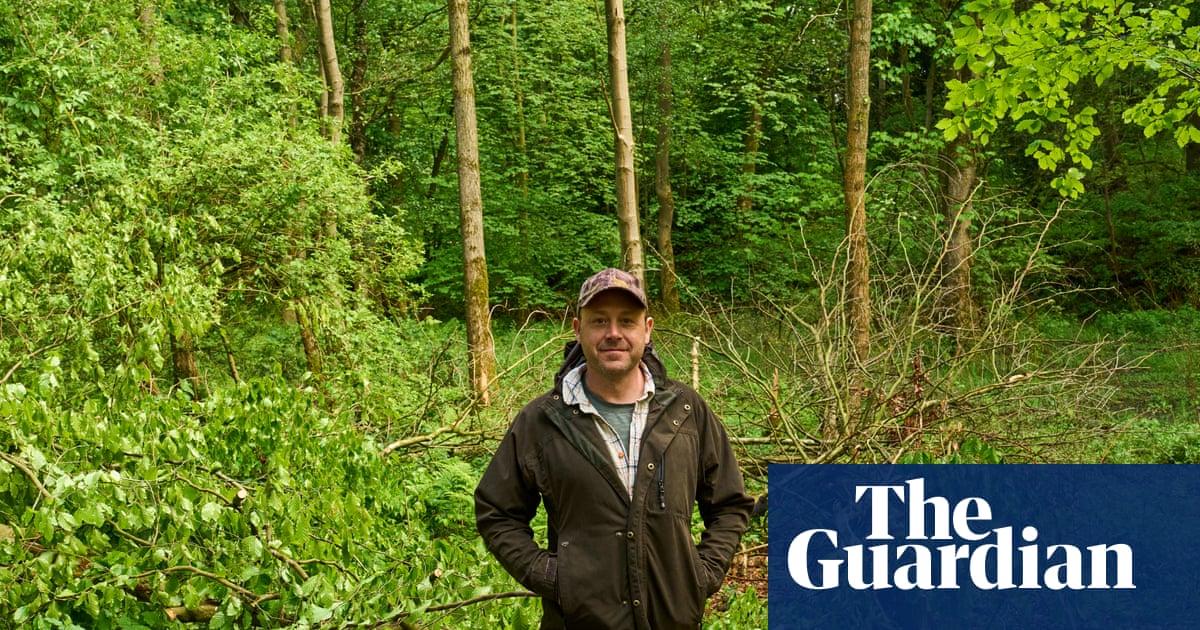
Roger Tempest stands at the gateway to the Yorkshire Dales, surveying land his family has held for nearly a thousand years—since 1097, when wolves still roamed wild through England. Today, the 32nd generation custodian of what was once Broughton Hall estate is witnessing a different kind of wildness returning: otters slipping back into restored wetlands, curlews calling across recovering grasslands, and a pair of beavers whose kits now cry out from their riverside enclosures.
This 1,100-hectare estate near Skipton is undergoing a profound transformation, one that began quietly in 2021 when Tempest embarked on a nature recovery programme but is now accelerating through a partnership with Rebalance Earth, an investment fund that treats natural capital as critical infrastructure. The shift matters because it signals how climate chaos—the record-breaking temperatures and devastating rainfall that battered the UK in recent months—is forcing both landowners and investors to rethink what land is for. As Rob Gardner, Rebalance Earth's co-founder and chief executive, puts it: "People start connecting the dots. There is a shift in mindset from 'this is an episodic thing, aren't we unlucky' to 'actually this is now going to happen more and more.'"
When Tempest inherited Broughton as a child, the main house sat in disrepair with bats flying through unheated rooms, while the surrounding land had been exhausted by intensive farming. He set about restoring the derelict buildings into a thriving business park that now employs some 700 people across 50 companies, while the main house—which has appeared in productions including BBC's Gentleman Jack and Channel 4's A Woman of Substance—was returned to its former grandeur. The estate also hosts year-round yoga retreats and a spa complex. But success brought clarity about neglect elsewhere. "We regenerated all the buildings and the architecture, and I think we were guilty of forgetting about the land," Tempest admits.
The turning point came when two sheep farmers ended their tenancies, freeing vast tracts for nature. A staggering 330,000 trees have been planted in the past five years alone. Otters returned. Curlews came back. When beavers were introduced last April, they didn't hesitate—they've since had their second litter while busily engineering their landscape with dams and lodges.
Yet previous grants, as Kelly Hollick, the estate's nature recovery manager, notes, "only funded trees." The funding from Rebalance Earth—described as "a few million"—will unlock what she calls "the next level of rewilding" across roughly 700 hectares, or about two-thirds of the estate. Spruce monocultures will be cleared and replaced with native species. Iron age pigs and Dales ponies will graze where sheep once did, their hooves breaking up compacted earth so grasses and plants can flourish. The estate will still produce food—from orchards, allotments, and around 60 cattle—but in a fundamentally different relationship with the land.
Rebalance Earth, backed by the West Yorkshire Pension Fund's £25 million investment, insists this model works economically too. By restoring natural processes, increasing biodiversity, and helping land hold more water, the company argues that degraded ecosystems generate "financial, environmental and social returns"—benefits that ripple outward as communities gain resilience against flooding, drought, and coastal erosion. Gardner, a former City investment banker, believes capital can be "a force for good." At Broughton Sanctuary, nature and investment are finally writing the same story.