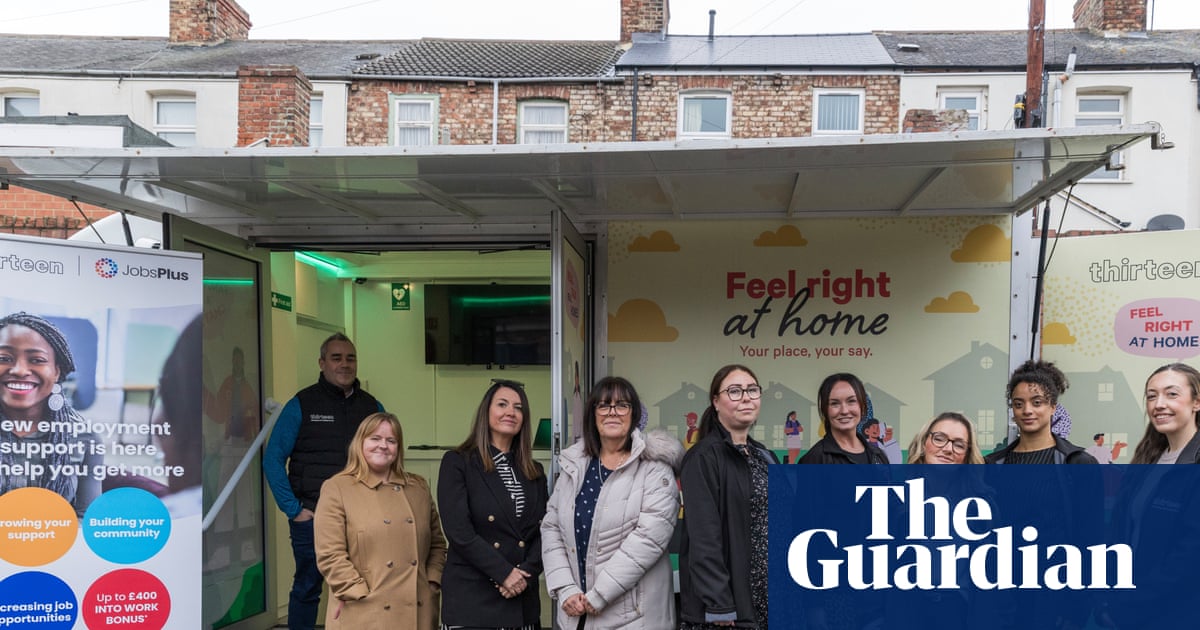
In a cluster of neighbourhoods across England—from Stockton-on-Tees to Toxteth, from Wirral to Penge in south London—a different kind of job support is quietly proving its worth. JobsPlus, a government-funded pilot scheme operating in just 10 hyperlocal communities, has achieved what broader employment initiatives often struggle with: reaching people who've been left furthest behind by the mainstream labour market.
The scheme's early success matters because it tackles a stubborn reality: residents of social housing are nearly twice as likely to be unemployed as the general population. Many participants carry real obstacles to work—caring responsibilities, health conditions, or simply the invisibility that comes from living in overlooked corners of the country. Traditional job centres don't always reach them. JobsPlus does, through "community champions" embedded in each neighbourhood who know their streets and their neighbours.
Between July 2024 and December last year, 27% of the 1,000-plus participants achieved a positive employment outcome. In the vast majority of cases, that meant moving from unemployment into a job. For a scheme working with people facing genuine barriers to employment, that's a striking result. What's equally striking is whom the programme is reaching. About a third of enrolled participants (31%) are aged 16 to 24—far higher than the 12% representation of that age group in the eligible locations. This matters urgently. Across England, the number of young people not in employment, education, or training has exceeded 1 million for the first time in a decade, a crisis that has captured ministerial attention.
The JobsPlus approach is deliberately intensive and human-centred. Caseworkers offer one-to-one support, help with practical barriers like interview clothes or transport costs, and connect people to local employers, Jobcentre Plus offices, or NHS services when needed. The scheme recognises something often overlooked by policy-makers: employment outcomes don't happen in isolation. The evaluation, conducted by the independent Institute for Employment Studies, found that participants reported significant improvements in mental health, including reduced anxiety, low mood, and social isolation. Many felt these psychological shifts were "essential precursors to applying for roles or sustaining work once secured." In other words, the scheme helps people become ready for work, not just pushes them toward it.
The pilot programmes, funded by the Department for Work and Pensions and the Youth Futures Foundation, have been running in locations chosen specifically for their concentrations of social housing and joblessness. Current funding extends until March, but the Institute for Employment Studies has concluded the model could be scaled nationally—a significant endorsement. Stephen Evans, chief executive of the Learning and Work Institute, which runs the schemes, framed it plainly: "With over a million young people now estimated to not be in education, employment or training, it's time to move from analysis to action."
One detail of the pilots—a £400 "into work bonus" for people who keep a job for two months—proved useful but not decisive. The real catalyst appears to be community connection, intensive support, and trust. Employment Minister Diana Johnson has positioned JobsPlus as a complement to the government's broader "youth guarantee," its commitment to help every young person earn or learn. But what this pilot reveals is that guarantees only work when someone actually finds you first. In these 10 neighbourhoods, they're doing exactly that.