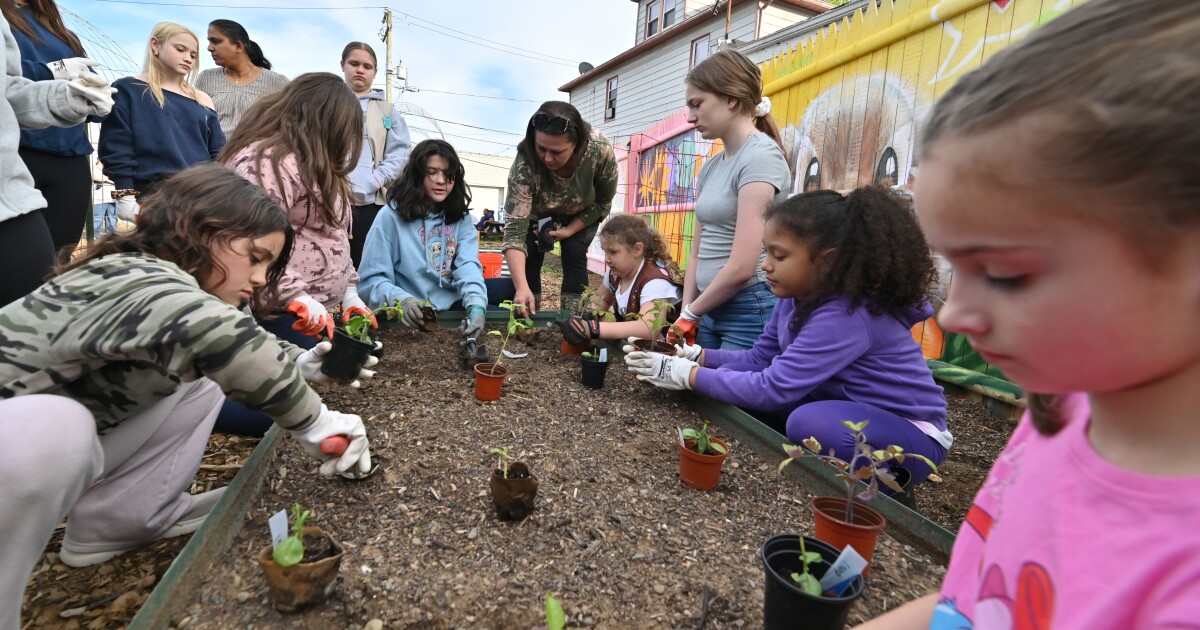
When eight-year-old Madilyn Simonovich pushed a pepper plant into the soil at Kingston's newest community garden, she was part of something much bigger than a single growing season. Behind her stood Jayanne Czerniakowski, who launched the Green Neighbors Network just last year after a modest beginning: three blue pools from Facebook Marketplace, some holes poked in the bottoms, and a granddaughter's curiosity about where food comes from.
What started as a simple experiment has blossomed into a vital community resource addressing food insecurity while teaching local youth about sustainability, gardening, and environmental responsibility. The transformation of a vacant Frederick Street lot into a thriving garden sanctuary reflects how one person's passion can ripple outward through a neighborhood, drawing in Girl Scouts from the area, 4-H groups, and students from Jenny Lynn Elementary to learn, plant, and harvest together.
Czerniakowski assembled a board of community members who share her vision. Jessica Miller, who lives in nearby Luzerne and has known Czerniakowski for over 25 years, brings deep gardening expertise—Miller has been an avid gardener for a long time and now serves as a go-to resource for the nonprofit's growing operations. Alex Crossley, another board member, discovered the garden by accident through a Facebook post and felt so moved by the project that she volunteered to paint one of the fence panels that now surrounds the space. Each panel features work by a local artist, turning the garden's perimeter into a public art installation that welcomes neighbors and celebrates the community's investment in the project.
"I love gardening," said Madilyn, peering at the plants now taking root. The fresh produce harvested from the garden will be free for community members to take home, addressing real needs while the garden hosts educational events about food sourcing, sustainability practices, and hands-on gardening instruction. Nine-year-old Ava Kamback is among the young volunteers preparing beds for the first summer season, learning alongside her peers that connection to the earth and to one another strengthens both.
For Crossley, involvement in the project from its earliest stages has been transformative. "Just being here and being a part of the art, and then being a part of the whole construction of getting the garden started from the ground up has really been awesome and life-changing," she reflected. "I love the connections and the knowledge I'm gaining." That sentiment captures the garden's deeper purpose: it is not simply a place to grow vegetables, but a place to grow community, where newcomers to gardening work alongside experienced growers, where artists contribute to shared public space, and where children discover that food doesn't simply appear in stores.
As warm-season crops go into the ground this spring, the garden stands as proof that transformation begins with one person willing to try something audacious—three blue pools and a dream.