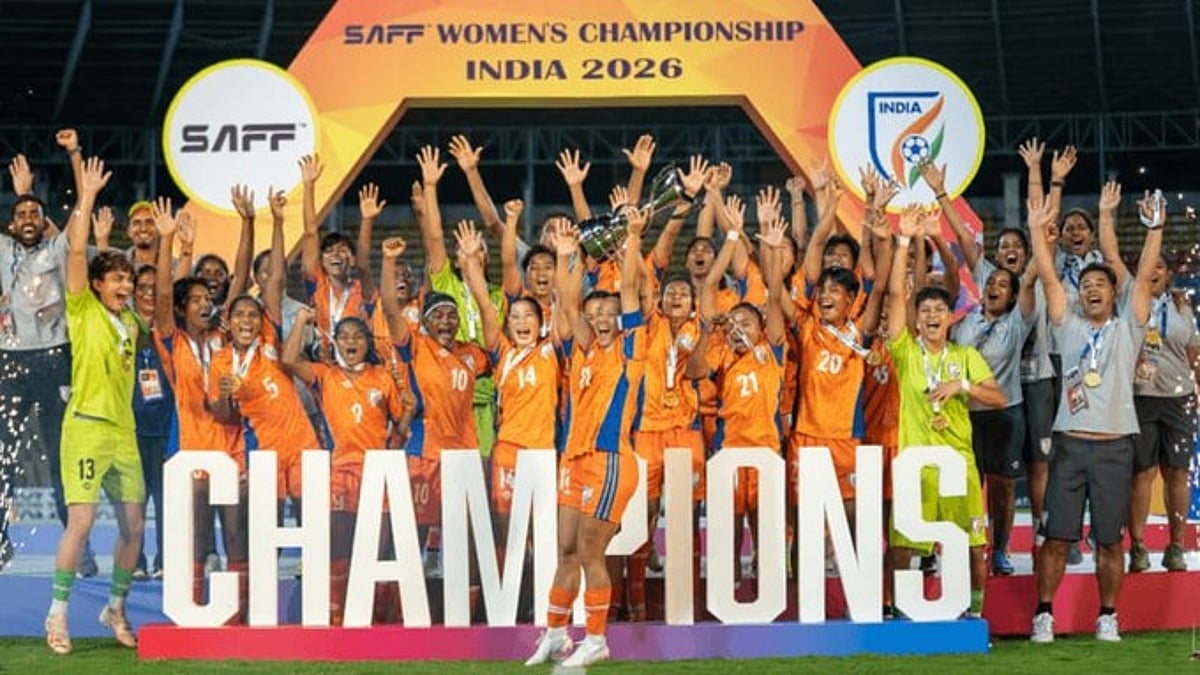
Sanfida Nongrum dropped to her knees at the final whistle, tears streaming down her face as she embraced Dangmei Grace—a legendary teammate announcing her retirement in the same breath as India's grandest victory. It was Saturday at the Pandit Jawaharlal Nehru Stadium in Goa, and the Indian women's football team had just reclaimed the SAFF Women's Championship after seven long years, defeating defending champions Bangladesh 3-1 in a match that embodied the rising power of South Asian women's football.
The triumph matters because it signals a turning point. India had spent two consecutive championships chasing the trophy from the sidelines while Bangladesh held it. Now, with this victory, the Blue Tigresses have reasserted themselves as the region's dominant force—and done it at home, in front of their own crowds. Prime Minister Narendra Modi understood the ripple effect immediately, posting on X that the team's excellence "will encourage more youngsters to play football in the coming times."
The match itself told a story of relentless momentum. Pyari Xaxa gave India the lead in the 42nd minute, but Bangladesh's Ritu Porna Chakma equalized just before halftime, keeping hope alive for a third consecutive title. Forty seconds into the second half, Sanfida Nongrum restored India's advantage—a psychological blow from which Bangladesh never recovered. Lynda Kom Serto sealed the victory in the 82nd minute, and the final scoreline of 3-1 reflected India's complete dominance throughout the tournament.
The numbers underscore just how overwhelming that dominance was. India won all four of their matches without dropping a single game, scored 18 goals across the championship, and conceded just one. These are the statistics of a team firing on all cylinders, a collective that moved with purpose and precision. Sanfida Nongrum, whose decisive second-half goal proved the turning point in the final, had been pivotal throughout the tournament, scoring in both the semi-final and the championship match. Her performance exemplified why India returned to the summit of South Asian women's football for the first time since 2019.
But the emotional center of this victory belonged to Dangmei Grace. The 95-cap veteran, who debuted for India in 2013, had announced she would retire after the tournament—and she ended her international career with a third SAFF title in her hands. Grace is a legend of Indian women's football, and her presence on the pitch alongside rising stars like Nongrum and Serto represented both continuity and promise. The photograph of Nongrum embracing Grace as the final whistle sounded captured everything: the weight of legacy, the joy of achievement, and the passing of the torch.
This victory marks India's record-extending sixth SAFF Women's Championship trophy. It also represents something deeper—a moment when a nation's investment in women's football, its infrastructure, its belief in these athletes, yielded a tangible, undeniable result. Prime Minister Modi's congratulatory message, warm though it was, perhaps understated the real significance: this championship is not just about inspiring young girls to pick up a ball. It is about showing them that the path they choose can lead to victory, pride, and legacy.