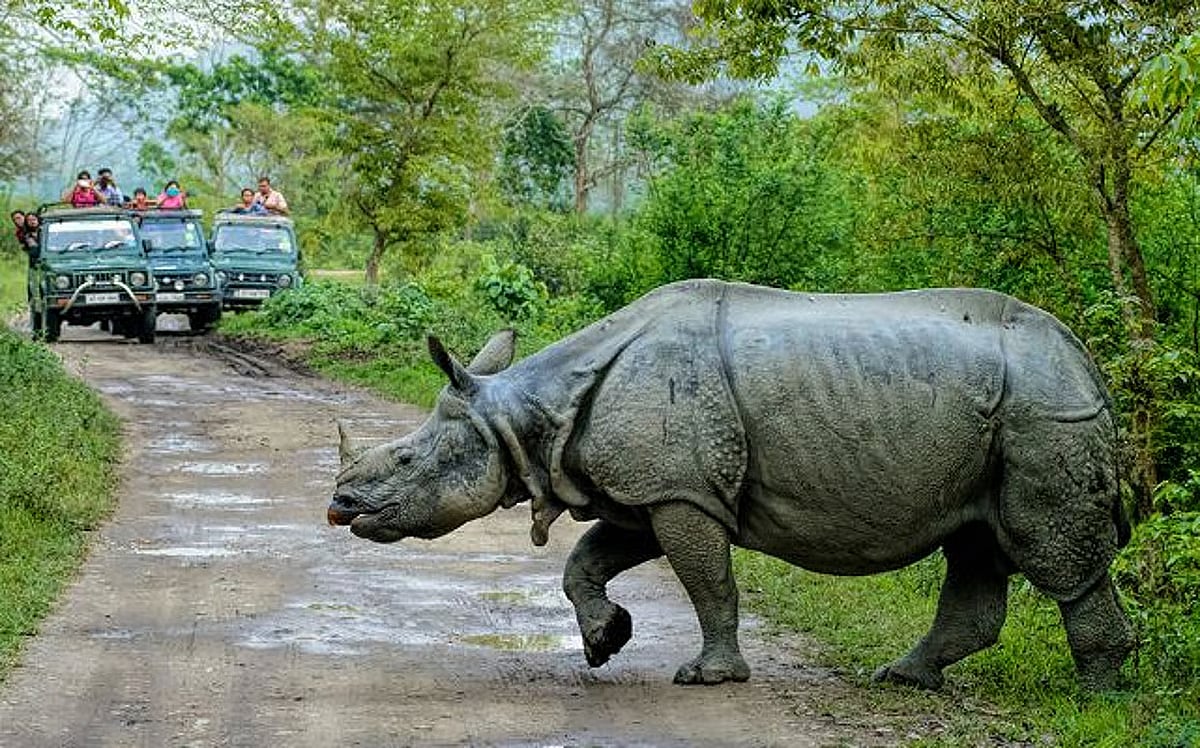
In 2022, Assam achieved what conservationists once thought impossible: a full year without a single greater one-horned rhino killed by poachers—the first zero-poaching year in 45 years. The milestone marks a dramatic reversal from the crisis years of 2013 and 2014, when 27 rhinos were slaughtered annually by international syndicates hunting for the animal's prized horn across the state's floodplains and elephant grasslands.
For decades, Assam's protected forests were a battleground. Between 2000 and 2021, hundreds of rhinos fell to organized poaching networks equipped with sophisticated weapons and transnational logistics. The scale of the crisis seemed insurmountable, a dark symbol of how wildlife crime outpaces conservation. Yet today, Assam stands as one of modern India's most compelling examples of how coordinated political will, operational precision, and community intelligence can turn the tide.
The turnaround began with a fundamental shift in strategy. Under former Assam Director General of Police G.P. Singh—now chief of the Central Reserve Police Force—authorities stopped treating rhino poaching as a forestry problem and began attacking it as organized crime. Singh's teams deployed cyber tracking, interstate coordination, and financial investigations to dismantle the syndicates, financiers, and logistics networks operating across state and international borders.
The transformation required technological firepower. Kaziranga National Park and other protected areas like Orang, Pobitora, and Manas became fortresses of surveillance. Drone monitoring, 360-degree E-eye surveillance towers, thermal sensors, and real-time tracking systems created an unprecedented security grid across vulnerable habitats. Along National Highway 37, authorities installed Automatic Number Plate Recognition cameras, optical sensors, and thermal imaging to scrutinize every vehicle. Kaziranga became India's first national park where anti-poaching camps were equipped with satellite phones, guaranteeing communication even during the region's devastating monsoon floods. Rangers in the field used the M-STrIPES patrolling application and synchronized wireless systems to coordinate instantly—turning response times from hours into minutes.
The state also deployed trained Belgian Malinois sniffer dogs to track poachers and monitor infiltration routes through forest zones. But technology alone did not deliver victory.
What truly transformed Assam's forests was the integration of local communities into the intelligence network. Forest villagers and residents became eyes and ears, sharing information through WhatsApp groups, social media platforms, and traditional local channels. These grassroots networks, combined with the visible presence of police and forest officials, created what authorities describe as a "high-risk, low-return environment" for anyone considering poaching.
The political backing from the state government proved essential. Chief Minister Himanta Biswa Sarma's public commitment to zero poaching reflected not symbolism but institutional coordination—police, forest departments, and communities moving in concert. The result is visible daily in Assam's national parks: one-horned rhinos roaming freely across grasslands, their massive silhouettes basking in sunlight rather than falling to gunfire.
Today, the greater one-horned rhino has become more than a tourism draw in Assam. It stands as a testament to what happens when a state decides that a species—and the forests that shelter it—matter enough to defend with everything available.